Wednesday, November 30, 2005

In Case You Think It Is Only Americans...

An interesting referral code showed up Bilious Young Fogey who had an even more interesting link on his blog, just in time to go with the discussion about "gays in the military", "morale", "discipline" and "cohesion of units":

The Naked Truth About Army Life (UK)

Most people who saw a clip of the Royal Marines’ “video nasty” last weekend, with its disturbing footage of two naked men attempting to beat each other into unconsciousness, roared on by an equally naked gang of fellow marines, would doubtless echo Lord Bathurst’s view. It looked like the worst kind of loutish bullying, fuelled by alcohol, with a sinister homo-erotic streak running through it.


I suppose these men only felt comfortable wrestling naked because they were sure when the other guy had them pinned down he wasn't going to stick his grenade launcher in the fox hole?

Just saying.

Read More...

Speaking of Interesting Army Videos

A Captain writes to the WSJ:

I just got back from my third deployment from Iraq on Friday, and I happened to be at the dentist and saw a completely offensive ad from the idiots at MoveOn.org this morning.[snip]

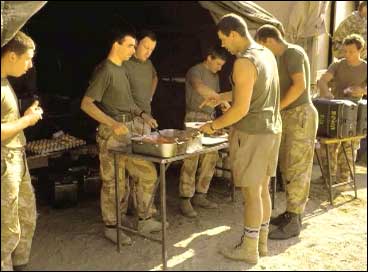
Here is the crucial part of the ad that I would like to bring to your attention. As they pretend to argue on my behalf, they show a group of soldiers standing around a table in the Middle East.


"A hundred and fifty thousand American men and women are stuck in Iraq," according to the narration that accompanies this scene.


Guess what was wrong with this picture before you click here for the rest of the story.

Read More...

To Break the Monotony And Boring Talk of Politics and War

Found these from a visiting referal link US Marine's View:

Bunny

Rotating Illusion

Finally, for all you cubicle dwellers out there:

Low Morale

Read More...

Conversations Around the Net

I was busy on Tuesday, with several discussions around the net. Interesting reading if you weren't following:

Uncle Jimbo wrecks Blackfive's joint with a discussion on Gays In the Military

Rick Moran and I disagree about whether someone's Overt Christian Fundamental Beliefs make them a bad pick for a government or administrative position.

Finally, a discussion about Crime and Terrorism reverts back to "legalization of drugs would decrease profits for criminals" and now we know why we don't make any head way in significantly eroding or closing sources of funding for terrorists.

I suppose you could infer that I am one of those funky conservative type people who don't toe the party line, have serious libertarian leanings, but find certain concepts and practices more repugnant than others.

I'll let you figure out which ones. ;)

Read More...

Other Interesting Reading:

New American Way of War

In case you missed this over at Belmont Club, he linked to this interesting piece by Max Boot on the New American Way of War, that goes along with my original post about Clausewitz and the changing face of war:

Paradoxically, increasing precision makes U.S. firepower both more effective and less destructive. Because U.S. bombs can hit within a meter or two of their aim point, they can carry a lighter load of explosives. U.S. war planners tried hard to minimize collateral damage by employing the smallest possible munitions to get the job done, on occasion going so far as to drop bombs filled with nothing but concrete. Saddam's regime sought to take advantage of U.S. sensitivities by locating military installations among schools, hospitals, and mosques. But even with such dire provocations, U.S. forces still took great care to spare civilians


Clausewitz, right or wrong:

If the wars of civilised people are less cruel and destructive than those of savages, the difference arises from the social condition both of states in themselves and in their relations to each other. Out of this social condition and its relations war arises, and by it war is subjected to conditions, is controlled and modified. But these things do not belong to war itself; they are only given conditions; and to introduce into the philosophy of war itself a principle of moderation would be an absurdity.


I think that Max Boot leans a little towards the Thomas P. Barnett model and does reflect Clausewitz's point that increasingly, politicized war will mean a different model for armies of the future. 170 years later, Max Boot reminds us, in nearly prescient prose, that the changing model is not just about technology and the idealic use of air power in place of "ground pounders", but is increasingly about "new" and flexible roles for these services:

It may make sense to transform some heavy armored units into lighter, more deployable formations. It makes no sense to reduce the size of the army as whole, an idea that Rumsfeld once toyed with. The army has already shrunk from 18 active-duty divisions in 1990 to 10 today -- a force that is not adequate for all its responsibilities, which include deployments in Afghanistan, Bosnia, Kosovo, Sinai, South Korea, and now Iraq. The army is overstretched and having to lean more heavily on the reserves and the National Guard for vital functions such as policing and civil affairs. These part-time soldiers are not happy about becoming full-timers. The marines should pick up some of the slack by shouldering occupation duties in Iraq and elsewhere. But the active-duty army still needs to be increased in size. Airpower, no matter how awesome, cannot police newly liberated countries -- or build democratic governments.

The army needs to tackle the task of "imperial" policing -- not a popular duty, but one that is as vital to safeguarding U.S. interests in the long run as are the more conventional war-fighting skills on display during the second Gulf War. The Army War College's decision to shut down its Peacekeeping Institute is not a good sign; it means that the army still wants to avoid focusing on noncombat missions. The army brass should realize that battlefield victories in places like Afghanistan and Iraq can easily be squandered if they do not do enough to win the peace.

Read More...

Tuesday, November 29, 2005

Learning From Our Mistakes

The WSJ had two excellent pieces this morning:

The Ultimate- and Unnecessary - Sacrifice

The Navy learned from its mistakes at the Battle of Midway.

And, from Joe Lieberman in Iraq:

Our Troops Must Stay

America can't abandon 27 million Iraqis to 10,000 terrorists.

Read More...

Monday, November 28, 2005

Clausewitz and the War on Terror

I am reading Clausewitz's book "On War" on line. I've only read the first chapter, but now I see why it is a favorite among military members and aficianados. As a "theory" on war, it is applicable in every war, including the general war on terror and Iraq. I can also see how officers who subscribe to different war doctrines may refer to this treatise and claim that their doctrine is supported. That is, if you conveniently leave out or reject some of Clausewitz's theory in favor of specific comments. Of course, that is always the problem with theory; taking or leaving, building on or rejecting parts to create a "new" theory.

This book was written in the early 19th century and published after Clausewitz's death in 1832. I note from the website's introduction page that this book was not officially adopted by most of the military "war colleges" until the 70's and 80's:

adopted as a key text at the Naval War College in 1976, the Air War College in 1978, the Army War College in 1981. It has always been central at the U.S. Army's School for Advanced Military Studies at Leavenworth (founded in 1983). The U.S. Marine Corps's brilliant little philosophical field manual FMFM 1: Warfighting (1989) is essentially a distillation of On War, and the newer Marine Corps Doctrinal Publications (MCDPs, c.1997) are equally reflective of Clausewitz's basic concepts.


The writer notes that Clausewitz has always been "in fashion" among many individual professional soldiers, but:

It is, however, the first time that the American armed forces as institutions have turned to Clausewitz. While the philosopher had insisted that war was "simply the expression of politics by other means," the traditional attitude of American soldiers had been that "politics and strategy are radically and fundamentally things apart. Strategy begins where politics end. All that soldiers ask is that once the policy is settled, strategy and command shall be regarded as being in a sphere apart from politics."*2 The sudden acceptability of Clausewitz in the wake of Vietnam is not difficult to account for, for among the major military theorists only Clausewitz seriously struggled with the sort of dilemma that American military leaders faced in the aftermath of their defeat. Clearly, in what had come to be called in scathing terms a "political war," the political and military components of the American war effort had come unstuck. It ran against the grain of America's military men to criticize elected civilian leaders, but it was just as difficult to take the blame upon themselves. Clausewitz's analysis could not have been more relevant:

    The more powerful and inspiring the motives for war,... the more closely will the military aims and the political objects of war coincide, and the more military and less political will war appear to be. On the other hand, the less intense the motives, the less will the military element's natural tendency to violence coincide with political directives. As a result, war will be driven further from its natural course, the political object will be more and more at variance with the aim of ideal war, and the conflict will seem increasingly political in character.*3

    When people talk, as they often do, about harmful political influence on the management of war, they are not really saying what they mean. Their quarrel should be with the policy itself, not with its influence. If the policy is right—that is, successful—any intentional effect it has on the conduct of the war can only be to the good. If it has the opposite effect the policy itself is wrong.*4


What I think was missing from Christopher Brassford's analysis is that, not only do war fighters wish to remain separate from politics, but, frequently in the last 50 years (I say it begins with the Korean War), politicians and even common citizens have tried to separate themselves from the wars for various reasons. As if, some how, even if they (congress members) authorized the use of force by voting for it, they can pretend to be separate from the war by criticizing it. I think that Clausewitz actually makes this point when he said:

On the other hand, the less intense the motives, the less will the military element's natural tendency to violence coincide with political directives. As a result, war will be driven further from its natural course, the political object will be more and more at variance with the aim of ideal war, and the conflict will seem increasingly political in character.*


"The less intense the motives" I believe is the key phrase. In which case, one should honestly ask what were the motives of those who voted "yea" on the authorization of force against Iraq that now it is an issue of political discussion and dissension instead of the will to win?

Some other points from chapter one:

Definition

War therefore is an act of violence to compel our opponent to fulfil our will.

Violence arms itself with the inventions of Art and Science in order to contend against violence. Self-imposed restrictions, almost imperceptible and hardly worth mentioning, termed usages of International Law, accompany it without essentially impairing its power. Violence, that is to say physical force (for there is no moral force without the conception of states and law), is therefore the means; the compulsory submission of the enemy to our will is the ultimate object. In order to attain this object fully, the enemy must be disarmed; and this is, correctly speaking, the real aim of hostilities in theory. It takes the place of the final object, and puts it aside in a manner as something not properly belonging to war.


From the next paragraph, "Powell Doctrine" of using over whelming force from the onset of battle may have originated:

3. Utmost use of force.

Now, philanthropists may easily imagine there is a skilful method of disarming and overcoming an enemy without causing great bloodshed, and that this is the proper tendency of the art of War. However plausible this may appear, still it is an error which must be extirpated; for in such dangerous things as war, the errors which proceed from a spirit of benevolence are just the worst. [snip]

This is the way in which the matter must be viewed; and it is to no purpose, and even acting against one's own interest, to turn away from the consideration of the real nature of the affair, because the coarseness of its elements excites repugnance.

If the wars of civilised people are less cruel and destructive than those of savages, the difference arises from the social condition both of states in themselves and in their relations to each other. Out of this social condition and its relations war arises, and by it war is subjected to conditions, is controlled and modified. But these things do not belong to war itself; they are only given conditions; and to introduce into the philosophy of war itself a principle of moderation would be an absurdity.


And yet, we do impose serious conditions on the warrior, the tactics and even objectives of war. Even the Korean War had slipped into this realm. It could be said that the Korean War was the beginning of wars with limited objectives and even the beginning of limited tactics. This is completely political because wars of the last 50 years are all under the cloud of World War II and every war for centuries before where the agressors were painted as "evil" and their opponents (western democracies and their allies) claimed to be the "moral".

With limited wars where the lone super power (the US) is acting as an agressor and where the threat cannot be seen like the large armies and arsenals of once traditional enemies, it becomes increasingly difficult to establish, what many see as simply political cover, the enemy as the immoral. An interesting side effect is that large swaths of our population have decided that they are too "civilized" and that war is unnecessary. Even in the face of direct attacks, such as those on September 11, 2001, instead of rising immediately to defend of the nation, preparing for action against an enemy and calling the enemy out, it seems like the very next day the first action was not preparation for war, but questions of "why"? Why did it happen? Why would someone attack us?

The explanations were basically identifying the US as the agressor, as the responsible party, it was our policies. Now, this may or may not be true, but the reality is, when attacked, war has already begun and, as Clausewitz indicates, the cessation of conflict only comes in two flavors:

If two parties have armed themselves for strife, then a feeling of animosity must have moved them to it; as long now as they continue armed, that is do not come to terms of peace, this feeling must exist; and it can only be brought to a standstill by either side by one single motive alone, which is, that he waits for a more favourable moment for action. Now at first sight it appears that this motive can never exist except on one side, because it, eo ipso, must be prejudicial to the other. If the one has an interest in acting, then the other must have an interest in waiting.


Victory, obtaining the objective of disarming the enemy and forcing them to fulfil our will. Or, the cessation of conflict because one side is waiting to begin attacks again when they are better armed or the enemy is lulled into believing war is over. Conflict continues, even if it is under the radar, so to speak, of most citizens or is largely fought in the political arena, where political tensions maintain the conflict until one side or the other is ready or willing to resume the physical battle.

This is why the "War on Terror" will continue to be a long war, with moments of peace or low level tension between moments of conflict, whether small or conducted with large armies. Our own tendencies as the "civilized" tie one hand behind our back when fighting the war, putting limitations on the war which means that while we as society are conditioned to look for the big "climactic" victory, like the surrender of the Japanese on the USS Missouri, because of the limitation we have placed on our selves, we are not going to see any such "victory". In which case, it will be increasingly harder to engage the public's opinion and will in the war, unless or until another strike takes place on our own soil.

Even strikes against allied targets, like the Bali bombings that killed 200 or the London bombings that killed 57, seem to raise our consciousness very little or raise the level of "tension". This seems to be, not only a product of our "civilized" society, but also because the enemy has taken refuge in the last defendable redoubt: anonymity. The non-state actor; a secret army among civilians who bears no resemblence to enemies of the past. Or does he?

We should recognize now that the non-state actor is really a proxy for states to excersize their aggression without actually committing their own armies or state to the battle. While these non-state actors may claim their own reasons for striking, they cannot exist without the support of states or citizens of a state. In which case, it is likely that, while some actions may continue to be low intensity, small actions between small military units or may even regress to types of "police actions" using intelligence and assassinations or incarcerations, it is very likely that these tensions will flare again to a state on state action.

Some have recognized this by noting "terrorist supporting states". While parts of our population will continue to be unable to or choose not to recognize this reality as if some concept of war has changed (which Clausewitz rightly notes is "absurd"), the politicization of each war will continue, regardless of who is in power over the state, who chooses to commit to larger wars and who chooses to maintain the cessation of conflict for a "more favourable moment for action".

The difficulty will be in determining "victory" if the war is maintained at its current level to the very end. In which case, I believe that Clausewitz notes the likely outcome:

The smaller the sacrifice we demand from our opponent, the smaller it may be expected will be the means of resistance which he will employ; but the smaller his are, the smaller will ours require to be. Further, the smaller our political object, the less value shall we set upon it, and the more easily shall we be induced to give it up altogether.


Since the main enemy is not a state, the groups and leadership are dessiminated, submission or surrender in the classic sense cannot and will not be recognized unless the war becomes a war between states. Because our society does not see our real political objectives as disarming or conquering individual states, changing their governments (for the most part), the war will be very long indeed. Further, as Clausewitz noted, even if we did go to war with these states, our "civilized" war, moderating and modifying the efforts, will never truly result in the sumbission of the state or the people. Instead, it will be never ending war.

It seems that Clausewitz rejects this kind of war because it means the resources of the state, financially, materially and human, are chewed up without reciprocal results and can result in the state becoming vulnerable to its enemies, quite possibly "induced to give it [the objective] up altogether".

So, through all this discussion, the question must be, what are our objectives in the "war on terror"? Are they as limited as some have hoped to make them: search and destroy bin Laden and Zawahiri in hopes of destroying the exact enemy responsible for the attacks on 9/11? Is this single objective reasonable in the face of the current conflict around the globe? Would this actually create the circumstances for "victory", as in the end of violence, disarming the enemy and forcing them to fulfil our will (what is our will?)? Or would that be one action that would result in a cessation of violence, but not the end while the state supporters and the dessiminated groups wait "for a more favourable moment for action"?

This returns to the point I made several weeks ago concerning the two views of the war.

How do you see this conflict and who is the enemy? Is it a few men with limited resources or is it a proxy war involving many proxies and many states?

Who is the enemy and who are we expecting to surrender?

Without a decisive vision from the state as a whole as to who the enemy is, their objectives and ours, not just from one party or the other in charge of the state, the political will to continue will always be in question.

For additional reading, check out "Net War" at the Belmont Club.

The key challenge is whether America, in the sense of a shared idea, can be expansive enough to permit subordinate threads which can truly "take on a life of their own", and so become agile enough to engage the Jihadis at the lowest level. We are some of us familiar with the idea of multithreaded applications which can leave the main program and be re-entrant at an indeterminate point. Max Boot had hoped in 2003 that decentralized decision making would be part of the "new American way of war", multithreading within a larger architecture. Yet no sooner had those tendencies appeared when they were reined in by an American Left determined to impose all the blessings of the bureaucratic state upon networked warfare: oversight, endless hearings, legalisms -- the clanking apparatus of the unitary Sovereign -- to 'aid' in the pursuit of nimble bands of modern Mongols contemptuous of boundaries.


Update: Hat tip Mudville

From Phil and Becky Decisive Operations:

If combat is not the decisive operation, then what is? The decisive operation, in my view, is a toss up between governance and build-up of the Iraqi security forces. I'll call it a toss up for now, but I lean towards governance. The strategic objective as I understand it is to create a functional liberal democracy in the Middle East because citizens with hope, dignity and the promise of a better tomorrow don't fly airplanes into buildings or strap suicide vests onto themselves to blow themselves up in crowded marketplaces. The plan is to win the culture war by spreading freedom. Will it work -- winning the culture war against radical Islam by spreading liberal democracy? I don't know, but at least it's a plan. :) We definitely won't win the culture war solely by killing the radical Islamofascists because they are so good at the disinformation campaign in the Middle East that our kinetic action will inevitably create fodder for recruitment. It is impossible to fight an effective war where no innocent people get hurt. The enemy is very good at exploiting this with the receptive public in the Middle East. That is why the governance piece is so important -- it complements the combat action piece.


Read the rest.

Read More...

Friday, November 25, 2005

No Taxation without Representation?

Austin Bay reports (along with many other sites) that at least four "insurgent" organizations are seeking "negotiations" with the Iraq government:

The four groups include the Islamic Army of Iraq, the 1920 Revolution Brigade, the Mujahedeen (moo-jah-hih-DEEN’) Army and al-Jamea Brigades. But the country’s most feared terror organization, al-Qaida in Iraq, is not among them. It and two other Islamic extremist groups are believed to have staged many suicide attacks.


While Bill Roggio reports on continuing operations in the Anbar province.

Ramadi, the capitol of Anbar province, has long been the focus of a struggle between Coalition forces and the insurgency. Recently, we discussed how the Coalition is attempting to address the Ramadi problem by slowing bringing in Iraqi troops and pairing them off with U.S. units, and trying to avert a full scale operation like the one conducted in Tal Afar.

Coalition forces continue to press small scale offensives in Ramadi, which are designed to target specific neighborhoods as well as outlying areas of the city. Mountaineers in the beginning of October was one such operation, designed to disrupt activity in the south of Ramadi, and gain control over a bridge crossing the river.

The most recent operation is Panther, which is aimed at the Sufia region of Eastern Ramadi. About 150 Iraqi Army Soldiers and 300 Soldiers from 2nd Brigade Combat Team [2BCT], 28th Infantry Division are involved in Panther, which is “a continuation of operations to capitalize on three key al Qaeda in Iraq insurgents captured in Ramadi, during the month of November.”


Powerline is reporting from another source that the Cairo conference seemed to have some interesting side lines from the State Department:

Hand it to Secretary of State Rice. She knows how to make lemonade out of lemons. When asked on CNN this week her reaction to a communique signed by Iraqi leaders on Monday that recognized a "legitimate right to resistance," she said, "I think what they were trying to do was to get a sense of political inclusion while recognizing that violence and terrorism should not be a part of resistance."[snip]

The State Department, according to Iraqi officials I've spoken with, put tremendous pressure on elected leaders to attend this parley in Cairo. And the see-no-evil reaction to the results of these deliberations suggests something potentially more ominous. The Arab newspaper Al-Hayat, for example, reports that American diplomats on the sidelines quietly pushed for the statement calling for an eventual timetable for withdrawal of American troops. And there are now new reports that Foggy Bottom in particular would like to build on the progress of the Arab League's renewed interest in Iraq and urge the armies of its member states to build a force to stabilize the country.


At the same time, Iraq the Model reports on new election laws which include representation by province (like the British model or close to the US representation established by state, but with only one house):

As you all know, Iraq was considered as one electoral circle in the last elections but this time it will be different; each 100,000 citizens will have one representative in the parliament and Iraq will be divided into 18 electoral circles (see numbers below), i.e. each province will constitute one circle and a certain number of seats will be allocated to each province/circle according to its population count.


Read the rest.

Is this a coincidence? I don't think so. There were two major concerns of the "legitimate" insurgency:

1) Being a minority with little representation in Parliament.

This was no small matter. As noted by Iraq the Model brother, Omar, the last two elections had Iraq as one big representative pool with all parties contesting all seats throughout Iraq. Which meant that it was a fore gone conclusion that the Shia and Kurdish parties would get the majority of seats in Parliament and the remaining seats would end up distributed between many smaller parties, some of which were still coalition parties with little representation from those Sunni areas currently contested.

The truth is, Sunni specific parties will most likely never have a majority in Parliament again. What they hope for is enough of the seats to become an effective and necessary coalition partner with one of the two major blocks in parliament or to have enough seats that the Kurdish and Shia blocks cannot achieve 2/3 votes necessary to pass laws without forming a coalition with or getting buy in from the Sunni representation from the major Sunni areas. This will force both parties to compromise with the Sunni "major minority", giving them the ability to achieve some of their demands and keep them from being ignored in the state hand out of ministries and money.

During the run up to the referendum in October, the distribution of oil profits to the provinces for projects and infrastructure was a point of contention. Resolution of this issue and probably the new election laws led to several Sunni parties giving the nod to their constituents to participate in elections. There were many hold out areas still in Anbar. With continuing military pressure eroding their forces and base of power and new election laws, it's apparent that these Sunni parties see the power that they had gained from boycotting the previous election slipping away. This was the leverage they used to get concessions to the constitution. Once the permanent, four year government is elected, if the Sunni actually boycott December elections, they will lose all leverage. The continuing improvement of Iraqi security forces means that they will be militarily defeated.

However, if they come on line now, they can stave off continued military erosion of their bases of power, allowing them to save face and become political power houses from their districts.

Which leads to the second major issue:

2) Amnesty for past and present actions.

These groups know that their hands are dirty from the Saddam era right through this "insurgency". They are dirty with the blood of Iraqis and Americans. They also know that there are certain groups, particularly the Shia, who are not quite ready to give them a pass. Steven Vincent wrote about the death squads up until his death in Basra. The Iraq Ministry of the Interior was recently raided and alleged "terrorists", all Sunni, were found to be malnourished, abused and possibly tortured.

The Iraq the Model blog has mentioned several times that, while many groups are demanding a time table for a US withdrawal, the Sunni may be shooting themselves in the foot since the US and coalition force presence keeps a lid on a potential over boiling pot of reprisals. In which case, the Sunni would greatly suffer. With indication that the US is going to withdraw forces and leave security largely to the Iraqis, these groups need to be legitimate and protected by the government. The only way that happens is if they join the political process and their region is seen as largely "peaceful".

Don't take this wrong, because it doesn't mean that violence is over. As noted, Al Qaida and a few homegrown Islamist organizations are not intent on negotiating. They still want either Iraq as a whole or some large area to set up their "emirate". Further, it's likely that small off shoot non-Islamist "militia" will continue some sort of violence ongoing until most of the Sunni feel comfortable in their protected minority status both politically, demographically and financially. Think "Israeli/Palestinian Conflict" or Sien Finn and the IRA with "legitimate" political parties using their arrangements with these groups to unleash occasional violence as leverage during tight political moments, with cessation of violence a negotiating tool.

Unfortunately for Iraq, this means that violence will stay inside their borders for years to come, with or without US forces. It may be that the violence is much more low key. Except for the Islamists. That's another story.

What's interesting is that this has probably been the plan for some time. Maybe since the end of the last elections. The administration has been accused of not articulating their plan very well. Looking at it from this near "end game" position, I'd say that they have been saying it in very general terms for sometime: seek political resolution while continuing military action. Also from this position, it's clear why they weren't articulating this plan with specifics.

Would you really telegraph your punches that much?

As Clausewitz once wrote, war is the continuation of politics. Or, better explained in his own words:

The more powerful and inspiring the motives for war,... the more closely will the military aims and the political objects of war coincide, and the more military and less political will war appear to be. On the other hand, the less intense the motives, the less will the military element's natural tendency to violence coincide with political directives. As a result, war will be driven further from its natural course, the political object will be more and more at variance with the aim of ideal war, and the conflict will seem increasingly political in character.*3

When people talk, as they often do, about harmful political influence on the management of war, they are not really saying what they mean. Their quarrel should be with the policy itself, not with its influence. If the policy is right—that is, successful—any intentional effect it has on the conduct of the war can only be to the good. If it has the opposite effect the policy itself is wrong.*4


As I've noted and so has Winds of Changes, this necessity has left the administration in a difficult position. Hands tied, taking punches from their political opponents, the Democrats, who must know both the plan and the administrations need to keep it on the down low.

This makes Rep. Murtha, not just an emotional vet suffering from PTS, but an extremely good political actor (I mean that in the Thespian sense).

The Sunni have played a good game, but it was always a losing game. What they were fighting for wasn't necessarily a return to Ba'athist Iraq, but, in a more refined concept of Michael Moore's "minute men", "no taxation without representation". We've always had a plan and we've seen it in play the last few months with elections and military action in Anbar. War as the continuation of politics.

It doesn't cure the Islamist problem. As noted, that can only be done through military means and that will include Iraqi military and security. I certainly wouldn't count them among the "minute men".

The Democrats have played a good game, but their strategy doesn't necessarily gain them an automatic win in 2006 or 2008. I disagree with Donald Sensing at Winds of Change that the Republicans, much less the president is "supine" on the mat. Not from a partisan position, but because all they have to do is get Iraq violence down to a minimum, keep the political momentum going in Iraq and start bringing home troops by June (or earlier) and they can claim a victory, recounting the strategy and pointing to the "victory" for many months to come prior to the election.

Even better, if they manage to kill or capture another major Al Qaida figure before next elections, they can count "big coup". Another recently noted that the Democrats may have played into "Rove's hands", by shooting all their ammunition too early in the game.

In short, we have a plan. It's working. We're winning.

The policy is good.

Read More...

Thursday, November 24, 2005

Thanks Giving Prayer

Lord, hear my prayer of Thanks Giving.

I thank you for allowing me to be born in the United States of America; in a land where I am free.

I thank you for providing food and shelter, when many have not.

I thank you for family who have ever stood by me in good times and bad, for the joy that we have shared and even the sorrow which reminds us to draw ever closer, to love even more and give thanks for the good times.

I thank you for friends, those I have met and those I have not yet, who have been supportive, who stand by me in my times of need, who bring happiness and laughter, shares a tear and have ever given a hand up when I've been down.

I thank you for the strangers who stand on guard here and on foreign soil, ever watchful, that protects this land and those I love.

I thank you for giving strength and courage to millions of men and women who have sought and received freedom.

I thank you for those who have sacrificed in the name of freedom that has given me the ability to say this praise in your name without fear, without hiding my faith in dark corners, but here, in the light, I say these words of thanks.

Lord, you have provided much for your humble servants, yet on this day of Thanks Giving I ask that you look down upon us and remember those who have not, those who are sorrowful and missing loved ones, those that mourn. Show them your mercy and comfort. Remind us to be your hands upon this earth and act accordingly towards our fellow man.

Remind us, Lord, to be ever thankful, to give a hand to our neighbors when they are down, to be humble when we are so blessed, to remember those who have yet to taste your bounty and the joy of freedom, to turn the other cheek, while remembering that we are our brother's keeper, to be ready to defend, but equally ready with the hand of peace.

In praise and Thanks Giving, I pray,

Amen.

Read More...

Wednesday, November 23, 2005

Lies, Damn Lies and Supporting the Troops


Going around the blog world, I have been unable to escape a continuing theme which continues to fall under a specious "nuanced" concept of "supporting the troops, but not the war". I believe that some folks have a genuine desire to support the troops, but argue over the need for war or the tactics used. I believe this is an extremely difficult, if not impossible line to walk. I believe that the difficulty of this concept is why those who make contrary and even abusive commentary are also so defensive about their positions, yelling about allegedly being called "unpatriotic" and "un-American" for espousing certain ideas. While most people have refrained from actually using those words against dissenters, I believe it is becoming more common, at least in the blog world, to start calling a spade a spade.

The discourse is particularly strident over several issues. From the one position, the claim is that the attacks are on the administration itself and its policies. From the other is the claim that such attacks are actually damaging the morale of the troops and actually amount to attacks on the soldiers themselves, therefore, the claim of "supporting the troops but not the war" is a false position. I believe that conscientious people from the "attack the administration" group know that they are, if not pushing the line, actually crossing it, but, from the need to have a clear conscience, deny it to themselves and others. They know that the American populace will not stand for Vietnam Veteran "baby killer" attacks full fledged or redux. It is a sure way to lose the general population.

From my perspective, these attacks do amount to attacks on the troops directly, whatever the "nuanced" intentions of the commenters and certainly, from an alleged veteran service member, the claims by Moulitsas at Daily Kos, who must surely know how the military works, cannot even pretend to such claims.


Take the latest claim that troops used white phospherous against civilian targets, that it was used as an incendiary anti-personnel weapon or that it is a chemical weapon. Recent comments have included not only these claims, but the weapon is contravened by the Geneva Conventions and that the Artillery Field Manual states that it is to be used against specific types of targets, but not as an anti-personnel weapon.

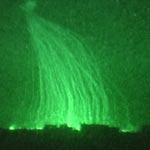
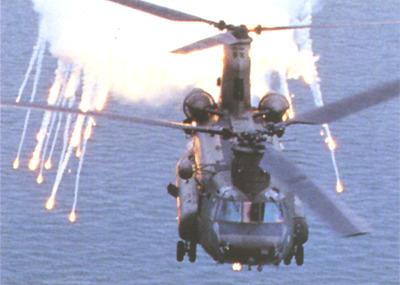
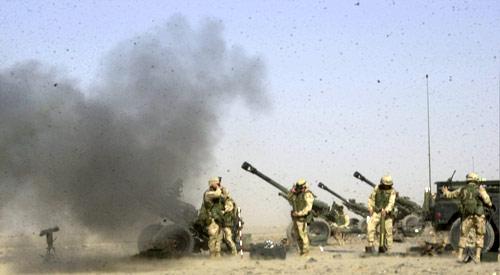
All of these things have been debunked many times. The reality is, in order to maintain that WP was used "illegally", you not only have to ignore any facts that preclude it as classified as a chemical weapon or ignore your own eyes when you see the video or pictures of what appears to be illumination rounds or WP applied as smoke (see above) or helicopter counter measures against heat seeking missiles exploding 100 to 200 ft above ground or even ignore the actual combat that took place, you would also have to believe that many, many soldiers were either complicit in the delivery of this weapon of their own free will. Or, that the soldiers were too stupid to know the rules and reasons why these weapons are used or not used. Or, that the soldiers are so cowed and/or brainwashed by the command structure that they "might" have recognized it as an illegal order, but could not exercise their own judgement and disobey an illegal order.

From the perspective of the would be "dissenter" from the war, this is not an attack on the soldiers. Some how the soldiers are absolved from all guilt or participation in these acts. They say that they are attacking the administration because the Pentagon, part of the administration, would have approved the attack on Fallujah in the first place, which is true enough, but, having already proven to be ignorant of weapons and their uses, they would also have to believe all of the things I listed above and believe that the Pentagon then gave specific orders or directives to use illegal weapons and that the Pentagon gave these orders regarding every target that WP was used against. That individual soldiers, squad, platoon and company commanders do not exercise their own initiative, but are in fact automatons that just march down the road firing at targets without making any tactical decisions, protecting themselves, other soldiers in the area or civilians that they encounter and know to be civilians. Which means, these same folks making the claims would be completely ignorant of battlefield tactics, how orders are relayed, and how specific weapons are selected to use against a target.

Let's face it, during the battle of Fallujah, it's not Don Rumsfield or some other Pentagon underling who is giving the direct order to fire on any specific target with any specific weapon and munitions to one of 20 or so officers in charge of artillary or even mortar fire teams. It just doesn't happen that way. It's the men on the ground who are identifying targets, relaying coordinates and asking for weapons and munitions to be deployed based on their assessment at the time. Soldiers and marines. It is soldiers who are loading the munition into the mortar tube or artillary piece to fire. It is soldiers who are pulling the trigger to deliver the weapon.

In order to absolve a soldier from complicity in these acts, one would have to be willing to believe they are ignorant or cowed. One would have to enact the "Nuremburg" defense and claim that these men were simply following orders. A defense which has long been proven as specious on its face because we have already determined that soldiers should and could exercise their own morality and judgement and disobey "illegal" orders. Even if that soldier feared retribution such as being placed in the stockade or tried for insubordination, we as a society have already determined that it is better to suffer such fate than to participate in "illegal" acts. The military actually spends quite some time on building the moral character of their soldiers by discussing ethics, illegal orders, the right to disobey them and proper actions to take. This occurs at boot camp and throughout other training. Officers in particular, during OCS, are provided additional training. So, it is not that any soldier does not know his responsibility.

But, it appears that very few, if any, soldiers did not disobey their orders. In fact, for the WP argument to be true, tens of thousands of soldiers, from the grunt on the front line to the artillary units to the command support units, to communications to the supply and logistics forces delivering the weapons and ammunition to the line untis, to the mess units that provide food and water, and on and on and on, would have to have been complicit in the act.

The argument that the "support the troops, but not the war" folks make claims that troops are absolved from guilt because they could not disobey orders and the conditions were set by the administration by ordering the prosecution of the war and, specifically, by giving permission or the order to attack Fallujah in the first place as is evinced by this article in the Guardian and stated in other op-eds in the United States, protesters and around the blog world.

The point is, you can't claim to "support the troops but not the war" and then claim that illegal acts occured without casting guilt on the soldiers or painting them as stupid automatons. Either way, it's an insult and an offense.

What's extremely hilarious is that many of these same groups will refer to the President and his administration as fascist Nazis, but are willing to, not only accept, but actively provide the "Nuremburg" defense of "just following orders" for the military because they know that they must provide some cover for themselves in the arena of public opinion.

Either the troops are guilty along with the administration or neither is guilty.

Thus, spreading lies and damn lies, knowingly or unknowingly (largely knowingly I would argue), is not just an attack on the administration, but does constitute an attack on the military in general and all soldiers specifically involved in the action.

Let's call a spade a spade. You can be a liar, a damn liar, or, you can support the troops.

hat tip Mudville Gazette

Read More...

Tuesday, November 22, 2005

Odds and Ends

Don't forget to vote for me at Aaron's CC for the suit of spades. This is for those blogs that call a spade a spade, bringing attention to specific subjects like Islamism, terrorism and the Iraq war.


Today's suggested reading:

Michael Yon has some pictures up that are a must see.

Editorial in Jordanian Times:

The sleeping tragedy had been ticking all along like a time-bomb. For too long we have tolerated elements in our society whose poisonous ideology had been tirelessly feeding a destructive culture of hate and death to schoolchildren and adults alike. For too long we have refused to admit that the seeds of hatred have been sown in the classrooms and in the mosques by disturbed clergymen who have been let loose on our society to drown it in oceans of twisted interpretations of an otherwise great, compassionate religion. This is why the chickens have come home to roost.


For a moment I had a case of schadenfreud when I read this:

But rest assured that they still incubate the same vicious beliefs that moulded the likes of Zarqawi and graduated his army of suicidal maniacs (thank you, by the way, George and Tony, for removing the sewage lid and unleashing on our region the most uncontrollable vermin known to mankind).


My first reaction was, "Your Welcome. Just returning the favor." But, then, I thought that, while this gentleman may still want to lay a little blame away on someone else, I think that, in our shared world where everyone is a target, these types of sentiments do nothing but put a wedge between us. In the entire editorial, this is the only section I disagreed with. Largely because, there are circumstances in the region that led up to Islamist terrorism that are directly or indirectly related to the culture, politics and religion of the region that may or may not be related to American policies in that region. But, from this perspective, I think we need to get over the blaming of which ever outside parties and place it squarely on the shoulders of terrorists, because, in the end, they recruit the men (and now women), they create the bombs, they pick the targets and they pull the trigger.

It is the terrorist that decides to throw away all morality and murder non-combatant citizens of all countries and all faiths in the name of a goal, establishing the caliphate or nationalistic Islamic state, which is unattainable accept in fantasies. The question of Islamist terrorism is not really whether these people who commit the crimes are delusional and insane. Somewhere, deep down, they know it is unachievable, thus, the murders of innocents are not "war" as an extension of a political policy, but murder for the sake of murder. It's murder because their chosen targets are almost always civilians; men, women and children without a uniform, without a weapon to defend themselves, without any real connection to a military endeavor. These are no accidental killings, but specifically aimed at the softest and least defended in society.

So, whether they are civilians in Amman, Jordan; Khaneqin, Iraq; Riyadh, Saudi Arabia; London, England; New York, New York; Madrid, Spain, they are all victims and the only people responsible for their deaths are the murderers. That is something that we are going to have to agree on sooner or later if we are going to confront this deadly phenomenom as a united front instead of wary allies.

Read also Jordanians Protest Bombings: 200,000 in the streets

Winds of War Weekly Update

Winds of Change: Iraq Update


Read More...

Monday, November 21, 2005

As I Was Saying: Grand Standing On A Given

In an earlier post, I said I thought the Democrat party was grand standing on troop withdrawal because it was already known when and what kind of withdrawal will occur and they want to take credit for making it happen.

Well, read and know I am the mistress! Or, at least find out what kind of troop scale backs will be occuring in Iraq in 2006 through 2008. I'm no logistician, but, if I know the military, these plans have existed for many months if not a year or more. Largely because the military draws up multiple plans for given situations that depend on certain standards, status and threats. When a situation meets those standards, it is put in play. Since it takes time to get assetts in place or re-deployed, these plans have probably been in play and known to such folks like the House Arms Committee and its Senate sister who have to approve budgets and funds for the expenditures.

Don't imagine for one minute that every Democrat on the hill is standing on some sort of bizarre principle demanding troop withdrawal. The words: Politician and Principle should really never be used or intimated in a sentence together. The world might actually collapse.

One might wonder why the Republicans don't just come out and say this truth? Maybe, just once, they really mean it when they say they don't want to tell the enemy our plans? Or, maybe, they really mean it when they say that improved Iraq security forces means less American forces?

Nah...that couldn't be it, could it?

hat tip Mudville Gazette

Read More...

Terrorism Inc: How To Be A Successful Terrorist

By Dr. Ayman "Eichman" Al Zawahiri
Commentary by Osama "Who's Your Mama" bin Laden and "Z-Man" Al Zarqawi

Introduction

Are you down and out? Did you graduate from university, but can't find a job? Are you living in your mother's basement and hanging at the souq all day? Do you have to beg your father for money just to get a few hits of the hookah? Do you see yourself going nowhere? Do you believe that it is somebody else who is responsible for your condition? Have you prayed to Allah (pbuh) for assistance, but all you hear is silence punctuated by the laughter of the young girls in half shirts and talking on their cell phones?

If this sounds familiar, then we have a unique opportunity for you. We want you to join our global franchise: Terrorism Inc. This unique opportunity will not last forever. Terrorists come and go, but a successful terrorist lives on forever.

We at Terrorism Inc. have perfected methods to make our graduates household names, teach them how to take advantage of charitable institutes to provide wealth to live from with little work in exchange, how in influence politicians, policies, the media and citizens around the world. Just purchase our two disc CD package for $29.99 and you will learn the secrets of a successful terrorist. Read further and we'll reveal three of our top secrets that will convince you that our methods work.

Selecting the Right Enemy:

1) Your enemy should be very big and strong. No one is going to pay attention to you if you try to over throw the government of Fiji even if Fiji is your ultimate destination. A terrorist must earn his "props" and it can only be done by striking at a much larger enemy. Once you have these "props", you can over throw the government of Fiji easily just from fear, requiring few men and little money. Or, if you prefer, France would make an excellent destination, but not the primary enemy. Remember: think big.

OBL: A bigger enemy will make you look like the underdog. No one would believe that a small group of men would be so foolish as to strike a larger enemy first. They will look at your enemy and imagine that the bigger enemy must be a bully that has done somethng grievous to provoke such a reaction from a much smaller group or person. This will help you gain "sympathy" in other countries; something that is quite necessary in our later lessons.

Z-Man: When you are classified the "underdog" by the world at large, you can committ all sorts of attrocities against anyone you like and the world will believe that it is the only tactics open to you because of your "size". The people you kill don't even have to be your stated enemy. You can issue statements later that whoever you killed are "collaborators" with your enemy, even if they are a different nationality or have never spoken to, worked for or visited a citizen of the country much less their government. As the "underdog" they will forgive you anything. For instance, you can tie up helpless men and women and cut off their heads, on camera, and send it out to the world. Those who see it will just say, "well, they have no choice" or they will blame it on the victim for being in a "war zone". You can blow up bus loads of children, people praying at mosques or churches, blow up a wedding, kidnap and torture old men and send retarded children into a crowd to committ "suicide" with an explosive vest.

The tactics and sheer cruelty you can get away with will amaze you. Everyone of them will add to your mystique as a terrorist.

2) Your enemy should be a democracy. Committing terrorist activities in a police state or where the leader has total authoritarian power is very dangerous. They do not have any constraints like "morality" against tracking down, torturing or killing you or your followers. Also, the people in such a country may be more afraid of the authoritarian leader than they are of you which will keep them from helping you by providing safe houses, food, money or routes to smuggle arms and men.

OBL: If you choose an authoritarian state as your enemy, your scope and appeal will be limited. You want the widest audience and the most sympathy. Committing terrorist acts against ordinary people in an authoritarian state will only seem as bad as the actions of the state against helpless people and will diminish your appeal. It is better to choose a country that is free and open, that prides itself on "free thought" and "due process of the law". This way it is likely that, no matter what cause you raise your banner under, there will always be people who will entertain your reasons and cause as just. This is very important when we teach you how to use propaganda against your enemy, one of the most important tools in your arsenal.

We will teach you how to use "due process of the law" to your advantage by making legal claims against the country you attacked. You or your attorney will be able to make many speeches in court and to the press that will keep you in the media and confuse your enemy about whether you are truly their enemy or a criminal. They can't resist applying their culture and way of life to your ideas. The more outrageous the claims, the more likely they will be believed and the more likely you will get attention from the media. You will also be able to co-op many of these groups to your cause. Even if you repeatedly state you will kill these groups too as an enemy to your own idea, they will refuse to believe you. These groups you will use until you have met most of your goals. Save them until the last to kill. If you kill members of these groups too early, you may cause them to doubt your cause and lose an important advantage in propaganda and useful fools that will give you monetary and material assistance.

Z-man: If all else fails and you are unable to actually attack the democratic country directly, you can choose an unrelated country or a country with some sort of ties with your enemy, even if that country has strong opposition to whatever your enemy has done in the past or is doing now. This country can be either another democratic "free" country or a state with an open monarchy. The important thing is that the country is relatively open to allow you to travel in or out, to make contacts with other groups and where you can get the useful fools to help you kill their fellow citizens. It will be very exciting to see the look of shock and surprise on the faces of the useful idiots when you bomb them. What's even better is that, even after you bomb them, there will still be useful idiots that will believe you had every right and good cause to do so. As I said, they will forgive you anything.

3) Your enemy should have a history of strong partisan political opposition in government. In a police state, the leader makes a decision and no one questions it because no one can take the leader from power as long as he has the military, police and other government institutions under his control. When there are elections and partisan opposition, the opposition will do anything to win back the power of leadership and government institutions.

OBL: When an enemy has strong partisan opposition and the reins of power frequently change hands, even if they think that you are a dangerous enemy, because you are small compared to them, the opposition out of power will believe that they have time to come to power and prosecute their own war against you. Because of this, they will use more of their time trying to force the reins of power from their opposition than cooperating to take action against you. This will give you much time to consolidate your forces and resources. You will also be able to use your time to identify states, usually police states, that consider themselves the enemy of your enemy or, at least, have no use for democracy. These states will help you with money and materials.

Z-Man: An enemy with a well entrenched partisan opposition can be used to your advantage. Your words and actions will inspire them to make many speeches against their opposition. You can adopt the slogans of the opposition in your propaganda and press releases. This will make the partition of the forces easy; making it sound like the partisan opposition is siding with your cause. It will make your enemy appear weak, make you seem more successful than you are and will bring more men, money and materials to your cause. The entire time, the opposition will believe they are not playing into your hands. The enjoyment from this effort will be worth all the pain of dealing with the media who will constantly be looking for your next spectacular attack to help raise their ratings, giving you free air time that would otherwise have cost you billions of dollars.

OBL: It will also confuse your enemy so much that they will think that the strong response against you by the party in power is not working. The partisan opposition will continue to work against any actions taken by the party in power, making it appear so weak that, when or if the opposition party comes to power, they will have to do something completely different in order to not appear to be following in the tracks of the previous party. Generally, this means they will go back to doing small police actions against you, giving you time to relax, re-enforce your position, gather your forces and build a small enclave that we like to call "the emirate" where you will be able to build and train your forces in relative security and calm before taking the next action.

Z-man: The best part about it is that the waxing and waning of power and tactics means that you can make it "an endless, bloody war", killing, maiming, stealing and living the life of adventure for many years to come.

A special message from Dr. Zawahiri:

This is what makes our program such a success story. It creates a long term career in a niche market that has little competition, but many perks including having your name in the history books.

These are only three of our tried and true methods. We will teach you our other many tactics learned from over twenty five years in business. The two CD package will include:

How to co-op causes by choosing the proper ambiguous over all cause.

Like "Arab Oppression" even if the oppression is at the hands of the Arabs, you can always claim it is somebody else's fault.


How to present a plan to rectify the selected "problem" with little work or effort.

This plan will also be very vague so no one can pick it apart and point to what is "wrong". Also, when you institute this plan, you can make it up as you go because you have given very limited guide lines. No one can accuse you of lying.


How to make your cause and forces seem larger than they really are.

This tactic has worked from ancient history to modern warfare. By choosing the right tactics, co-opting causes, contracting out actions to other organizations and making attacks in multiple locations, your enemy will believe that you are thousands, if not tens of thousands, strong.

Using your enemy's "morality" against them, even if you have no morality yourself.

This section will tell you how to use the "useful idiots" and the media to point out every mistake of your enemy. This is an extremely successful propaganda technique against a much larger enemy. Because you are the "underdog" you are allowed 200 atrocities for every one of their mistakes taht results in the death or maiming of innocents. We will teach you how to use this to your advantage, how to use "useful idiots" and the media to spred the word; subcontracting work to actors to stage events and even committing actions yourself that you can get the "useful idiots" and the media to present as the work of your enemy.

Learn more about becoming a successful terrorist when you buy our two CDs for only $29.99.

Act now and we will throw in two bonus CDs:

Propaganda on a Disc

This CD will show you how to use basic computer programs to create pamphlets, fliers, press releases, manuals, web pages, videos and press releases to enhance your propaganda program.

Al Qaida's Greatest Hits

This CD will contain some of the best attacks by our graduated students from flying planes into buildings to beheadings, car bombs, mosque bombs, torture sessions and many more.

Just call 1-800-EXP-LODE.

Have your credit card ready. Visa and Master Card accepted.

We do not take American Express.

This has been a paid commercial brought to you by our sponsors:

The House of Saud
The House of Saad
The House of Mullahs
The Islamist Association of Imams
The Ba'ath Benevolent Association
Islamic World Charities

Secial Thanks to:

George Galloway
R.E.S.P.E.C.T.
Michael Moore
Internatinal A.N.S.W.E.R.
Cindy Sheehan
Code Pink
C.A.I.R
The Muslim Student Association
The American Congress

Read More...

Sunday, November 20, 2005

On The Campaign Trail...

My fellow bloggers, readers and occasional commenters:

It has come to my attention that I have failed to announce my nomination for, not one, but two awards; both of which require votes from my kind friends and readers. Thus, I am compelled by gratitude for the nominations and sheer vanity to request your assistance in promoting my humble blog.

The first nomination is for a blog card from Aarons CC. I've been nominated for a card from the suit of spades, for calling a spade a spade. In this case, for looking at and talking about the dangers of Islamism, the history of Islam and the rise of Islamism and the war on terror, including Iraq. My friend Ala at Blonde Sagacity nominated me and I thank her for believing that anything I write here is worthy of an award. It's humbling to know that someone thinks I have anything of importance to say on the matter, that anyone reads this blog. I'm no where near as big or widely read as some of the other blogs up for nomination, but, I don't write the blog to become famous. Rather, I write it as the voice in me that just wants to yell out into the world once in a while, to let people know I'm here, I'm paying attention, I'm thinking and I will not go quietly without raging against the dying of the light.

The essence of blogging, yes?

So, please take a moment and go look over the blog if you're new here or, if you've read here before and you enjoy it, click over to Aarons CC and vote for The Middle Ground.

Which brings me to my next nomination. I have been nominated for a Weblog Award. I looked at the list of bloggers that have been nominated along with me and I am humbled once again to be in such great company. Nominations close at the end of the week and voting will begin on or after November 26. All things considered, with the company on the list, that I'd even come close to making the top 15 finalists is probably reaching, but I hope that you will do me the distinct honor of voting for me. Or, just as good, nominate one of your favorite blogs in any of the categories. I have been nominated in the "best blog" category. I saw LGF and the Rott on the list, just to name a few. My hope is to be a stealth candidate that everyone sees on the list and says: WTF?

Just a few more thoughts on blogging and the topic I chose. I believe that blogging is very much in the fashion of real democracy where you have competing ideas that previously had very few routes through which they could and would be filtered. Which means that it was controlled and many good ideas never saw the light of day in the public forum or political houses unless you were willing to join some lobbying group or political party, even when their agenda didn't completely match yours, just for the chance that one idea might get a voice and be accepted.

Today, this public forum returns us back, if ever so small, to the days of the Agora, to the public forums of the first democracies, where any citizen could speak his or her mind and the best ideas won out by being the best and by the ability of the speaker to state his or her case, taking the appeal, not to the towers of power, but to the people themselves, reminding them that they are the power that allows the towers to stand. And, where you can write a run on sentence without being heckled from the hallowed halls of public policy by avant academia, elitist politicians or gestapo editors.

For those who have or have not read here before, I came to blogging a year after we invaded Iraq because, like so many others, the voices on the radio, on the cable networks and the words in the papers, just didn't tell me what I needed to know. I needed to know because my brother is in the military and was on stand by so I needed to know where he was going, what he'd be doing and what he was facing. Fortunately, for our family, he didn't go, but I realized many other families were not as lucky. I realized that I had supported the war before and I had to support it then, to make sure that it was done, not just for those families whose sons and daughters have taken up the fight or paid the price, but for the 2987 who died on 9/11, for the 300 million who live in this country and for all those millions more who might look out over the horizon and be reminded that tyranny is not forever. Tyranny is opposed and, if sometimes we are slow and too complacent to always act on that principle, we still hold it, we don't forget them and, someday, tyranny will fall in their land, too.

I started by just commenting at Iraq the Model. It was satisfying to know that there were others out there that believed as I did. It was gratifying to read a comment that said, "good idea", "excellent point", etc. It was exhilerating to argue the point with another who did not agree. I wanted more time and space to put my thoughts together so I started to blog. A year later I realized that it was a truly freeing experience. Somewhere, a mile away or in Africa, India, Iraq, Australia, Russia or some country in South America that few know how to locate on the map, somebody is reading a blog and sharing an idea or two or ten in the speed of light.

I realized that I wanted to join this effort.

After 9/11, I realized that we had become complacent. Not just about terrorism, but about the whole idea of freedom and democracy. It didn't just happen over night. It's been happening for years if not decades, with the sharpest most marked decline actually beginning after the fall of the USSR. It was as if that was the last wall we had to knock down between freedom and tyranny. Because it was so high and so difficult, we couldn't see the other walls after that. Blinded by the sudden sunlight, we couldn't see the obstacles in front of us and we didn't look back to remember the way behind us. We didn't remember that freedom is about constant struggle. We didn't remember that it was never easy. We didn't remember that no tyrannt gives up power because it is the right thing to do.

We didn't remember that there is always some little corporal who thinks that he knows what is best for the world and he will make it happen by building a utopia. They believe utopia can exist if only it has the right people and the right rules to govern it. The utopia invariably begins by first outlawing all the things that people believe are bad or dangerous for utopia. In utopia, things that were once good for a free country like, diversity, free thought, invention and competition, are now bad, because you cannot maintain utopia unless all the people think alike. When free thought raises it's head in utopia, the masters of utopia must stomp it out along with all those who look, think or talk differently than the blue print of utopian humanity.

First, they do it in the dark, in the quiet where no one sees. Then, when no one says anything, when no one stops them, they do it in the light of day. They cull the utopians even more. Because no one stops them from doing it in the light of day, they decide that everyone beyond their utopia is weak so they begin to search out and expand the borders of their utopia, until, one day, the outside world wakes up to find the bloody, evil hell of utopia is on their doorstep.

When I read the words of Qutb, Zawahiri, bin Laden and Zarqawi, when I saw the inside of Saddam's Iraq, and hear the words of Amenejid in Iran, I realize that the world will never be free of little corporals trying to create a shiny illusion of utopia that hides a rotten core. I realize that the free world must be vigilant and must always struggle to stay free; to stand ready to help those that are struggling to be free and to give hope to those who have not yet realized they have the power to throw off their chains.

Maybe that sounds melodramatic. But, I am a student of history and the world has a way of ignoring the little corporals with their nightmarish dreams of utopia until it's too late and the nightmare can only be beaten back at great cost to humanity. So, here I am, blogging, mentally manning the barriers, occasionally handing out my version of the pamphlet, reminding people not to ignore the words of little corporals, the screams in the dark of night or the murders in the light of day.


Thank you and I hope you will vote for me.

Read More...

Saturday, November 19, 2005

An Evening With the Lord and Lady

Friday evening I went to dinner with John and Beth at Outback Steakhouse. It was quite fun. The truth is, I haven't been out much in the last few months and, as an event to break the doldrums, this was quite exceptional.

I felt sorry for John. We sat at the bar, taking up a corner, Beth to the left and me to the right. Who knew we were such talkers? Er..unless you read here and note my long posts. I have a lot to say and it's not just in writing. I saw a few men giving John looks of sympathy (or maybe envy? wishfull thinking?).

Strangely, we only spent a few minutes talking about war, military and blogging. Oh, and shooting of course, we did talk about that. A brief mention about how close some of us are and this is the first time we've met. I have to say that I'm planning to meet these folks a little more often. That is, if they don't close the castle doors and briing down the portucolis.

One thing about the Lord and Lady of the castle, they make friends wherever they go and the Outback is no exception. They were on first name basis with the bartenders and waitresses. No wonder the caslte is never short of denizens.

The only rough part about the evening was, after only one glass of wine, I heard myself saying the "F" word and a few other words more often than I normally would. Who knew one glass of merlot would smash the language inhibitions so fast?

Okay, who am I kidding?

I just want to say, "thanks, John and Beth, it was a great evening and I can't wait to do it again. Or attend that blog meet we've been skirting around." ;)

Read More...

Friday, November 18, 2005

Grand Standing

As I read one of my favorite milblogs this morning, I note some interesting things that aren't being reported (much):

The United States and coalition forces will likely reduce the number of troops in Iraq next year, Iraqi Vice President Adel Abdul Mahdi said on Saturday.
<...>
"I've discussed the pullout possibilities with Secretary Rumsfeld and we agree on the future course. We are optimistic about the buildup of Iraqi forces to cope with the situation," he said.


So, are Democrats just making noises so that next year, when the troop draw down begins they can take credit?

Probably.

The point is, we don't go until the job is done and the job is not done until Iraq's forces and government are capable of handling most of the insurgency, leaving us to deal with the Islamists, which will probably be done by special forces and intel units that will stay in Iraq for sometime. But, I imagine that we aren't planning to keep 135k in Iraq for the next five years. I also suspect that civil affairs units will stay and help Iraq get on its feet for awhile longer before turning it over to NGOs.

That's been the plan all along, even if certain Senators and Representatives refuse to acknowledge it because, to get political benefit, they have to say that Iraq was a disaster and not a win. Particularly after they've been talking it down for two years.

Support the troops? Nah. I don't think these folks really care if they make the troops feel like they lost or fought for nothing as long as November 2006 they can use it to get elected. And, hey, so what if Zarqawi and bin Laden think they won and use it to recruit more terrorists to bomb us and our allies. We can always lob a tomahawk some time in the future.

hat tip: Mudville

Read More...

Mom, Be My Voice...

From Sgt. Hook:

Mom,

Be my voice. I want this message heard. It is mine and my platoon’s to the country. A man I know lost his legs the other night. He is in another company in our batallion. I can no longer be silent after watching the sacrifices made by Iraqis and Americans everyday.Send it to a congressman if you have to. Send it to FOX news if you have to. Let this message be heard please…

My fellow Americans, I have a task for those with the courage and fortitude to take it. I have a message that needs not fall on deaf ears.


hat tip:Mudville Gazette

Read More...

With All Due Respect, He's Wrong

Murtha makes a totally emotional plea to bring the troops home. With all due respect for this man's previous service, it does not make him any more knowledgabe or omniscient about the conduct of the war or matters of national security. Frankly, his plea was couched in terms that were repeatedly calls to consider the wounded, that the soldiers are suffering and that their job is done so they should come home.

I'm reminded of Greyhawk at Mudville who says that it's the soldier who wants peace more than others could understand. I am also reminded of Wilfred Owens and Sasoon who wrote poetry after WWI that was about war with little ideas of romance or nobility, except maybe the nobility they imparted the dead in a futile endeavor. Both of those men had signed up as it was their patriotic duty. Wilfred at times was able to separate his duty and his pride as a leader from his disgust at war, but, all the same it was the soldier he always came back to, not the political or security question. He never really thought of that.

I suppose, for most soldiers, that's what it's like in the trenches. But, when you are an elected official, your job is supposed to be able to represent your constituents, all of them, in all facets of government. You're supposed to be able to identify, assess and make decisions on far broader precepts than the pain of war. Now, it's possible that Senator Murtha has thought about all of those other precepts: national security, protection of citizens (even civilians), economics, military and politcal position within the world body. But, we are also the embodiment of all of our experiences and, with all due respect to the Senator, I believe that he is projecting his experiences instead of evaluating the situation and making good decisions on behalf of all of his constituents.

Let me address a few points:

The war in Iraq is not going as advertised. It is a flawed policy wrapped in illusion. The American public is way ahead of us.


There is an illusion and it is largely about the condition of Iraq. Without fooling ourselves, there is an insurgency. It is largely Iraqi, but a small and vicious islamist contingent that is better trained and more capable of pulling of large VBIED and Suicide bombings. There are terrorists or, better yet, proxies from Syria and Iran, but they hardly constitute the type of insurgency saw during Vietnam because these states are no where near the ability of China or Russia to intervene and supply. They are just capable enough of making it painful, not of defeat. The

American people are tired. They've been at war for four years. They only see explosions, counts of American wounded and dead and reports about other killings which are routinely portrayed as part of an insurgency, that is really about gangs, criminals and, yes, sectarian battles. No one really knows the condition of the country. There are vast areas that are totally pacified and attempting to return to "normal". However, it doesn't mean that we can pretend those other areas don't exist. It just means that the condition of the war is not only about on going battles, but those that are complete. Probably the worse thing about this, and the worse thing about Senator Murtha's comment is that it totally ignores any obligation to the Iraqi people.

My question to him is: How many times should we abandon the Iraqis and then expect that they will be friendly towards us?

My question is serious because, when we leave, Zarqawi and his ilk will be setting up base in the Anbar providence and, I suspect...no, I hope, that Sen. Murtha is not suggesting that we should not pursue this terrorist. What sort of reaction should we expect from our abandoned allies? Cooperation? What sort of government will be in place (if at all) when we leave? We left the Shia to be massacred and now we may leave the entire country to whatever fate, solely so we can pretend we are at peace.

I'm going to go out of order of his comments and address this issue here, since it is germaine to all other arguments:

Our military has been fighting a war in Iraq for over two and a half years. Our military has accomplished its mission and done its duty. Our military captured Saddam Hussein, and captured or killed his closest associates. But the war continues to intensify.


First, the mission of our military was not just to topple Saddam. The point of the mission was to remove the threat posed by Iraq as a state with WMD and a state who had made overt contacts and contracts with terrorist organizations, now the major threat to our national security. Saddam as an opponent or emobidiment of that threat was truly secondary to the threat posed by the terrorist connection, however debated that maybe and however depleted, though not totally destroyed, his WMD program was. Now, the condition of Iraq still constitutes a threat to our security either in the potential for an Iranian dominated Shia government or as a weak government that cannot combat its insurgency and where terrorist organizations currently do, and certainly will, thrive in the condition of anarchy. Either in the entirity of Iraq or in any single or combination of provinces.

Further, it presents a security risk to our allies in the region, more than just a current hotbed for Islamist terrorists that may or may not make it out of Iraq to return to their representative countries, but as a chaotic state where, in fact should we leave, terrorist organizations will set up permanent and uncontested bases of operation to spread their ideology and terrorism to neighboring states. It happens now. The mind boggles at the probability for attacks and Islamist revolutions in neighboring states completely de-stabilizing the area.

Then, not only will we have failed the Iraqi people, but we will have actually failed our allies and all those who seek to live in peace in the middle east. This would pose an incredible "threat" to the United States, the elimination of which was the goal of our mission.

Thus, I must disagree with Senator Murtha that our mission is "accomplished" though I will agree that our military has done and continues to do its duty.

For all other answers, all I've got to say is, "read Mudville. He has answered the question of recruitments, wounded, deployments, attacks and many others for the last two monts (read November and October Archives). Any number can be used and turned to state a conclusion the speaker has already drawn.

An answer from McCain

Read More...

Wednesday, November 16, 2005

Al Qaida's War For Oil (and Other Things)

If we are to understand the Islamist strategy, we need to get beyond such standard fare as "they hate us for our freedoms". They do and it is well documented that adherents of the Islamist doctrine feel that freedom is antithetical to morality. They do want to create a society where they can enforce their puritanical ideology on politics and society. But, that's not all they want. Yes, they want to create the "caliphate" where in they can practice this ideology. Yes, they believe they cannot have this utopia while the US is powerful enough to interfere with its development and it is a given, after all of the attacks that the US has suffered from extremists in the last thirty years, that the US would view the development of such a state a threat to national security. Iran is quite enough and at least has some concept of real politics that has maintained the balance until Iran began looking for "the bomb". Even then it is for purely secular goals of power in the region and, in some regards, protection of the future of their own Islamist state.

So, the Islamists are correct in the regard that more radical nation states would be considered a threat. However, by limiting the discussion to simply ideological concepts and the danger of state supported fanaticism, it hides the very secular and, shall we say "imperialistic" and "capitalistic" nature of the Islamist goals. The final goal, the destruction or subjugation of the west economically and militarily, would be icing on the cake. However, before they get there, there are many steps in between and a very long road towards such an accomplishment.

Tiger Hawk has re-evaluated Steven Den Bestes 2003 strategic overview. While I believe he did a decent job of a basic overview, the areas I was disappointed with had to do with Steven offering the "standard fare" for the Islamist strategy and causalities. However, he did list two important areas that are the basis for my additions:

According to Princeton's Michael Scott Doran (now on the National Security Council), al Qaeda's strategy is to "vex and exhaust" the apostate Muslim regimes and the United States, their principal sponsor:

    So where does the war stand now, according to al Qaeda? A leading al Qaeda operative has written a book, the title of which translates loosely to “The Management of Chaos.” According to al Qaeda, the current stage of revolution is the stage of “vexation and exhaustion” of the enemy. They have a notion of how to do this to the Americans and to their 'puppets'.

    You vex and exhaust the Americans, according to al Qaeda, by making them spend a lot of money. The United States is a materialist society, and if forced to spend too much money it will “cut and run.”[snip]

    In addition, al Qaeda wants to force Americans to carry the war into the heartland of the Middle East. There are two reasons why al Qaeda sought an American invasion in the Middle East. First, it will be very costly for the United States and will therefore drain our treasury. Second, bringing the war to the heartland will have a polarizing effect within Muslim society.


A few points on the last: just because Al Qaida hopes and plans for us to do something and expects a certain outcome, does not mean that we don't do it. In many respects, it is why Iraq was a favored target for the US. Iraq was the rogue state of the ME and already had a long list of offenses. He was at least a neutral foe. However, I believe that we agreed with Al Qaida that a war in the Muslim backyard would have a "polarizing effect" and we were counting on it.

Now, I want to get to the "vex and exhaust" part of the analysis. From this excerpt (and I have not read or seen all of Doran's analysis or lectures) it would seem that this is focusing on the military cost as if the over all strategy simply relies on stretching our military thin and ramping up costs of fighting to deflate or destroy our economy and, thus, our ability to continue fighting. I think that this is true to an extent, but far too narrow a view of the over all strategy.


I've used this map before to explain the global nature of the war. Wherever a red dot appears a terrorist attack or continuing Islamist battle or an Islamist movement exists. By no means does this map represent all of the attacks, on going battles or organizations. Certainly, the western hemisphere is not represented showing Islamist activities in the US, Canada and South America. Certainly, this represents an extensive battle front that, were we facing it alone, the costs would be more than prohibitive. Fortunately, many states have their own survival at stake so we can rely on assistance from them, but, as pointed out, the Islamists are hoping that the over all strategy will exhaust our allies as well.

But, it is hard to see why we should be concerned about Islamist movements in Kashmir or Bangledesh or Sri Lanka or even Thailand for that matter. Those would appear to be regional with little economic or direct security impact.
This is a map of the Ottoman Empire (caliphate) at the height of its power from the 15th to early 18th century. It's power was not derived simply by military might. As you can see by the map to the left of the legendary "silk road", it controlled major maritime and land routes, vast amounts of raw resources including base metals, precious metals, precious and semi-precious gems, grain, rice, cotton or muslin, ink, silk, precious woods, papyrus (for making paper), tea and even part of the opium trade (just to name a few). The wealth of the empire helped to produce some of the major changes in medicine, engineering, literature, basic science and philosophy. All this long before the discovery of patroleum.

By the late 17th century, the Ottoman empire began to be reduced in size by slow inroads on territory from other states and by localized revolts of indigenous populations. French, British, Spanish and Italian colonial expansion chipped away in India, Indo-china and the Philipines, then on to Africa.
Today, Islamist organizations are attempting to regain power in many of these states. And, just like centuries past, these states sit on top of some of the world's largest natural resources and straddles the world's busiest maritime routes. The map on the right shows modern maritime routes that follow the same path as the "silk road" routes with the exception that the Suez Canal has greatly reduced the number of days that it takes to bring products and energy resources to Europe, Russia, Australia, Japan, China and the United States to name a few.

60% of Daily Oil Production is moved via seaborne tankers. Approximately 70% of that oil comes from OPEC nations which produces approximately 30% of the worlds oil. 75% of the worlds natural gas reserves are in the middle east. The EIA indicates major "choke points" and security risks:

...the Strait of Hormuz leading out of the Persian Gulf and the Strait of Malacca linking the Indian Ocean (and oil coming from the Middle East) with the Pacific Ocean (and major consuming markets in Asia). Other important maritime "chokepoints" include the Bab el-Mandab passage from the Arabian Sea to the Red Sea; the Panama Canal and the Panama Pipeline connecting the Pacific and Atlantic Oceans; the Suez Canal and the Sumed Pipeline connecting the Red Sea and Mediterranean Sea; and the Turkish Straits/Bosporus linking the Black Sea (and oil coming from the Caspian Sea region) to the Mediterranean Sea. "Chokepoints" are critically important to world oil trade because so much oil passes through them, yet they are narrow and theoretically could be blocked -- at least temporarily. In addition, "chokepoints" are susceptible to pirate attacks and shipping accidents in their narrow channels.


60% of the world's cotton is produced by China, Russia and the United States. India accounts for 14% of the world's production and 6% of imports. Pakistan and Uzbekistan are re-emerging as major players in the market. Asia is the fastest growing consumer of cotton. China accounts for 25% of the worlds consumption in steel while producing only 20% of the worlds steel. Japan is the worlds largest net exporter of steel with Russia running a close second. The fastest growing consumers of steel is Central and South America. What does this mean? Again, large amounts of raw materials are produced and shipped from and through the contested areas. Chemicals, paper, and rubber (Asia produces 85% of all rubber; Thailand is the largest single producer) just to name a few. Food, grain, clothing, technology, military supplies and many others traverse this area daily. Over 50% of the worlds seaborne tonnage goes through the Indian Ocean-East Asian maritime routes. All of which is intertwined with every existing and emerging economy as well as every industry, military and daily living.

In terms of national security and world economic stability, when people talk about disengaging from the Middle East and diversified energy technology as a way to minimize our exposure and reduce the threat from Islamic extremist terrorism, it is a very narrow, short sighted view that does not address either the over all dangers or the over all strategy of the Islamist movements and terrorism.

The long term goals of this movement is known. They seek to create an Islamic Caliphate or state that would encompass the original area of the caliphate at the height of its power. They seek to accomplish this goal by supporting Islamist movements through out these areas with the intent of creating slow (or quick) erosion and take over of the most vulnerable states. Even if all of the states within the area do not "flip" to Islamism, the creation of Islamic states in key areas would drastically change the control of key materials, production and maritime routes. If these Islamic states make economic and security compacts with one another, it would formulate the seeds of a wider "caliphate" and potentially dominate neighboring states, not to mention create whole new paradigms for inter-state and international conflict. Any and all movements in this direction could and would be used to damage or control world economics, specifically western economics.

This, as President Bush has said regarding freedom and democracy, would be the work of generations. Something that is recognized and expected by the Islamists when Zawahiri said in his last letter that they will "pass the banner" to the Islamic youth. Events such as economic depression, regional conflicts and even withdrawal of US troops that allows Iraq to de-stabilize and Islamists to establish an enclave within the borders, could speed up the achievement of these long term goals.

In the short term, reviewing the contested areas, maritime routes, materials and production, the strategy to "vex and exhaust" the United States, its allies and other target states, does not require the actual take over of any one state and does include a wider economic strategy beyond "military" or "political" cost. Generally, these movements only require that the area or country stays in turmoil, thus increasing the cost of production, exporting, importing and transporting goods as well as securing ports. For instance, 18 of 20 highest volume container ports are in South East Asia. Basically, the strategy of "a thousand cuts".

This is one of the reasons that the United States and allies are engaged in providing financial, material and military support to states like Indonesia and the Philipines to attrit these forces and maintain security. Like wise, the United States and many countries are jointly patrolling maritime routes and, in particular, "choke points". Further, we have concentrated on beefing up security at these foreign ports.

But there is an even shorter term strategy.

One of the original plans was to draw the United States into a massive invasion of Afghanistan. There hopes were to bog the US down into a long guerilla war, using massive force, costing massive money and causing massive casualties among the civilian population. They were hoping to use this to stir the Islamic populace and re-invigorate the mujihadeen. While Al Qaida had been operating bases, training forces and spreading their doctrine, their forces were degraded after the Afghan/Russo war when many of their original forces returned to their native countries. Some to start their own movements and become facilitators for Al Qaida and others simply returned to live. They did not expect the Afghan population to be turned so quickly which Zawahiri explains in his recent letter. They did not expect the US to take a different tactic from the USSR, using smaller forces backed by local mujihadeen. Basically, it did not allow them the time they they needed to draw in other resources.

For some, the use of small forces in Afghanistan was not a brilliant battle plan that contradicted the enemy's expectations, but allowed Osama bin Laden and Zawahiri to escape while a large part of their forces fought a rear guard and were killed for their efforts.

In early 2002, Zarqawi travelled to Iraq. There are questions as to whether this was for medical care or to take up Saddam's offer for assylum. In addition, 16 Al Qaida members (referred to as "leadership elements") were captured or arrested on the Iranian border with Afghanistan and are currently "hosted" in that country. There may be another question here as to whether they were simply planning to pass through Iran or had planned to seek refuge there along with bin Laden's son. In either case, Iraq serves many purposes for the Islamists. It has raw materials, it has location and it has a plethora of weapons. At the time of Zarqawi's first advent into Iraq, it still had undestroyed and barely secured remnants of nuclear, biological and chemical programs. There was money, even after the fall of Saddam.

However, one of the conditions that Zarqawi most feared was met and continues to be met as Democracy has come and, in his words, "there will be no excuses thereafter". Further, his attempts to inspire a civil war have been largely thwarted though revenge killings, incarcerations and possible torture (if not neglect) of many Sunni prisoners has become an issue. At the same time, Sunni insurgents are attempting to negotiate terms with the US and are joining the election process. As Zarqawi also noted in his February 2004 letter:

2 - We pack our bags and search for another land, as is the sad, recurrent story in the arenas of jihad, because our enemy is growing stronger and his intelligence data are increasing day by day. By the Lord of the Ka`ba, [this] is suffocation and then wearing down the roads. People follow the religion of their kings. Their hearts are with you and their swords are with Bani Umayya (the Umayyads), i.e., with power, victory, and security. God have mercy.


Iraq has been a mixed bag for the insurgents. Part recruiting tool, part public relations disaster with the larger Muslim population. Based on Zawahiri's letter directing Zarqawi to expand or move his operations to Egypt and the Levant, it may very well be that Al Qaida has decided that it needs to improve it's situation by moving to a more protected area (like the Gaza strip) where they can regroup and take on the next phase of their operations. It's certain that the Palestinian Authorities could not possibly stave off the Islamists and no country is liable to enter there with the continued Israeli/Palestinian conflict that could "inflame" the Muslim world. Exactly what they are hoping for.

Other advantages include an already fanatical base, closer to Zawahiri's known associates. If the US pulls out early from Iraq, then it is nearly guaranteed that western Iraq will be maintained as a base of operations or an emirate.
If Al Qaida is able to more firmly attach their fortunes to the Israel/Palestinian struggle, it could lead to an even better recruiting tool. Attacks on Israel would hinder or slow down the peace process and Israel may go on a larger offensive that would also serve to increase tensions. In addition, as part of the strategy of "a thousand small cuts", operating in Egypt, Gaza and Jordan would offer an even better opportunity to impact the "cost" effect, not just for the US, but for Europe, Africa, Russia and any country whose imports or exports travel through the Suez Canal.
It would not be necessary to actually hold all of the land or even part of it. At most, they would need occasionally interdict shipments, target them with rockets, or even simply cause the area to be so unstable that the risk (thus, the cost) is extremely high for traversing the Suez Canal. This would interrupt goods traveling to and eventually through the Mediteranean.

For countries like France and Germany with low GDP and high unemployment, pressure on their economy could be especially devestating. That goes for the emerging economies of the former Eastern Bloc countries. Further, operational proximity to Europe could allow for an intensification of attacks. Last, Islamists from Algiers, Somalia and Sudan (to name a few) could provide a base for a much wider conflict.

Whatever the narrow short term goals or the more extensive long term goals, Al Qaida and Islamists need to obtain and hold an area for a base. They need:

a)A victory or even a "draw" that leaves them in possession of some land where they can not only operate, but set up a model society; to inspire people with their deeds and their governance.
b) The area must be relatively secure so that the Islamists can bring people to train and be indoctrinated
c) The area needs to have a resource or resources that can be sold on the open market or the underground market to have a secure financial base
d) Proximity to a base of like minded individuals that would be inspired to act within their own countries.

They need to do what the US is doing in some small way. The problem is, their original model in Afghanistan fell apart because the Taliban's rule had not convinced the people that it was just and right. Some how, Zarqawi thinks that an even more repressive government, as has been seen in the towns he and the mujihadeen have taken control of, is a better model than the Taliban.

This base of operation will need not only land, but people and resources in order to take the war to the next level. Without a place to declare victory and consolidate their position, their ideology will continue to be marginalized and possibly wane.

It was interesting to read in Zawahiri's last letter that he felt the struggles in East Asia were less important than establishing a base in "the heart of Islam". It may be that these areas, while important in the "thousand cut" strategy, are too far away from the main body of would be supporters, do not have sufficient resources, are largely islands that would be difficult to secure against naval, land and air invasion and would be tantamount to painting themselves into a corner. So, these battles are supported as they are in the interest of the movement, but do not represent a place that the movement wants to set up a base. These areas would be incorporated later to "consolidate" the three major points of the Caliphate: Africa; Middle East; East Asia.

Like wise, while Pakistan provides some cover for Al Qaida and draws large numbers of young men every year to "study", Al Qaida no longer enjoys total support by the government and, in many respects it does not meet a few important requirements for a base of operations. Mainly, it is still far away from the ideological center of Islam; the Pakistani Army is beginning to pursue them in the areas they once felt most secure; it has no significant resource that could finance their effort.

In order to press the advantage, the United States needs to:

a) Deny the enemy secure, uncontested territory
b) In the least costly manner possible or with calculated costs that have some sort of dividend (ie, the peace dividend)
c) Deny the enemy resources in any area that may be used to develop or purchase weapons or other assistance.
d) Continue to close their financial capabilities. It is largely understood that Zarqawi was paying many "insurgents" to take action like a small criminal mercenary army and at the same time, extorting money from the locals as "protection" money to use in these endeavors and angering the locals.
e) Sustain a low intensity war, either special forces or multiple short term wars that attrit forces and deny security and demoralize the base.
f) Continue diplomatic push to create more open societies, but will need evaluate the cost of leaving them in power and maintaining stability compared to the potential cost to benefit ratio should that country be toppled ie, is there a more intense pro-Islamist movement within the country that would provide a base for insurgency, more robust than seen in Iraq or can the regime be led to provide more open society without destabilizing?

I believe the last question will need to be carefully weighed, but I also believe that the calculation of what regime is "cooperative" and stays intact verses an "uncooperative" regime and total take down, is vastly different than the Cold War detente model.

Jihadists Agree: Fight in Iraq Central To War on Terror
Why al Qaida is Fighting For Iraq
Two Views of Iraq War
Iraq "Insurgency" Review

Other:

Islamic Throught and Terrorism

Read More...

Tuesday, November 15, 2005

Zarqawi Competing with Al Qaida Brand in Afghanistan?

Here's what was said:

While his commitment to waging his terror campaign in Iraq seemed unparalleled, Iraq may in the end prove just the beginning, says Alani.

"Al-Zarqawi is competing with the al-Qaida headquarters," he said. "With the Amman attacks, he has now proved that the brand in Iraq is able to carry out operations on a regional scale."


I disagree with that assessment here.

Interesting that the article from the AP makes the same point directly under the statement from Alani:

In October, the U.S. government released a letter purportedly from Osama bin Laden's deputy, Ayman al-Zawahri, urging al-Zarqawi to expand his insurgency into neighboring Muslim countries. Al-Qaida claimed it was fake.


Read More...

WMD Refresher

Reading the UNMOVIC report for 2005 and 2003 reports from UNMOVIC, it's no wonder we went to war and, frankly, even knowing what we allegedly know now, I'd still support it. I've never seen so much "they had this", "this was the quantity declared", "this was reported destroyed", "we can't account for the rest", "this was not declared in 1991", "this was declared in 1995 aftre Hussain Kamal defected", "this plant was declared as dual use", "this was still going on", "we can't confirm the destruction", "Iraq admitted to moving previously accounted for destroyed munitions from this site to that in order to make up for the unaccounted for missiles/biological/chemical/weapon/materials/equipment/etc, etc, etc so inspectors would believe the product was destroyed; we don't know where the unaccounted for things are".

It's always good to refresh the memory regarding the details. Although, I admit that it was giving me a headache by page 100. The assessments were particularly alarming in the March 2003 document. They are still alarming because certain information supports the claim that Iraq did have dual use equipment and facilities. Even the 2005 last quarter document has some information regarding Iraq's attempts (some successful) to hide materials, equipment and actual weapons from the inspection process that I had only vaguely heard about.

From the 2005 report, last quarter:

In particular the detection of the conversion of a legitimate biological facility for biological warfare purposes turned out to be especially difficult since such activities took place only for a short period of time, and the site required only minor adjustments for the production of a biological warfare agent. While modern analytical and detection techniques have advanced significantly in recent years, so too have advancements in technology which could make detection much more difficult, such as “clean-in-place” capabilities and disposable production systems, thus presenting new challenges for the future. [snip]

If a deception campaign is actively pursued, the probability of finding hard evidence of activities related to biological warfare is minimized. An important technical tool that could have helped to identify such facilities is extensive forensic sampling and analysis. Iraq was well aware of the possibility of inspectors taking samples and tried to remove any traces of the agent by thorough decontamination of the facilities. (page 14)[snip]

The account of the United Nations verification indicates that, under a comprehensive and intrusive international inspection regime, Iraq could not completely hide its biological weapons programme. Although it has not been possible to answer satisfactorily all outstanding questions concerning Iraq’s biological weapons programme, such as total quantities of bulk agents produced, weaponized and destroyed, and the disposition of all biological seed stocks, etc., the inspectors were able to discover evidence of a programme larger than had been declared by Iraq and to develop effective lines of investigation that led Iraq to eventually admit the bulk production of biological warfare agents.(page 15)


Reading the entire report would help people understand how Iraq really did retain the ability to quickly and easily reconstitute their programs once sanctions were lifted. Even during sanctions, via the report, Saddam was able to obtain certain fermentation and drying equipment, essentially to develop veternarian vaccines, but then transferred the equipment to al Hakam for biological weapons creation that was not even discovered until 1995. It was only discovered because Hussain Kamal defected and told us.

A little more on the "hide and seek" of WMD from the March 6, 2003 report:

Many of the facilities and storage sites associated with Iraq’s WMD programmes were destroyed during the war[ed...Gulf War I]. Thus, for example, many thousands of chemical bombs and rockets were destroyed, as were the main production plants at Al Muthanna and Al Fallujah. Similarly, the main missile engineering facilities were also destroyed. However, some WMD factories escaped destruction during the war including some nuclear facilities and most of the BW facilities. Furthermore, some equipment at plants that were subject to bombing survived because it had previously been evacuated to safe locations. For example, some of the CW [ed...chemical weapons]bomb making equipment was stored at a sugar factory at Mosul during the war.


Something that probably made the president say, "hmmmm", page 11 and 12:

Four years [ed...1998-2003]without inspection is a significant period. Given the history of Iraq’s proscribed weapons programmes (see Appendix), Iraq potentially could have made considerable advancements in that time, particularly in the biological and chemical fields. For example, within a period of about three years, Iraq built most of its chemical weapons plant at Al Muthanna and went into large-scale production of a variety of CW agents and munitions. And it took just two years to build its BW production plant at Al Hakam and produce over 27,000 litres of BW agent. Plants of such a size would of course be easy to detect, but they could also be disguised as dual purpose plants now producing some civilian product.


How soon we forget.

Update: See the May 2003 report for post invasion information on existing weapons. What I found interesting was the difference in tone from the pre-invasion alarmist language to the post invasion "well, we think we have it figured out now". Of course they did. Not because the inspections pre-invasion were brilliant and only in need of good analysis, but because UNMOVIC inspectors now had full, unrestricted access to information.

What a difference transparency makes.

I will point out an obvious fact from this post invasion report and that is that several projects that Saddam had going on, particularly for missiles, were prohibited and the pre and post invasion reports hint at the OFF scandal to come.


Update 2: Going along with the previous "are the Democrats that naive and stupid" question, Hitchens Hits One Out of the Park:

Not only do the liberal Democrats apparently want their own congressional votes from 1998 and 2002 back. It sometimes seems that they are actually nostalgic for the same period, when Saddam Hussein was running Iraq, and there were no coalition soldiers to challenge his rule, and when therefore by definition there was peace, and thus things were more or less OK. Their current claim to have been fooled or deceived makes them out, on their own account, to be highly dumb and gullible. But as dumb and gullible as that?


(hat tip Egyptian Sandmonkey)

Read More...

Rockefeller 2002: Is Anything Treasonous Anymore?

Instapundit had this post up about Rockefeller taking a trip to the ME in January 2002 telling everybody that Bush had already decided to go to war with Iraq. He said about the trip:

This hardly reflects well on Rockefeller's judgment, and it may well have had some bad consequences, but in fact Senators, for better or worse (usually worse) do this sort of thing a lot. I don't think it's in a league with the Bonior / McDermott lovefest with Saddam (which Andrew Sullivan called "perilously close to treason" at the time). Rockefeller wasn't giving PR cover to the enemy. It was just irresponsible behavior, which sadly is nothing unusual where the Senate is concerned. Nor do I think it did much harm -- if I recall correctly, Saddam nonetheless didn't think we'd invade until we did, and I don't think this tipped him off to anything. Indeed, had Saddam taken Rockefeller's advice to heart, it might have helped.


However, I just sent him a question:

But you know who did take him at his word? Al Qaida. Didn't Zarqawi show up in Iraq around February 2002? Ostensibly to be treated for a wound (per our intel), but didn't he go somewhere and then come back by or before June 2002 to begin setting up his network? My memory may be slipping, but I thought that the case for war really didn't heat up until close to September 2002 (though we had made noises I suppose about the inspections before hand).

Since we know that there are at least sympathetic officials in these governments, would it be inappropriate to suggest that Rockefeller's trip may have tipped off Al Qaida early on, allowing them to get a jump on operations and possibly result in killing more of our soldiers?

Loose lips sink ships, after all. All of this reminds me of those posters we used to see from WWII. You know, back when we used to know how to conduct a war.


So, was Rockefeller just incredibly naive about the incestuous relationship of these states and the Islamists or was he just arrogant enough to believe his political cause was more important than national security and the lives of our men and women?

Update:

Heh...who knew the NRO would pick up on the same question?

Read More...

Personal Wars: My Friend At Walter Reed

My friend, Tom the Redhunter, spends just about every Friday at Walter Reed protesting the protesters. Veterans' Day was no exception.

I think I loved this part the best:

As I've mentioned, the bus carrying the wounded heros arrives back at Walter Reed at sometime between 9:15 and 9:30.

And every single night, the Pinkos pack up and leave at 9:00 sharp.

Why? They claim they're there for a "vigil", on behalf of the wounded troops.

Our best guess is that the Code Pink organizers know that the troops on the bus will flip them off, and they do not want their useful idiot followers to see this.

But no matter what their reason, it's fine by me that they leave. I want the troops to see us, not them. So immediately after the Pinkos abandon a corner, a bunch of us rush over to seize it. Oddly, it almost feels like we've capturued enemy territory, which in a way I suppose we have.

Anyway, when the busload of wounded heros shows up they get to see four corners of pro-America, pro-troop people, holding up partiotic signs.


I think this is another reason that the war feels "personal". It seems like we are in a life and death struggle for the national identity of our nation. Maybe that seems melodramatic, but that's what I feel like sometimes. Like these things we do shape our national history (our story) in some small way.

You know why this war is different than Vietnam? Way back then, the national culture was still a product of our parents' upbringing. I mean, people had come back from WWII and they settled into suburbia. They were looking for quiet. They wanted to create a world that was different from the hell they had just experienced. That world was, in many ways, quiet. People didn't get in other people's business. They went to work. They lived by a different set of social mores. Manners were emphasized. Public discourse seemed less raucus. When the protests of the sixties came, I think that many people responded as the French are doing now. They were quiet at first because it didn't seem like a big deal. I think they thought it was just the "youth". They wanted them to be quiet and let them go back to their quiet lives. They didn't want to get in the dirt with them. That's not how they lived.

Then, I think, one day people woke up and saw that these riots and protests had spread to such an extent that they seemed like an overwhelming majority of people must believe as these protesters did so, people remained quiet, however they felt about the war. Then, through sheer persistence, they changed their mind, in some ways because of how long it had lasted and the number of dead, but also because people thought they were alone. No one likes to be alone in their opinions (no matter how secure they believe themselves). So, those who felt the war was legitimate in Vietnam stayed quiet. They let the story of Vietnam, from beginning to the end, from the moment the soldiers left, til the moment they came home, be shaped by the "other" who was organized and vocal.

No one had really ever considered before that those that would support a war or support the troops would have to be equally organized and vocal. At least, not in the general public. Politicians, yes. Citizens, no.

It is a different story today. We know that the "silent majority" can't be silent this time.

And we won't.


Read More...

Monday, November 14, 2005

Al Qaida, Insurgents Targeting Media

I put the original proposition forward here that the "insurgents" have now decided to attack the Western Media directly. I believe that this is supported by this report from Salam Pax (hat tip Mudville Gazette

That was Kaduri’s. If you are person who likes BIG Iraqi breakfasts then that’s your place. While G and I were working for the NY Times we used to joke that the best way to put western media in Iraq out of action is to attack Kaduri’s. Every morning drivers, interpreters and fixers for many of the media organizations staying at the Palestine or Sheraton Hotels in Baghdad would be there. It was always like this, very busy. Kaduri’s morning shift ends around 11 because he opens very early.


Not that individual media personnel have not been targeted, kidnapped or killed, or that there have been attacks on television and radio stations in Iraq, but this is by far the most direct, organized multiple attacks on the entire infrastructure of media capabilities in Iraq. I believe this represents an orchestrated plan to interdict media reporting from Iraq which has proven so negative for Al Qaida.

Just my two cents.

Read More...

The Big Lie and the Lying Liars That Tell Them

It seems we have circled back again to the same subject with an even more rancorous discourse, with certain political elements now pushing the agenda of their least credible and most fringe elements.

Did the president "lie" or "mislead" us into war?

Since I've been having discussions with certain members of the left regarding this subject, I decided to address them here. Mainly because, while many others have taken the time to respond to these arguments here, here, here (at the bottom of this one is a quote from Bill Kristol that ably represents my continued support for regime change in Iraq since 1991) here, just to name a few.

However, in my discussions with others, I thought it was pertinent to make some salient points above and beyond all this "evidentiary" findings of perfidy on any one party's part. I am wondering if the American conscience and memory are so short term that either political party feels they can make statements about something that occured over an entire decade that can be proven false, not only by actual statements that can be looked up on the internet, but by the memories of the American citizens. Do people believe that the American citizen is so lacadaisical?

Let me start by reminding any readers who have not read here from the beginning of the blog, I was a member of the Democrat party and voted Democrat since my first election. That is, until 2004. So, my memories are not those of a partisan Republican attempting to discredit an opposite party, but from the position of principles and beliefs which I have held since before Gulf War I. I suppose, in many respects, this makes me a "Christopher Hitchens" liberal, but with all due respect to the parties involved, you cannot really have a discourse about the alleged lies of one party or the other without looking at this story from the widest scope possible, beginning with the use of chemical weapons by Saddam Hussein in the Iraq-Iran war.

The public's memory cannot be erased. I was not long out of high school when we saw the videos of the Anfar campaigns in the Kurdish north. I recall also that we were greatly concerned with the possible use of chemical weapons against our own troops in Gulf War I and the rush to create vaccines against it. I also remember that the President was very succinct when he said that the use of chemical weapons against our troops would result in a much more robust response against the entire state of Iraq.

Those are things that the public cannot and should not forget in this discussion. The existence of and the use of chemical weapons was well established. The end of the fighting in Gulf War I saw the ceasefire agreement which insisted on inspections and sanctions until these weapons and Iraq's nuclear ambitions were destroyed.

The American memory should also recall that there were calls at the time to not stop at the Iraq border, but continue to Baghdad to take out the dictator who had committed attrocities against the Kuwaitis and his own people. Conventional wisdom at the time and the use of a UN mandate prohibited this action. We stood by while people were massacred.

My own memory reminds me that I was appalled at the slaughter of the retreating Iraqi troops. Largely because it was the first time I saw the affects of war in live time on my television. However, within two weeks, I remember my own response to the slaughter of the Shia. That response was that the slaughter of the retreating Iraqi troops had apparently not been enough and we should have gone down town to Baghdad. As a matter of fact, I was arguing with people at the time that we should consider these actions a violation of the ceasefire agreement and go back to finish the job. Again, conventional wisdom and political realities seemed to rule the day and we simply decided to provide "no fly" zones to stop the use of helicopters in the endeavors. It didn't really stop the slaughter and I was greatly frustrated.

For the next eight years, I remember with clarity and without having to look up every statement that, during the entire Clinton administration, we were continually having to enforce the tenets of the ceasefire agreement; insisting on the return of UN inspectors who were routinely thrown out and obstructed; routinely bombing sites in Iraq whenever our planes were targeted, fired upon or when Saddam refused to allow the inspectors back in. On these occassions, the President, as well as Senators and Congressmen, made statements about the continuing danger of the undestroyed and unaccounted for weapons and materials to justify the continued sanctions and attacks.

I do recall that Republican members of congress tried to accuse the President of using this issue to distract people from his own issues on the domestic front. Frankly, I didn't buy it then and I don't buy it now. From my perspective, the domestic political issues were separate from the continuing problem of Iraq. Particularly since the number of targeting and firing upon our planes in the "no fly" zone had indicated the secession of hostilities was a barely maintained farce.

I recall thinking on many occasions during those eight years, that we should have ended that farce long ago and I was extremely frustrated that we hadn't. The 1998 Iraq Liberation Act had gotten my hopes up, but we did not follow through.

Speaking of 1998, that was the year that Al Qaida blew up our Kenyan and Tanzania embassies. It was the first time that I saw reports indicating that there was a possible connection between Al Qaida and Iraq. In fact, Hussein had offered Osama bin Laden assylum in Iraq. So, the idea of operational potential between these two entities was not first heard in a speech by President Bush, but in comments by Richard Clarke, President Clinton and other officials in 1998.

However, I will admit that, during that time I was not as alarmed about the potential connection as I was after 9/11. Why? Maybe because, while we had info on Saddam and he had been roundly villified for a decade, we had received very little information about Osama bin Laden and his network. It was treated as an organization that could attack us, but only somewhere else and, for some reason, the concerted terror attacks were treated as if they were just something that we had to deal with. We continued to see Iraq and Al Qaida as separate problems that would be addressed separately with separate solutions.

September 11 did change my view on the danger posed by non-state terrorist organizations and their potential state supporters. I believe that these same events over the long period, coupled with the continued intelligence and statements from, not just the President, but Senators and Congressmen from both parties that continued to support the allegations and concerns, is what convinced me of the appropriate actions.

However, I do want to make something clear about my own assessment of the situation and over points I do believe people are missing.

Iraq did have weapons of mass destruction. It had materials. It had weapons that were also precluded by the ceasefire agreement. These materials and weapons that we were aware of were under lock, key and seal by the UN. In my own assessment, then and now, it was not the unknown weapons and materials that I was worried about, but the known. Coupled with the continued obstruction of inspections, the last several years of attempts to lift the sanctions against Iraq (and now the known fact that the oil for food program had been essentially completely undermined), the continued rhetoric from Saddam about destroying the US and the, all be it "tentative", contacts with Al Qaida which we knew about during the Clinton administration, it seemed and seems clear to me that the danger, after suffering such an egregious attack on 9/11, was "clear and present".

Frankly, these are the same concerns I have with Iran which we know is seeking nuclear capabilities and we know they are "hosting" al Qaida leadership and possibly lending material assistance to the operations in Iraq. But, I do not want to digress. Rather, this point is only to emphasize the original point: it is and was the "known" which concerned me more than vague possibilities of secret facilities.

It is true that Iraq provided a 10,000 page report allegedly showing their actions that destroyed or dismantled their capabilities, facilities and weapons. However, at that time and since then, these records did not equal the amount of materials originally recorded by the UN inspections. This appeared and still appears to indicate that at the least, Iraq was extremely lacadaisical about their materials that could fall into terrorist hands and, at the worst, indicated that the regime was hiding something. Frankly, to this day, the disposition of these unaccounted for materials and weapons has not been explained to my satisfaction. But, I won't digress to conspiracy theories on this point. I only make it to indicate that these issues coupled with the reality of the previous decade represented the case for war as part of the "growing concerns" after 9/11.

My questions to those who continue the attack on the "intelligence" as "misleading", what about the "known"? Are they now saying that, even if it was under UN seal, they felt comfortable and secure with Saddam's possession of these materials? Are they saying that the tentative contacts between Al Qaida and Saddam, coupled with the known materials and weapons, did not make them concerned? Were they only a "little" concerned or, after the 9/11 attacks were they "very" concerned? Did the level of contact change the level of concern? When a mass murdering dicatator with WMD and materials has contact of any sort directly with the terrorist organization that killed 2987 of our citizens, are there really differing levels of concern? Or, should we not assume that, if they are not operationally involved for that attack, there was a "clear and present danger" that they would, at some point, become operationally kopacetic? Were we to trust this man with those materials and, in essence, our continued safety after a decade of incidents that seemed to prove him untrustworthy?

These are questions I would like answered.

To me, what we have not resolved adequately is not the question of whether Iraq represented a danger to US security or if he had WMD and materials or if he had direct operational contact with Al Qaida for 9/11 or if the potential operational cooperation presented a larger danger given the history and materials. The answers are "yes", "yes", "no" and "yes".

To me, the presence of that single "no" regarding actual cooperation for 9/11 does not negate the over all danger and does not indicate any "lies" or "misleading" or hiding "exculpatory" information that might have changed someone's mind. It did not and does not change my mind on the necessity to take down Saddam Hussein's Regime.

The worst part about this whole discussion is that it does not address the real problem which was the lack of better intelligence regarding the unknown extent or lack of weapons. It does not affect the decision to go to war, but does indicate a problem that is more extensive than the Iraq question. If we lack this kind of ability in a state that we had been in a constant low intensity war with for a decade, what is our ability to obtain information and prosecute actions against terrorists, to maintain our intelligence regarding other hostile regimes?

What does it say about the intelligence community? And, after 9/11 have we really addressed these problems and made steps to improve our intelligence? Are these accusations about "lying" a distraction from these important questions that actually do impact our security including the question of nuclear and other weapons in the hands of the Iranians and North Koreans, much less the Pakistanis?

What is the lie? Who is telling the lie? Why?

Are the American citizens going to allow their memories to be subverted in order to advance a purely political agenda that harms our national security, not because "dissent" indicates a lack of patriotism, but because doing so has no real benefit in advancing our national security?

There is obsfucation and lying going on, but the liars are members of the minority party who seek to set up the political conditions for re-election in 2006 and possible presidential elections in 2008. It has little if anything to do with the ethics of this administration or the security of the United States and her citizens.

Read More...

Think Like A Terrorist: Hidden Messages

There were many overt messages in Zawahiri's letter to Zarqawi which have been discussed here, here, here and here. (highly recommend the last link)

What is equally hoped is that the hidden messages were identified and some additional action was or will be taken. It is difficult to think like a terrorist. Only in hind sight can we sometimes make the connections.

There were two hidden messages in Zawahiri's letter and a hidden message in Zarqawi's recent explaination on the Jordan attack. The first target were western journalists at the Palestine Hotel in Iraq. At first, I thought that this was an over reaction on Zarqawi's part to the suggestion that the media war was not going in favor of the mujihadeen, however, after the Jordan bombings, I believe that this deserves a second look.

Zawahiri makes this statement:

...and that this general opinion falls under a campaign by the malicious, perfidious, and fallacious campaign by the deceptive and fabricated media. And we would spare the people from the effect of questions about the usefulness of our actions in the hearts and minds of the general opinion that is essentially sympathetic to us.[snip]

However, despite all of this, I say to you: that we are in a battle, and that more than half of this battle is taking place in the battlefield of the media. And that we are in a media battle in a race for the hearts and minds of our Umma. And that however far our capabilities reach, they will never be equal to one thousandth of the capabilities of the kingdom of Satan that is waging war on us. And we can kill the captives by bullet. That would achieve that which is sought after without exposing ourselves to the questions and answering to doubts. We don't need this.


Now, it's true that Zawahiri was talking about Zarqawi continuously and gratuitously killing Shia, other Muslims and captives on video and releasing it to the media. Part of that media being Al Jazeera which is widely thought of as an independent wing of the jihadists. However, I thought that it was interesting that Zawahiri used the words "battle", "war" and "media" together several times in the paragraph. It seems like over kill (excuse the pun). Also, the phrase "kingdom of Satan" is almost always thought of as the west or more specifically, the United States. However, I also found it interesting that he used it after stating, "however far our capabilities reach, they will never be equal to one thousandth of the capabilities of the kingdom of Satan that is waging war on us" and after continuing to talk about the battle or war within (with?) the media.

Whose capabilities is he talking about? The US or the media? It's no secret that Al Qaida launched their own version of jihad TV on the net and had castigated Al Jazeera, particularly after it did not show several statements from the Islamists in full. It has never had much love for Western media and basically considers them a "tool" for the "great Satan". I believe that he is telling Zarqawi, not only are his actions causing problems and he should reconsider how it appears in the press, but he is telling him that the media is waging war against them and directing him to attack the media directly.

I believe another signifier is present in the message that may have pointed Zarqawi towards attacking the media directly. Zawahiri mentions several books and statements that were not published or played by the media. He asks that the books and statements be put on the letter receiver's website. One of the books is "Knights Under the Prophet's Banner". In the book, he clearly states that the media is a tool of Western powers:

Part ElevenA. The universality of the battle:
The western forces that are hostile to Islam have clearly identified their enemy. They refer to it as the Islamic fundamentalism. They are joined in this by their old enemy, Russia. They have adopted a number of tools to fight Islam, including:
(1) The United Nations.
(2) The friendly rulers of the Muslim peoples.
(3) The multinational corporations.
(4) The international communications and data exchange systems.
(5) The international news agencies and satellite media channels.
(6) The international relief agencies, which are being used as a cover for espionage, proselytizing, coup planning, and the transfer of weapons. [snip]

Choosing TargetsN. We must get our message across to the masses of the nation and break the media siege imposed on the jihad movement. This is an independent battle that we must launch side by side with the military battle.


In hind sight, these two messages combined with the new Al Qaida website broadcasting their videos and "news" directly appears to be a message to take the battle to the media directly.

Another hidden message now seems very apparent. We already know in the letter that Zawahiri talks about spreading the jihad to the "Levant":

It has always been my belief that the victory of Islam will never take place until a Muslim state is established in the manner of the Prophet in the heart of the Islamic world, specifically in the Levant, Egypt, and the neighboring states of the Peninsula and Iraq; however, the center would be in the Levant and Egypt. This is my opinion, which I do not preach as infallibile, but I have reviewed historical events and the behavior of the enemies of Islam themselves, and they did not establish Israel in this triangle surrounded by Egypt and Syria and overlooking the Hijaz except for their own interests.[snip]

It is strange that the Arab nationalists also have, despite their avoidance of Islamic practice, come to comprehend the great importance of this province. It is like a bird whose wings are Egypt and Syria, and whose heart is Palestine. They have come to comprehend the goal of planting Israel in this region, and they are not misled in this, rather they have admitted their ignorance of the religious nature of this conflict.[snip]


Three important points:

1) The Levant is more than just "Palestine" and Israel. It includes part of Turkey, Lebanon, Syria, Jordan, Egypt, Iraq and Israel. It is by far the most fertile and arable area (ie, the Levant) of the middle east. It also controls the Suez Canal, a major thorough fare for trade into and out of the Middle East. Traditionally, Egypt is the first country that Salah al Din took control of before usurping the seat of the caliphate in Damascus. He made Egypt the seat of power. Baghdad, Constantinope and other cities took turns as the later seats of the caliphate depending on power shifts, but, importantly, all of these cities fall within the "Levant" or "the heart of Islam".

2) Note that, while Zawahiri mentions Syria, Egypt and even Israel, he studiously avoids mentioning "Jordan". He never once mentions it, but instead constantly refers to "Palestine". In Islamist language, there is no such place as "Jordan" nor should there be any such place as "Israel". Both of these states are illegitimate and formed on the land of the "Palestinians". Jordan was created when the British over seeing the Palestine Mandate "territory" split it and gave part of the land to the Jewish settlers and a larger chunk of the land for the "Arabs", setting up their ally Abdullah I (Hashemite King of the Hijaz) as the de facto ruler in an attempt to stave off the coming conflict. Geopolitical Review notes that Zarqawi, from the Zarqa region of Jordan, does not consider himself "Jordanian", but "Palestinian".

3) He makes an interesting comment, seeming to go along with the other points, but interesting that it is put there. He says that the heart of Islam is "overlooking the Hijaz". This could have referred to any number of things. For instance, just below Jordan on the Arabian Peninsula western coast is the area formerly referred to as "Hijaz". It is the area that includes Mecca and Medina, the two holiest cities in Islam, surrounded by the Hijaz Mountains named after the Hijaz tribe which were once guardians of the holy cities. That would be the simplest explanation. However, the term "Hijaz" also refers to the name of the tribe from which the Hashemite kings of Jordan descend, driven out of Hijaz in Saudi Arabia by the Wahabi Azzam al Saud. Jordan is considered an ally in the war on terror, helping to train the new Iraq security forces.

I believe that the other reference that strongly suggests that this is a direction for acquiring targets is included in this later statement:

The third stage: Extend the jihad wave to the secular countries neighboring Iraq.


The secular countries include Syria, Jordan, and Turkey. For reasons that should be obvious, neither Turkey or Syria make a good target (for now, though Turkey has seen several terrorist bombings at western hotels and other sites). Syria is, for all intents and purposes, assisting the jihadists and the Ba'athists in Iraq. It is the country through which most of the foreign jihadists are traversing to go through the "rat line" on the Euphrates. Since it is a police state, it seems unlikely that these people are operating within Syria without either overt or covert complicity by the state. Turkey is less accessible from Iraq with the thousands of troops stationed on the Kurdish border in Northern Iraq, not to mention the Kurdish are highly inhospitable to the Islamists. Turkey requires a great deal of planning and covert cells to effect.

This means that Jordan was the easiest to access and to attack with its vicinity to Iraq, the number of refugees and the support base that Zarqawi must have from his own clan and other Islamists in the area.

I believe that the specific target or kind of target that was to be hit may have also appeared hidden in the text and is later confirmed by the dead and the statement by Al Qaida regarding the targeting.

It is strange that the Arab nationalists also have, despite their avoidance of Islamic practice, come to comprehend the great importance of this province. It is like a bird whose wings are Egypt and Syria, and whose heart is Palestine. They have come to comprehend the goal of planting Israel in this region, and they are not misled in this, rather they have admitted their ignorance of the religious nature of this conflict.[snip]


It's not strange that Zawahiri talks about the Palestinians or the secular nature of their struggle. Nor is it strange that he talks about taking the war to Egypt and "the Levant". He's talked about both in the same book he references in the letter "Knights Under The Prophets Banner". What makes this passage stand out is that most of the letter is about Iraq. Once he changes the subject, it's an alert that this is more than talking over all strategy, but is imparting some operational importance to the area and to the particular actors in the area. It is also interesting that the book he specifically references in the letter has a similar section on the Palestinian movement.

In "Knights Under the Prophet's Banner", he is not so circumspect in his description of the secular nature or authorities of the movement:

He declares: "In writing this book, I have sought to explain some of
the features of the currently raging epic battle, and to alert the readers to the hidden and open enemies, their wolves and their foxes, so that they can be on their guard against the brigands who wish to rob them." [snip]

2. The Muslim youths in Afghanistan waged the war to liberate Muslim land under purely Islamic slogans, a very vital matter, for many of the liberation battles in our Muslim world had used composite slogans, that mixed nationalism with Islam and, indeed, sometimes caused Islam to
intermingle with leftist, communist slogans. This produced a schism
in
the thinking of the Muslim young men between their Islamic jihadist ideology that should rest on pure loyalty to God's religion, and its practical implementation."

"The Palestine issue is the best example of these intermingled slogans and beliefs under the influence of the idea of allying oneself with the devil for the sake of liberating Palestine. They allied themselves with the devil, but lost Palestine."


On November 10, the Jordanian Embassy links to this AFP report:

The head of the Palestinian intelligence services, Bashir Nafeh, was among those killed in Wednesday's blasts, a top Palestinian diplomat told AFP early Thursday. “Bashir Nafeh was killed in the attack on the Grand Hyatt Hotel,” Charge D'affaires Atallah Khairy said.


Contrary to Bill Roggio's generalization that this was "standard al Qaeda fare: essentially hatred for the entire civilized world", the message and the victim had specific content and meaning:

These hotels were chosen because they became the favourite place for American and Israeli intelligence and other western European governments to carry out their invisible attacks which they call the war on terror... Egyptian, Palestinian Authority, Saudi and Jordanian spies also operated there to plot against the mujahideen (holy warriors) in Palestine and Iraq... The hotels are also a safe haven for the infidel Iraqi government to live and hold meetings after our fire has burned their Green Zone [in Baghdad]...


Recent reports indicate that Al Qaida has taken up residence in Gaza strip. Also noted here, here and here among other places. Notably, the Palestinians have denied Al Qaida is operating in Gaza since 2002.

Reports indicate thattwo Americans were killed. One of the Americans killed was Rima Akkad Monla, daughter of:

Moustapha Akkad, best known for producing all eight films in the "Halloween" franchise, also produced and directed "The Message" (1977) and "Lion of the Desert" (1981). Both latter films starred Anthony Quinn.


She was attending the wedding taking place at the Grand Hyatt. The same place that Nafeh was killed, possibly attending the same wedding. Reports also indicate four other Americans were wounded. There is no information that any of the dead or wounded had intelligence links beyond Nafeh.

The additional attacks on other hotels followed the basic pattern of Al Qaida's attacks noted here. Because carrying out these attacks are dangerous and operationally laborious, Al Qaida picks targets with three main objectives in mind: political, financial and psychological. The more spectacular attacks outside of Iraq usually represent an intersection or combination of the three goals in order to get the most "bang" for their buck.

While in general, the we understood that Zawahiri was directing Zarqawi to expand his operations to Egypt and "the Levant", I think that we were not expecting the operations to occur so quickly after release of the letter. Although, the letter was actually written in July of 2005 and not released until October, giving Zarqawi plenty of time to review and plan for an operation there. I also believe that this letter indicates more than a general operational inquiry from a long distance manager, but an indication that there is significant command and control structure between Al Qaida in the Afghanistan/Pakistan region and Iraq. I don't believe that Zarqawi is simply a franchised "agent" of Al Qaida with any significant differences between him and the AQ leadership. Tactics may be questioned and autonomy given in the region, but over all command is contained in Zawahiri and OBL. It indicates that, even with Zawahiri's isolation in Pakistan, there is still significant communication capabilities that need to be shut down and that, where ever Zawahiri and bin Laden are, they still represent a very serious threat in their leadership capacity.

One other point in the letter that was vague and out of place was this reference:

7-The subject of the Algerian brothers at our end, there are fears from the previous experiences, so if you're able to get in touch with them and notify us of the details from them, we would be very grateful to you.


I believe this indicates that there is an active Algerian cell planning an attack and I don't believe that they are in Iraq. My first impression was that it might be in reference to the Algerian embassy workers and diplomats that were recently kidnapped as another possible directive. However, he seems to be straight forward in asking for "details from them" which he had also asked for from Zarqawi, which means that it is not so much a "hidden" message as an inquiry into an operation which he hasn't had contact with. I'm assuming that the "fears from previoius experiences" relates to the cell being broken up, killed or arrested. Since he doesn't have access to information about Iraq, he must be missing other arrests or activities.

I think an important reminder here is that this letter was essentially written to the head of the media wing in Iraq, not Zarqawi directly. This leader was most likely one of several recently captured or killed in Iraq (see Bill Roggio for details). Which means that Zarqawi had already seen this letter and received all of the directives before we captured it and finally released it.

It is possible that it was this cell reported arrested in Canada on 11/3/05:

TORONTO -- Canadian agents this summer busted a suspected terrorist cell in Toronto that included an Algerian explosives expert they say was trained by al-Qaida, intelligence officials said Thursday.

The cell was made up of four Algerian men who had applied for refugee status in Canada and were alleged members of the Salafist Group for Call and Combat, an Islamic group with ties to al-Qaida, which is banned in Canada and Algeria, the officials said.[snip]

Three of the men were deported this summer to U.S. border crossings, because they had entered Canada from the United States. The key figure left Canada voluntarily in March 2004 after he was confronted by investigators, said the National Post.

"American authorities were aware of their arrival and they were dealt with appropriately upon their arrival," Campion said. She said she didn't know whether the men were being detained in the United States.


The "key figure" is still at large. He's an explosives expert trained by Al Qaida. Interesting that the report says he left after being "confronted" by Canadian security. Based on the activities for the Madrid and London bombings, it is most likely that the man had accomplished his task and was leaving Canada anyway. Since they had nothing to hold him on legally and Canadian terror laws are so lax, they were forced to let him go. However, they were able to continue their surveillance on the other members of the cell. Since the "deportations" took place in the "summer" after this letter was written and subsequently captured, it is likely that the Canadians deported them on request from US intelligence based on this information.

Additionally, an Algerian cell was broken up in France, reported September 27, 2005. Although the report indicates that the tip off came from Algerian government sources from an interrogation of a suspect that the Algerian's held, part of the report was interesting:

Le Figaro said the suspected cell allegedly had al-Qaida contacts and that some of its supposed members have knowledge of explosives.


Other recent reports indicate Algerian cell members are attempting to move missiles and possible poisons into France for an attack reported October 29, 2005.

Considering the number of Algerian cells broken up recently, this inquiry may be even more than an inquiry after one cell, but an inquest into the status of the "Salafist Group for Call and Combat" from Algeria that continues to support the idea that these groups have an even closer operational relationship with Al Qaida than many experts believe. It would seem that AQ has a more significant role in command and control or coordination then previous tought. In short, these groups have banded together to meet their single unifying objective, which is establishment of the caliphate (the manifesto of most of these groups usually includes this statement within the first three points). The Algerians appear to have taken Europe as their region of operations.

One of the fears from the local riots has been that the Islamist terrorists will take the opportunity to attack while the police and other security forces are spread thin. Others have suggested that the riots themselves are part of a wider Islamic front. Most likely not, from this perspective, but, if an attack has not been pulled off during this time, it may be that the riots themselves have an unwanted and unexpected boon to terrorism. Since the riots seem to be about discrimination and the crackdown by security forces on Muslims, along with the poor financial status, it's likely that France will be forced to reform some of its stricter laws or at least refrain from pushing raids and arrests without very significant information and not holding the suspects as long.

This may allow, what appears to be a very active terrorist organization, to go about their business more freely, without as much fear from potential harrassment from the authorities. Additionally, the Algerian movement seems to be very popular in France. The riots, having shown the "youth" the power of group violence, may attract more members to these organizations.

In closing, I believe the Zawahiri letter was even more important than originally indicated by intelligence and media sources in that it had identified specific targets and country to attack. I believe that it may contain other specific targets and directives well beyond the obvious regarding his condition and discussions about the war in Iraq.

Read More...

Sunday, November 13, 2005

Thomas Barnett Says It: Who's Winning The War?

Caught this on Barnett's site:

So is Al Qaeda successfully expanding the war or are we just watching the same spray-the-cockroaches-in-one-apartment-and-watch-them-try-to-run-to-the-neighboring-ones phenomenon that's defined the entire history of the organization (and yes, we're stupid enough to buy their propaganda that it's been one long string of 'victories" each time they flee to a new state to join whatever fight's already in progress or seek sanctuary from some government they can bribe)?[snip]

Al Qaeda is no closer to any Muslim-unifying grand state than they've ever been. In fact, that goal grows all the more fantastic with each day.


Read More...

We've Already Won Iraq; Some Folks Just Haven't Figured It Out Yet

For all intents and purposes, we have won in Iraq. Iraq is and will be a democratic country in the Middle East. No power can stop it now. Nothing can change it, but the will of the Iraqi people and they have already spoken twice, soon to be three times, on where they stand: Democracy, self rule, and liberty.

What we see now is "mop up".

Why did we win and why have people been predicting a loss or some sort of draw? As my friend recently noted from the Strategy Page, as a nation, we have a built in three year war rule. Nobody likes to have war forever and once you've experienced war for three years, people get tired, they get confused and they get dispondent. The war seems never ending and life seems like it will never get back to normal. When you're at war, you're afraid. You're afraid what might happen today, in the next hour, the next minute that will change your life forever. You're afraid that the war will go on and on and your children will fight it and their children.

Some of the fear is correct and some of it is irrational paranoia brought on by the length of the war. Like soldiers that get the thousand yard stare because they've been in battle so long. It used to be called "battle fatigue", now we call it PTSD, but I think for the general public "battle fatigue" is a better description.

Fortunately, battle fatigue works in our favor in Iraq. People don't really want to live in conflict, in fear, in danger and uncertain of their future or their children's future. In the case of the insurgency, what does the "insurgency" have to offer, but a continuation of death and destruction? In places where these so called "insurgents" settle in and take control, they make life miserable. There is no sense of security or normalcy or even future. Not simply because people must fear that the presence of the "insurgents" will bring the Coalition forces, but because these "insurgents" only know how hurt, maim, torture, kill and put people in fear.

They cannot provide public services. Their brand of "civil affairs" means extorting money from the locals, extorting food, demanding that men allow their vaunted "mujihadeen" to marry their daughters, some as young as 9 (allowed because Mohammed married Aisha and slept with her at that age) in order to secure some sort of "loyalty by marriage" (trying to work off tribal loyalties); measuring men's beards or lashing them if they shave it off; improperly covered women get lashes, too. And that's on a good day. They set up impromptu sharia courts, prosecute and execute people in heinous ways for these little things or less. Crap, maybe they don't like the color of some guy's dishdash.

Now, even your most faithful Sunni Muslim knows that the rules of his religion and general convention says that they can follow any one of four Sunni sects and still be considered "faithful" so when some schmuck from Arabia comes into your town and starts telling you that what you've done for 20 years is apostasy, starts intruding on your very person with rules about your facial hair, the clothes you wear, who you talk to, is not going to be very happy. Sure, these guys are fellow Muslims, but there are limits to anyone's acceptance and limits to which you can abuse somebody's hospitality. Lashing some dude for the length of his beard, stealing his bread and money and screwing with his family (the source of his honor) is not going to win you friends and gain you influence.

Contrary to popular belief, it's not the US that is pissing off the locals with unreasonable demands, it's the mujihadeen and their fellow crackpots, some of which are even worse, follow no rules and act like gang members dispensing "street justice".

How do we know this happens? Everywhere the marines go, somebody is extremely happy to see them. They tell them where the bad guys are, we capture or kill them. We have CAP (civil affairs patrols) which gives out food, clothing, schools supplies, treats the sick, looks for projects to build, includes the locals in decision making at the local level and helps them get their voice at the national level. Can Zarqawi do that?

The answer is "no".

One of the problems also facing Americans is that we have a tendency to look at history through mythological, mystical monumental moments. We think those moments define the historical event.

Like World War II for instance. Everyone knows that we dropped two A-bombs on Japan and they surrendered 10 days later. The one big "battle" and it's all done ideology and so every American is looking for the "one big battle" in Iraq or with Al Qaida so they can brush off their hands, breath a sigh of relief and declare the war over. That's what history says so we should see that in Iraq, right?

Let me repeat that it took 10 days for Japan to surrender after we dropped the second bomb. Ten days. For those who are remiss in their history, the only reason they surrendered after 10 days was because some Japanese officers were sane enough to look around, see their people were surviving on half rice rations, note that 3/4 of their forces were gone or marginalized, and that they were arming their citizens with sticks, rocks and hoes to defend the "homeland". They realized it was suicidal to continue. In those 10 days, they orchestrated what amounted to a coup against the military junta that was in control of the palace.

Those A bombs were important, but they didn't win the war. The war was won through dogged persistance, continuing to attrit their forces and resources. We had more men, more money, more resources, better industrialization that had not been bombed so we could keep turning out weapons, tanks and ammunition. That's what won the war.

That's what won the European theater, too. Not one decisive battle. Many battles, some won, some lost, but we were constantly able to replenish our forces and resources. The German's couldn't do it at the rate that we could. The war was not won in one decisive battle, but many battles with many different strategies. Some battles we "won" because the German's left the field, but we lost many men, tanks, artillary, you name it, we lost it, but we won the battle. The battle by itself did not win or lose the war.

Can you name the battle that won the civil war? Can you name the last battle? Did the last battle win the war? No. The Union won the war the same way we won WWII. Long, hard slogging up and down the country, attritting Lee's forces and resources. You could say that Gettysburg was the turning point, but a reminder would tell you that the war went on for another year. A year of Grant chasing Lee up and down the country while Sheridan went smashing through the south destroying as much of the manufacturing and agriculture that he could to reduce Lee's resources. Yes, Lee surrendered ten months after Gettysburg, but the war was not over at Appatomatic Court House, just the war for Lee. We still had to round up some other folks who hadn't yet got the message.

By the end of that war, the people were just plain tired. Reading history, the thing that the Union feared most was that Lee would not surrender, but would disband his forces into guerilla troops to continue the war indefinitely, so, Grant kept pursuing and Sheridan kept burning until everyone was ready to go home and see if they could grub some corn out of the soil to feed their families.

That is how you win the war. Long, hard, staying on target, on course and going until the enemy realizes that they cannot hope to match you.

We are seeing that in Iraq today. WE have the money. WE have the men. WE have the resources. They couldn't match us if they wanted to. They know that. They've written and said it so many times it's not even funny anymore. The only thing that keeps part of the "insurgents" (read, "Islamists") going is fanaticism. The suicidal (duh) fanaticism we saw in the Japanese military junta that was ready to sacrifice their entire country for the sake of their honor. The same fanatacism we saw in the Nazis, still fighting street to street in Berlin when that was all that was left to them because they just could not imagine that they could lose.

But they could and they did. Not simply because we have a better ideology than they did, but because we were better at churning and slogging.

That's the shitty thing about long wars. Long wars means churning and slogging, not quick decisive on off battles that start and stop the war. Desert Storm was not an abberation, by the way. We never stopped being at war with Saddam, we just had different rules under the ceasefire agreement. It was really an 11 year war that we just pretended we didn't have. Tell that to the guys flying missions over and into Iraq for the 11 years before we finally did the big push. I'd bet that they did not consider themselves peace time police patroling the skies of Baghdad. It was war every time they went up because the Iraqi forces consistently and continuously targeted them with radar and sometimes actually shot at them.

We just pretended not to notice over here with our digital bubble boom and our Starbucks lattes.

So, we've got the so called insurgents beat on the political and civil affairs side. They couldn't match us if they wanted to.

What about the military part? I really love to hear people talking about the "mistakes that have been made". Really? The wars not over yet (though, I maintain it is won in Iraq) and people are writing history already? All I can say is that it's a damn good thing that we weren't such a bunch of pansy ass Monday morning quarterbacks during most of the wars we've fought. If we're judging wars by the wins and losses of battles before the war is over, I suppose we should dig up Washington, Lincoln, Wilson, FDR and Truman so we can impeach them for their disasterous war plans that cost us billions of dollars and hundreds of thousands of men for the stupid mistakes they made. While we're at it, let's dig up the Generals and Admirals for general Courts Martial. We can get a two for one with Washington. I mean, hell, if you want to look at "failed" battle plans, he'd be a damn good candidate with the number of battles he lost.

No? Not interested? We won those wars? How do you know? Were you there when they were sending back dispatches and the news papers were reporting defeats and people were milling around the local government buildings for a look at the casualty lists? Are you sure we won those wars? You know, I think that people that lived through them might have argued the point right in the middle of war. I'm thinking, at the beginning of 1943 the American people were probably thinking that there was a real chance they were going to lose the war and be subject to some giant fascistic global junta. Maybe even imagining something foolish like suing for peace in hopes of cutting their losses and getting back their daily lives, hopefully without having give up to much to those ass holes.

Amazingly, somehow, we did it. WE turned it around and kicked ass. Not easy, not bloodless and not gutless. We never surrendered. We lost that somewhere around Korea and finished divesting ourselves of the last traces in Vietnam. Why? Because people were tired. They wanted to have peace and live a normal life without much intrusion. We really like it like that. Which is nice, if you can get it, but the world is full of ass holes who think that they should rule the world or at least their tiny part of it. They can only do it if we let them.

Now, the difference between all these wars might be that people felt invested in the outcomes. Nobody really wanted to live with a fascistic junta hanging over their every moment of life or even contemplating taking over our country. People don't feel invested in Iraq. I can't tell you how many times I hear people talking about Iraq as if it was a civil war. "Why can't we just leave and let those people sort it out for themselves?" Those people. People we don't know who aren't like us. They don't speak our language, eat our food or worship as we do (in general; we certainly have a number of "those people" living here, but that's here after all).

People think that Iraq's success or failure has no bearing on their lives. They don't get our strategy and they don't get the enemy's strategy. They imagine, four years after 9/11, that outright war is not necessary. They just want to go back to their normal lives. They want it to be quiet. They want terrorists to be handled like they were handled before. Track them with our intelligence agencies (what a laugh), toss a bomb (at empty camps), assissinate a guy or two, call it a day so they can get back to their ham sandwiches, potatoe chips and beer while they watch Sunday football.

They have no affinity for "those" people. The only reason they are concerned is because the nightly news keeps telling them about explosions and dead people. Funny, most of the dead people are "those" people. Maybe they are just irritated because the nightly news has five minutes less about the football standings becaue they have to report the bombings?

Probably not. Mostly, it's about Battle Fatigue.

I recall reading in history (and watching the movie "Patton") when Patton walks in on a young guy crying in a tent. First, he's all concerned that the guy was injured. Then he finds out that he has "battle fatigue" and Patton is pissed that he's in the same tent, crying as the men who were injured and dying, fighting. He slaps the piss out of the guy. Back when that movie was filmed, it was, in many ways a statement about how Hollywood saw the military. Sure, Patton was a hero in WWII, but don't forget that he was a crazy, mean, unfeeling son of a bitch who was largely concerned about the image and the glory of the army and himself to the point that he'd sacrifice the mental and physical well being of his soldiers to achieve it. I can't tell you how wrong that is, but this is not a time to hash out how hollywood and even his contemporaries saw fit to castigate him over the years.

Frankly, every time I saw that part of the movie, I always felt empathy for Patton. There have been too many times lately when I want to slap some whiney ass "we are losing, there have been so many mistakes", "battle fatigued" blow hard it's not even funny. I could make an entire three hour movie, including editing out the less photogenic moments, from of re-enacting Patton's slap. I could probably make a sequel while I'm at it. I think I'll call it, "Patton Strikes Back".

History has not been written for Iraq nor for the war on Islamo-fascists. You could say that I am prematurely calling the war in Iraq a win, but I would counter by saying that, while no battle is ever really the "decisive" battle that ends a war, battles can be the tipping point and the tipping point was November 2004 in Iraq. Contrary to popular belief, the "insurgents" do not have us running all over Iraq, we have them running all over Iraq. I guarantee you that there is not a night that the leaders don't sit down to eat dinner or lay on their blankets when they are not worried that the door is going to come crashing in or that a laser beam is tagged on the window, waiting to deliver that instantaneous death.

We have them running from one town to another, unable to get all of their intelligence at one time or meet with their assets regularly. They don't have time to breath, to think about creating the political vehicle they need to convince the locals to join them (that's why they resort to extra foul tactics of repressing the locals and why the locals invariably give them up). They don't have time to set up a civil affairs arm to give money, food or medical treatment. They don't have time. All they can think about is surviving one more day, one more hour and one more minute.

For those confused about our strategy for winning the military side of the endeavor, see Bill Roggio's nice map. It's called "sucking them in". At our leisure, we pause and let these thugs think they can set up camp in some town and then, when we have our intel and forces in place, we surround them, pin them against the river or the border, close the door and hammer them to pieces. We follow that up with security and civil affairs patrols. Strangely, the enemy keeps falling for it, from Fallujah, to Mosul, to Ramadi, to Husaybah and Qaim. They have no choice because, in order for them to actually begin their "winning strategy" they need an operations base, an Amirate, from which they can launch their version of political and civil affairs functions to win over the population.

Until then, they have no choice but to focus on their own security which by necessity means that they will repress the local population, giving us the "in" we need before we even get there with bandaids, money and humanitarian rations.

I keep recalling the words from the last Zarqawi letter where he says that the people's hearts are with the mujihadeen, but their swords are with the winner. It is ever thus, and it spells defeat for the party who can't win, who can't buy the swords and doesn't know how to turn them into plow shares.

We're the winner.

Don't forget that.

As for the so called "mistakes" that allowed an insurgency to occur by all those who don't want to be called "Bush's Cheerleaders", I say, "drop dead". It cracks me up, really. Besides judging the war before it's done, these same folks accusing the administration and the military of acting like they are indestructable, infallible gods, area acting like the military is full of infallible gods that can actually control the enemy. They believe, in some mixed up over confident omnipotence, that we some how control the strategies and planning of the enemy. As if these men are really the camel humping, goat herding cave dwellers that they accuse people like me of believing to the detriment of the war effort. Talk about the pot calling the kettle black.

We can, to some extent, control certain elements in the political, civil and military arena that can "shape" the battle field, but it in no way means that we actually control the enemy. Frankly, I get confused by the rhetoric sometimes. First they tell you that there was no plan to fight the insurgency and then they tell you if some other strange and unknown tactic had been employed there would have been no insurgency to plan for. So, which is it? We should have known there would be one or we should have done some mystical, magical movement on the battle field that would have precluded it?

Is it both? That's where the "What? Is the military actually like gods on Mount Olympus that can control all the people on the battle field? If they could, why didn't they? Because they were too stupid? All the Monday morning quarterbacks have it all figured out. They've got the war on Tivo so they can rewind it, watch every move made, analyze it to death and then tell the world that, had they only been the coach or the quarterback calling the plays, they wouldn't have made the same mistakes.

Easy to make that call when you're watching the game on Tivo from the comfort of an over stuffed recliner.

I don't care if these folks believe they are some sort of expert or even have a military background. I call "bull shit" on them. I especially call "bull shit" on all the non-military assholes who don't have to make these calls every day who are repeating some crap they heard from Clarke or McCaffrey on MSN Bull Crap while they sucked down their second egg McCardio arrest of the morning. I mean, who knew so many people wanted to be John Kerry?

"I have a plan. It's a good plan. It's the same plan the President is using, but I would have done it better. I don't know how since I've never actually seen the plan and can't seem to read a map to figure out what's going on now, but, I have a plan and I know some how I would not have made the same mistakes."

Well, good-F'ing gum drops for you. What I am pretty damn sure of is that these same folks might not have made these mistakes, but they would have made some other mistakes and, who knows, maybe those mistakes would have put us in a worse place than we are now. It's all irrelevant because you dance with the demon that brought you, not some shit head writing an op ed for the NYT whose greatest worries are how much whip cream somebody put in his latte, making the deadline and spellcheck.

So, screw off you big whiney ass babies. We're at war. We're winning the war in Iraq. We will win the war on terror, despite all the wailing and gnashing of teeth. Excuse me if you just haven't figured it out yet.

Read More...

Saturday, November 12, 2005

And This Is Your Cry

I pointed to the laugh now this is your cry.

I'm not sure which one you should read first, but I suggest that you have kleenex available for both.

Read More...

Your Laugh For the Day

I saw this at Little Green Footballs and had a really good laugh.

In order to enjoy it, you must get out your mental encyclopedia on musicals. An excerpt from "Les Risibles":

ACT III

Streets of Paris. The toughs strut along the streets of the banlieu coming their hair, carrying bottles of gasoline.

TARIQ
How about this one guys?
KHALIL
That rusty hunk of junk? It’ll never make the TV news!
HASSAN (excitedly)
Why… this car is automatic!

It's systematic!

It’s flambee-matic!

Why… it's a greased Peugeot!

TOUGHS CHORUS
We'll get some Molotov cocktails and some 2 euro Bics oh yeah
(Keep talking whoa keep talking)
Start a fire burnin’ like a pair of cheater slicks oh yeah!
(I'll get the petrol I'll kill to get the petro)
With a thunderous sound it’s gonna burn to the ground!
It’s gonna explode
by the side of the road,
a greased Peugeot!
Go, go, go, go, go, go, go, go, go, go!


I promise, the rest will make you ROFLMAO.

Update: I know why it failed...he's missing a love song. You can't have a good musical without a romance and a love song.

As they say...working.

Update: Opening song before the curtain rises

I saw my problems and I'll see the light
We got a jihad thing, we gotta feed it right
There ain't no danger we can go too far
We start believin' now that we can be who we are - jihad is the word
They think our anger is just a growin' pain
Why don't they understand?
It's just a cryin' shame
Their lips are lyin', only Allah is real
We gotta fight right now, we got to be what we feel - jihad is the word
Chorus: (Jihad is the word, is the word that you heard)
It's got a groove, it's got a meaning
France is the time, is the place, is the motion
Jihad is the way we are feeling

We take the pressure, and we throw away
conventionality, belongs to yesterday
There is a chance that we can make it so far
We start believin' now that we can be who we are - Jihad is the word

Chorus: (Jihad is the word, is the word that you heard)
It's got a groove, it's got a meaning
France is the time, is the place, is the motion
Jihad is the way we are feeling

This is a life of illusion,
a life of control Mixed with confusion - what're we doin' here?

We take the pressure, and we throw away
conventionality, belongs to yesterday

There is a chance that we can make it so far
We start believin' now that we can be who we are - jihad is the word

Chorus: (Jihad is the word, is the word that you heard)
It's got a groove, it's got a meaning
France is the time, is the place, is the motion
Jihad is the way we are feeling

(Jihad is the word, is the word, is the word)

Stand by for the love song

Read More...

Friday, November 11, 2005

Bush Lied: Two Questions for the Democrats

It seems that there are those Democrat Congress persons who have decided that they should perk up their base by latching on to one of the extreme left's favorite memes: Bush lied, people died.

I will not spend time regurgitating the questions or any answers to their arguments, something that simply leads to "he said, she said" and allows the mantra to continue. Instead, I have two questions for the Democrats:

1) If Bush lied, what was his motivation for going to war?

We know that the extreme left believes war was about oil, or personal vengence for Saddam trying to assassinate his father or some other strange idea, but I have yet to hear from any of the Democrat Congress persons (is that PC enough?) what they believe the motivation was. If Bush lied us into war, surely he must have had a reason other than the stated reason to do so. I note that, even with the continued push to discredit pre-war intelligence and decisions made on this intelligence that I have not heard or read one legitimate "motive" for such an excursion from any Democrat.

Which brings us to the second question:

2) If Bush lied us into war for an ulterior motive, what was the motivation for the Democrats who voted to authorize the use of force?

It is interesting that these folks seem very intent in distancing themselves from the intelligence question. For all intents and purposes, these Democrat Congress people had access to the same intelligence. There is a Senate Select Committee on Intelligence and a House Committee on Intelligence who see even more intelligence information than their basic congress counterpart. They routinely ask for and receive reports, memos and even first hand briefings with information from a multitude of intelligence agencies and sources. These committees consist of both Democrat and Republican members. These committees also provide information to their non-committee congress members.

Since the members of these committees all voted for the use of force and had access to the intelligence information (not simply provided by the President or any of his cabinet members, but directly from the agencies, directors and department heads to name a few), we must assume that, contrary to their current mantra that they were some how "duped" into approving the war, that, in all actuallity they had the same information that was somehow exculpatory in the case for war against Saddam and they deliberately ignored it or hid it in favor of promoting the decision to go to war.

In which case, I believe that it is appropriate to ask, if the President had an ulterior motive for going to war based on the "Bush lied" meme, what was the motive for the Democrats to approve the war? It certainly couldn't have been anything so specious as, say, National Security? Terrorist Connections? The fear of WMD in the hands of terrorists when intelligence on said terrorists indicated they were actively seeking WMD and had tested chemical weapons on animals in Afghanistan? Information that had Al Qaida and Saddam making contact over many years?

It couldn't be any of these things, could it?

Maybe they said yes because they were afraid for their political careers, being exposed for liars because they had just spent a decade continuously talking about Iraq's WMD and the danger of Saddam Hussein, approving the Iraq Liberation Act in 1998 and supporting President Clinton whenever he authorized the bombing of Iraq targets?

Or maybe, as they now seem to be claiming, they were duped. Maybe they were so stupid that, not only could the President give them a speech and a presentation that would convince them to go to war without asking any questions. Maybe they were also too lazy to read intelligence briefings, ask for and get intelligence information or briefings, talk to the members of the intelligence committees to get their input.

Hey, maybe these folks have stock in Halliburton and Exxon-Mobile? Maybe they approved the war because they were hoping that their stock would double in value? Maybe the Democrats have friends in Halliburton and Exxon who work at or own Halliburton or Exxon stock that they were planning to assist getting rich by prosecuting a war that would cause oil prices to soar and give them an in to oil fields and businesses in Iraq for future profits?

Particularly since Exxon-Mobile was allowed to merge under Clinton (a Democrat)after receiving a special waiver so they would not be prosecuted under any anti-trust laws and Halliburton received the most ever contracts with the government under Clinton (a Democrat). Both of these were done under extraordinary circumstances. Halliburton was even awarded a contract in 1997 even though Dyna Corp had under bid them, over turning the competitive bidding process because Halliburton already had the connections, resources and experience working with the DoD. At least, that was the reason given by then President Clinton.

Anyone could look at a dirth of information and decide that there was an ulterior motive. I for one do not believe that any person, neither the president nor any congress person had an ulterior motive for approving the use of force against Iraq. However, if the Democrats in congress persist, then I think it is fair to ask them these two questions:

If the President lied, then what was the motive for going to war?

If the President lied, then all congress members who voted to go to war are liars. What was their motive?

Any chance a Democrat congress person would answer these questions?

Oops. That's three.

Read More...

Honoring Veterans

My nephew was on KCTV5 5pm News. Today his school participated in a Veterans' Day ceremony at the Parkville National Golf Course. He was very excited when he came home talking about the army truck (humvee?), the army men marching by (he gave us an impromptu show how the men were holding their guns on their shoulders as they walked by, saluting the flag), and what I can only surmise was a military band or at least bugle and drum corps. The children sang all of the military branch songs from "Wild Blue Yonder" to "Marine Corps Hymn" and said (gasp) the pledge of allegiance (with "under God" included).

We came home and had recorded the five pm news so we wouldn't miss it. Not because we thought he'd be on there, but because we wanted to catch the local news. There, at about ten minutes into the news, they were showing all the local veterans' day observances when up pops a picture of his class singing and right there, right up front on the right hand side of the screen is my nephew. Everybody was real excited. His 15 seconds of fame. He was real excited too and started exclaiming about what he saw again.

To my nephew, there is no one more interesting or deserving of hero worship then our men and women in uniform.

Through the eyes of a child.

Honoring the youth of America who always surprise their elders who lament they are not the same as the youth of before, put on the uniform and go forward into the flames.

Just in case you think nothing good ever came out of Vietnam or it was fought for the wrong reasons - The Hmong say, "Thank you"


Friday's observances at the Liberty Memorial[Kansas City] marked the 40-year anniversary of the United States' first significant troop commitments in Vietnam.

Veterans from the former South Vietnam took part in the ceremony, as did veterans from the Hmong, a Laotian tribe allied with the U.S. in the Vietnam-era fight against communism. Many Hmong emigrated to the United States after the war.

"We would like to thank all Vietnam veterans and their families for their heroism and sacrifice during the Vietnam war," said Nguyen Hai Trieu, of the Vietnamese Veterans of Republic of Vietnam of Kansas City. "Also, to our fallen brothers and sisters, who we honor today, may they rest in peace and their memories live on."

Xao Cher Her, a Hmong veteran, noted through a translator _ his daughter, Amee _ that while more than 35,000 Hmong died in the war, "What we have gained today is friendship and freedom for about 300,000 Hmong in the United States."


And another from Blackfive John Ripley and Le Ba Binh

Dishonoring Veterans

WATERVILLE, Maine Organizers of a Veterans Day parade in Waterville, Maine, opted to skip the site of a memorial cemetery.

Normally, the parade stops at the Veterans Memorial Park cemetery.

But this year, there was an altercation between protesters and peace activists.[snip]

Last night, protesters led by a V-F-W commander faced off against peace activists who'd placed in the cemetery two-thousand white flags in memory of U-S soldiers who have died in Iraq.

The protesters tried to remove them, but police intervened. Five people were arrested.

Protest leader Wayne Elkins says the activists desecrated the veterans' grounds and that's "wrong."


Let me agree with Mr. Elkins, this is just "wrong". Of course, we've had our own problems locally.

My mom is a care taker for a lady in Tonganoxie who has a close relationship with the Frantz family. Of course, Tonganoxie really isn't that big. It is the quintessential "small town America" and everybody knows just about everybody. The pastor was at this lady's house when he got the phone call and said he had to go find Kelly and tell her the bad news. My mom got choked up when she was telling us what happened.

What they didn't show you on the news or in pictures was that, when they took this soldier to the chapel and then to the cemetary, over 300 people lined the streets with flags, the fire and police department provided escort and the slow sound of sirens telling people that a fallen hero was home echoed all over town.

Unfortunately, Phelps' group was there (about 15 people) protesting (whatever they call it). However, they were not allowed to do it without some folks showing up and blocking their view, standing shoulder to shoulder, with flags up. The Combat Veterans Motorcycle Assoc. came to town to make sure that these folks didn't get to desecrate a soldiers' funeral without someone saying they were wrong.

The school also retired Frantz's uniform and had a memorial service at the Friday night football game.

Small Town America

Lucas Frantz’s jersey was retired during an emotional pre-game ceremony that included Kelly Frantz and about 30 of her husband’s old Tonganoxie football teammates and friends.

“He went over there to fight for the people that he loved. He died for them. He died for us,” she said. “He was a wonderful man and soldier.”

Around town, flags flew at half-staff. A message on the local Sonic — where Lucas once worked as a cook and Kelly as a car-hop — thanked him for his service. At Shilling Electric Co. on the town’s main drag, Phyllis Shilling displayed American flag ribbons with black mourning ribbons.

“I think the whole town is very proud of this young soldier,” said Tonganoxie’s police chief, Kenny Carpenter. “I think they’re also very saddened that he lost his life.”[snip]

“I told him I would follow him wherever he went,” Kelly Frantz said, and the couple were married a few months later.

On Tuesday — his 22nd birthday — he was killed in Mosul. Kelly Frantz said she’d been told he was standing guard on the vehicle watching over other crew members.

She got the news from her father, who came to get her while she was helping her mother work at a preschool at the family’s church.

She said she thinks her husband would want people to remember other soldiers who are still in Iraq.

“They need all the support they can get,” she said.


I am always personally amazed at the strength and conviction of the family of soldiers.

NYSE Honors Veterans comments at Blackfive:

They were all eager to shake our hands and said "thank you, thank you, thank you" to as many of us as they could as often as they could as we passed by. It gave me goosebumps. All of us got a little choked up, but we managed to keep it together. Every year the stock exchange holds a two-minute moment of silence for all of the veterans that have served and are serving now. 3,000 people on the trading floor, but you could have heard a pin drop.


Support the troops.

Read More...

Veterans' Day: Poppies...


1917, C.W.R. Nevinson
In Flanders Fields*
In Flanders fields the poppies blow
Between the crosses, row on row,
That mark our place; and in the sky
The larks, still bravely singing, fly
Scarce heard amid the guns below.

We are the Dead. Short days ago
We lived, felt dawn, saw sunset glow,
Loved and were loved, and now we lie
In Flanders fields.
Take up our quarrel with the foe:
To you from failing hands we throw
The torch; be yours to hold it high.
If ye break faith with us who die
We shall not sleep, though poppies grow
In Flanders fields.


Veterans' Day History


SOLDIER'S DREAM
Wilfred Owen

I dreamed kind Jesus fouled the big-gun gears;
And caused a permanent stoppage in all bolts;
And buckled with a smile Mausers and Colts;
And rusted every bayonet with His tears.
And there were no more bombs, of ours or Theirs,
Not even an old flint-lock, nor even a pikel.
But God was vexed, and gave all power to Michael;
And when I woke he'd seen to our repairs.

War Memorials


Arlington


Castle Arrggh!
Mudville Gazette
Blackfive
TC Overide
Strenght and Honor


Air Force Pundit
Euphoric Reality
Eagle Speak


Gunline
One Marine's Views


Neptunis Lex
Froggy Ruminations


DoD News


The Wall


VFW


Flag On My Wall
The Men in My Family
They Are My Brother
Sacred Land
Boys in Blue and Khaki

To all our troops who have served before, serve now and will serve tomorrow:
God bless you and keep you safe.
Forever Grateful,
Kat-Missouri

Support Our Troops

Soldiers Angels: Project Valour IT


Support Project Valour IT by hitting the donate button. Or, send a donation to:

Soldiers Angels
Valour-IT Fund
1792 East Washington Blvd.
Pasadena, CA 91104

All donations are tax deductible.

As of this posting, a little over $65,000 total had been collected by all forces combined and did not include non-affiliated donations.

Read More...

Veterans' Day: Write About Them, Not About Me

Maj. Charles Whittlesey


For five days and nights, his command fought off repeated attacks which diminished his ranks, and having no communication with his rear became erroneous named "the Lost Battalion."

As one Yank remarked later: "We knew where we were, but so did the Germans."

With a limited supply of ammunition on hand, and food rations almost exhausted they held on.

He [Whittelsey]refused to take the credit for all the brave and heroic acts during the epic of the battle of the Meuse-Argonne. He told a reporter after the conflict: "Write about them, not me."


Picture courtesy of Doughboy Center

Read More...

Veterans' Day: To The Limits of the Soul's Ideal

Joshua L. Chamberlain:

The inspiration of a noble cause involving human interests wide and far, enables men to do things they did not dream themselves capable of before, and which they were not capable of alone. The consciousness of belonging, vitally, to something beyond individuality; of being part of a personality that reaches we know not where, in space and time, greatens the heart to the limits of the soul's ideal, and builds out the supreme of character.[snip]

"Now you have gathered these bodies here. You mark their names with head-stones, and compass them about with the cordon of the State's proud sorrow. You station them here, on the ground they held. Here they will remain, not buried but transfigured forms,--part of the earth they glorified,--part also of the glory that is to be.

"No chemistry of frost or rain, no overlaying mould of the season's recurrent life and death, can ever separate from the soil of these consecrated fields the life-blood so deeply commingled and incorporate here. Ever henceforth under the rolling suns, when these hills are touched to splendor with the morning light, or smile a farewell to the lingering day, the flush that broods upon them shall be rich with a strange and crimson tone,--not of the earth, nor yet of the sky, but mediator and hostage between the two.

"But these monuments are not to commemorate the dead alone. Death was but the divine acceptance of life freely offered by every one. Service was the central fact. That fact, and that truth, these monuments commemorate. They mark the centers around which stood the manhood of Maine, steadfast in noble service,--to the uttermost, to the uppermost! Those who fell here--those who have fallen before or since--those who linger, yet a little longer, soon to follow; all are mustered in one great company on the shining heights of life, with that star of Maine's armorial ensign upon their foreheads forever--like the ranks of the galaxy.

"In great deeds, something abides. On great fields, something stays. Forms change and pass; bodies disappear; but spirits linger, to consecrate ground for the vision-place of souls. And reverent men and women from afar, and generations that know us not and that we know not of, heart-drawn to see where and by whom great things were suffered and done for them, shall come to this deathless field, to ponder and dream; and lo! the shadow of a mighty presence shall wrap them in its bosom, and the power of the vision pass into their souls.

"This is the great reward of service. To live, far out and on, in the life of others; this is the mystery of the Christ,--to give life's best for such high sake that it shall be found again unto life eternal."


Read More...

Thursday, November 10, 2005

Partisan Politics May Spell Defeat In Iraq

You may have missed the news, but the terrorists in Iraq are suffering from a serious case of partisan politics. In guerilla warfare, this kind of split spells defeat.

We have a tendency to analyze only the successes and failures of our own forces. Read a paper, watch network or cable news and even search the Internet that is largely what we see. What we don’t see often enough and equally important to gauging victory or defeat are the successes and, more often than reported, failures of the enemy forces. Some of these failures have been very spectacular in their complete ineptness and for-sight. In the last report, “Iraq’s Public Relations Disaster”, I noted the “insurgents’” repeated failures at public relations. For a guerilla force to be effective, it must have the support of the populace. To reach its goals and defeat their enemy, particularly a large, better equipped, trained and financed force, it must be able to maintain or grow this base of support.

One way to gain support is to have an opposing political platform that offers the public the ability to improve their situation. Political platforms must offer more than a set of laws and a vague concept of government that has no form and leaves the make up of councils and leadership to some future date when it will all be figured out once the “enemy” is defeated. Political platforms must include these concepts as well as policies for economic and physical security. If there is more than one central guerilla movement, even if they cooperate for military activities, there must be a viable and secure agreement for power sharing should these forces actually meet their primary goal and defeat their opposition.

Without planned power sharing, neither group will find the other trust worthy, both groups will plan on turning on the other should they reach their mutual goal and, instead of a stable state under one government, it is more likely that civil war will spread through a wider part of the population causing one or more of these entities to be defeated. Or, each group will find they are separated, marginalized and their operational ability continually fluctuating as one group then the other gains political, geographical or operational superiority. In either scenario, it means failure.

Just ask the Taliban in Afghanistan. They were never fully capable of controlling all of Afghanistan. The civil war that ensued in the post Russia/Afghan war devastated the entire country. Even afterwards, an opposing force remained viable in the north and was used with great effect against them. They had no economic plan, but watched as their country spiraled into an economic black hole that left their people hungry, suffering from a drought and increasingly unhappy with their governance. Not to mention the kind of security imposed by these forces alienated large portions of the public. In the end, it spelled defeat. Zawahari reminded Zarqawi of this problem in his last letter. More than that, in a section of the letter that received much less attention than the comments on the Shia, the media and Zawahiri’s general condition in Pakistan, he actually points out the same partisan problems within the insurgency and, more directly, the Islamist forces.

Within Iraq, there are three main opposition forces to the Coalition: Islamists, former regime forces and groups that are generally opposed to the presence of western forces for various reasons. While these forces may cooperate operationally, they cannot compete with the US led plan politically. The “general opposition” simply does not want the US involved in any aspect of the Iraq’s political life. Sort of “thank you very much, we could have done it on our own, now, get out”. This group is the least politically viable and operationally capable force. They have no platform to speak of accept that they don’t want a government formed through any auspices of the US. This group is being largely marginalized through political dialogue and co-opting into existing parties. While they may supply men or materials to other forces, they do not want government based on these platforms any more than they want a US led creation. This makes them an unreliable ally to the other terrorist organizations. Useful tools that the other groups believe could be forced out or eliminated if they gain any power.

The second group, former regime forces, have already showed the rest of the population what their political platform is and it’s not acceptable to the general public. The most they can hope for is that their base stays with them long enough to give them political leverage. This leverage is being used today in a variety of ways including government positions, money and guarantees of safety from prosecution for past acts. Even though the government has announced general amnesties for past regime members, it always adds the caveat that those with blood on their hands will be prosecuted. Unfortunately, there are many people who have blood on their hands either as members of the past regime or due to current activities. These people resemble the last of the Nazi holdouts that fought to the death because they knew what they would receive at the hands of their opponents.

They have another opponent on the field as well. In 2003, bin Laden issued a statement that prompted jihadists to join these regime elements in their fight against the “infidels” with a codicil: bin Laden expected, when it was said and done, that the Ba’athists would be gone, no matter what. They were “socialist infidels” who had defied God and trampled on the Iraqi people. A later statement by Zarqawi in September 2003 makes the same comment. Finally, Zawahiri’s letter of October 2005 makes several references to his feelings about Arab nationalists and socialist infidels:

“It is strange that the Arab nationalists also have, despite their avoidance of Islamic practice, come to comprehend the great importance of this province.”


They are fighting for the same thing, but for a different outcome.

“He has, in addition to that, granted you superiority over the idolatrous infidels, traitorous apostates, and those turncoat deviants.”


Here, Zawahiri is not just referring to Zarqawi’s attacks against the coalition and Iraqi forces, but is congratulating him for being the strongest among all of the insurgent groups.

“God also blessed you not only with the splendor of the spearhead of Jihad, but with the splendor as well of the doctrines of monotheism, the rejection of polytheism, and avoidance of the tenets of the secularists and detractors and inferiors, the call to the pure way of the Prophet, and the sublime goal that the Prophet @ left to his companions.”


Regardless of any operational cooperation, Zarqawi has consistently rejected the ideas of the “secularists”, “detractors” and “inferiors” which include the members of the other two terrorist organizations in Iraq. Then he instructs Zarqawi to be ready to edge out his competition, not just the legitimate Iraqi forces, when “the Americans leave”:

“The second stage: Establish an Islamic authority or amirate, then develop it and support it until it achieves the level of a caliphate- over as much territory as you can to spread its power in Iraq, i.e., in Sunni areas, is in order to fill the void stemming from the departure of the Americans, immediately upon their exit and before un-Islamic forces attempt to fill this void, whether those whom the Americans will leave behind them, or those among the un-Islamic forces who will try to jump at taking power.”


Then he predicts the probable civil war because they do not plan to share power once they achieve their goals in Iraq (if they ever do):

“There is no doubt that this amirate will enter into a fierce struggle with the foreign infidel forces, and those supporting them among the local forces, to put it in a state of constant preoccupation with defending itself, to make it impossible for it to establish a stable state which could proclaim a caliphate, and to keep the Jihadist groups in a constant state of war, until these forces find a chance to annihilate them.”


Should Iraq fall into a state of total civil war upon a Coalition pull out, the “infidel forces” would include Syrian, Turkish and Iranian forces that would feel compelled to intercede and try to obtain power through proxies or to calm the region so as not to bleed into their countries. He understands very well that the Islamist forces may be capable and committed, but are relatively small compared to other forces in Iraq and interested states vying for power. Not to mention that two of these states, Syria and Iran, are allies of convenience that could put a serious hurt on Al Qaida’s operational abilities around the Middle East.

Finally, he admonishes Zarqawi to keep the zeal for Islamism high among the mujihadeen because these forces may decide that their duty of fighting in Iraq is over when the Americans leave and they “will return to having the secularists and traitors holding sway” over them. In code, secularists are the Ba’athists and the traitors are the Shia. He adds, “If the matter is thus, we must contemplate our affairs carefully, so that we are not robbed of the spoils, and our brothers did not die, so that others can reap the fruits of their labor.”

In other words, news flash to the current Ba’athist and “other” allies, the Islamists plan to edge them out or kill them when the first opportunity arises. No wonder Zarqawi was so quick to denounce the letter as false (along with the other problems the letter exposed). It’s like Hitler and Stalin signing a non-aggression pact only to have Hitler turn around and announce his intentions to invade Russia; a bad decision that led to Hitler’s eventual defeat in a two front war.

The Islamist terrorists have their own partisan issues within the group. In May 2005, when Zarqawi was injured, a statement appeared indicating someone else would be taking over the operations. In short order, this statement was withdrawn with an opposing statement saying no change had occurred, Zarqawi was still the leader. Behind Zarqawi, there were nine potential “heirs to the emirate”. Of those nine, three were subsequently killed or captured by Coalition forces after receiving direct human intelligence on their location. This includes Abu Azzam, Suleiman Khalid Darwish, and Abu Talha. Abu Azzam headed the Baghdad division and Abu Talha managed Mosul. In both cases, not only were these men possible candidates for Zarqawi’s position, but two letters were captured regarding their poor leadership skills. The writer of the letter regarding Talha, Abu Zayd, was killed on September 11, a few weeks after the letter was sent. Two weeks later, the Coalition received information on Abu Azzam. Azzam was discovered within a few short weeks of the letter complaining about his leadership.

It may be a coincidence of hard work by the Coalition forces that brought about their demise, but it may also point to serious dissent within the ranks.
Finally, Zawahiri let’s us in on another problem within the Islamist ranks in a part of his letter that received so little attention. Zarqawi and Zawahiri adhere to the Salafist brand of Islam. There are at least three other “schools of thought” within the Sunni doctrine. Compared to Zarqawi, Zawahiri is a political pragmatist regarding alliances with other Sunni components. Zarqawi, on the other hand, believes that, not only will the new Caliphate be without secularists and Shia, but it will be distinctly Salafi. Apparently he has angered some potential allies who have complained to Zawahiri directly:

“(3) Striving for the ulema: From the standpoint of not highlighting the doctrinal differences which the masses do not understand, such as this one is Matridi or this one is Ashari or this one is Salafi, and from the standpoint of doing justice to the people, for there may be in the world a heresy or an inadequacy in a side which may have something to give to jihad, fighting, and sacrifice for God. [snip}

The ulema among the general public are, as well, the symbol of Islam and its emblem. Their disparagement may lead to the general public deeming religion and its adherents as being unimportant. This is a greater injury than the benefit of criticizing a theologian on a heresy or an issue.”


The Matridi and the Ashari are two sects of Sunni Islam that disagree on the methods used to arrive at proper Islamic law (among other things). While other schools of Sunni Islamic thought believe that Muslims can choose the sect of Islam they wish to follow. Salafists believe that there is only one way and the rest are heretics. However, they are willing to proselytize to their fellows to turn them to the right path. It seems that Zarqawi has been busy telling all of these potential allies that they “must” follow the Salafist doctrine. An issue that, as Zawahiri says, might lead these groups to turn away from the Islamist cause believing that their ideas and beliefs are not respected and that they may lose their ability to practice their religion as they see fit if the Salafists hold all the power.

Zawahiri then goes through a long list of Islamists that contributed to the Caliphate that were not Salafists and urges Zarqawi to reconsider his method of announcing everyone as a heretic or apostate if they don’t follow his ideas exactly.

The “ulema” are the learned clerical leaders who often issue rulings on Islamic law. This “ulema” are most likely Sunni clerics in Iraq who have issued the call to jihad among their masses, but find themselves edged out or disparaged by Zarqawi’s insistence on Salafism. The “ulema” are very powerful within their communities. Zarqawi may render an entire area hostile if he disparages their clerics.
Just in time, Al Qaida in Iraq Fights Other Terrorist Groups:

RAMADI, Iraq -- Al Qaeda in Iraq, the terrorist group headed by Abu Musab al-Zarqawi, has broken with local Sunni insurgent groups in central Iraq, in some cases resulting in gun battles on the street.
On Sunday, fighting between insurgent groups started at a central intersection in war-torn Ramadi -- the capital of the Sunni heartland province of Anbar. As many as two dozen men fired automatic weapons and blasted away with shoulder-mounted rockets as Al Qaeda in Iraq ambushed members of three local groups.


It’s likely that these groups cooperated with the US in pinpointing Al Qaida and foreigners or, at least, AQ believes it. Some may have wanted to participate in the last elections. The US Marines and Iraqi Security Forces have been hitting this area for two weeks now.
Zarqawi compounds his mistakes by ordering attacks in Jordan that appears to have made the locals very angry. The most likely reason for these attacks is that the French Riots have pushed the Iraq war to the back pages. In their current condition, the inattention of the press gave the impression that Operation Iron Current was actually taking out the remnants of the insurgency. If there is one thing that Zawahiri and Zarqawi can’t stand, that’s to be off the front pages.
All things considered, it’s no wonder that Zawahiri has been questioning Zarqawi like the VP of Ops who doesn’t believe the smoke Zarqawi’s been blowing up his disdash about his branch’s performance:

4-I want to keep corresponding with you about the details of what is going on in dear Iraq, especially since we do not know the full truth as you know it. Therefore, I want you to explain to me your situation in a little detail, especially in regards to the political angle. I want you to express to me what is on your mind in regards to what is on my mind in the way of questions and inquiries.
F-Likewise I would like you to inform us about the Iraqi situation in general and the situation of the mujahedeen in particular in detail without exposing the security of the mujahedeen and the Muslims to danger. At the least, we should know as much as the enemy knows. And allow us to burden you with this trouble, for we are most eager to learn your news.


And, threatening to come down and see the situation for himself (twice):

G-I have a definite desire to travel to you but I do not know whether that is possible from the standpoint of traveling and getting settled, so please let me know. And God is the guarantor of every good thing.


Some have speculated that Zawahiri simply wanted to come down and join the efforts in Iraq, but, from this perspective, it had all the hallmarks of a long distance manager wanting to take a tour of the facility because the numbers just don’t jive with the glowing reports. Zarqawi, for his part, already declined, indicating this letter was a forgery.

Too bad for him, he didn’t take Zawahiri’s advice, because partisan politics is spelling defeat for Al Qaida.

Mudville Reports: Insurgents Attacking One Another
Public Relations Disaster

Read More...

Wednesday, November 09, 2005

Kurdistan Says: Thank You!

(Now Please Invest Your Money)

I can't wait to see these on American television. I believe some people will lose their minds and claim it's an administration propaganda fest, but, if you look closely, the purpose is to invite investment. They are telling people that, in the "other Iraq" it's stable, there's democracy, there's capitalism, there's hope...now invest some money please.

Still, the exploding DU heads will be an amusing change from the exploding scumbags. (H/T Winds of Change)

Don't miss Who Are the Kurds

Kurdish and Western Relations a must see. I just learned that Kissinger abandoned the Kurds after making a deal with Saddam.

Economic Environment

Read More...

Terror in Jordan: The Jordanian's Speak

...And it ain't good for the terrorists.

Reega - People kept cheering for al Qaeda until it came and took away your own sons and daughters.

Lulu - Terrorism is so ugly, especially when it rears its head to look you straight in the eye.

Laith - We also need to stick together as people and citizens of Jordan and not forget that the threat is always there and that we need to combat this cancer they call terrorism, and exted our help to those who combat it.

Natasha - May you enjoy the hell that is awaiting you, where, to your dismay, you will be greeted by seven demons instead of your long-awaited virgins! May you rot in hell over and over again along with Zarqawi, Bin Laden, Bin Shit and all those that support you.

Eman - Tomorrow and on Friday, Jodanians are going out in marches against terrorism…


Go see the others.

And don't miss Athena's review of the news.


Read More...

Revolution Is In The Air: Anniversary - Fall of Berlin Wall

Publius Pundit reminds us today is the 16th Anniversary of the Fall of the Berlin Wall.


Another revolution is born, courtesy of the US via Afghanistan and Iraq.

Gateway Pundit: Revolution Azerbaijan

Publius Pundit: Revolution Azerbaijan

Follow Publius Pundit if you want to know about democratic revolutions.

From American Thinker:

Throughout the world, the very idea of revolution is in the air. This is the 21st century, and ordinary people everywhere understand that the combination of democracy and free enterprise is the only thing that works. They see it, and they want it.


Winds of Change

Read More...

Attention: Project Valour IT On MSNBC

Now hear this, Carren Ziegenfuss (Capt Ziegenfuss's wife)will talk about Project Valour IT on MSNBC's Connected Coast to Coast 12:40 PM (EST):

Publicity Stunt
Mkay... I dragged my drugged and temporarily one-handed body out of the hospital bed to tell ya'll about something most important.

Carren is gonna be on national TV (and live national TV at that) to let everyone know about Project Valour-IT. She will represent me (the nerd who thought of this project), and the many people who have made this project a success.

She is going to be on "Connected coast to coast" a show run by MSNBC. Don't know how long she'll be on, but for the love of god, please tune in, put your hands on the top of your TV, and talk to Jebus when the show is over.

The show runs from 1200-1300 (noon to one fer ya civlians out there)(and that's eastern time) My beloved is supposed to be on around 1240, but I will rest assured that her looks, personality, and general charm will either get her on early, or the show will go into extra rounds like Rocky and the Big Ruskie in Rocky IV.

Here's how you can help. Send this to every one you know, post it on your blog, get them to post it on theirs. One side will say it's a failure of the gummint to not prvide this for the soldiers, others just see it as a way to help our brothers and sisters who have fallen but will be getting up.

However they spin it, just get the word out.

There's less than 18 hours to game time, so let's get our blog on!


Support Project Valour IT by going to the top of this page and hitting the donate button. Or, send a donation to:

Soldiers Angels
Valour-IT Fund
1792 East Washington Blvd.
Pasadena, CA 91104

All donations are tax deductible.

As of this posting, a little over $49,000 total had been collected by all forces combined and did not include non-affiliated donations.

According to my my sources at Davis-Monathon AFB, Tucson, AZ, the PAO has provided the information I sent them regarding Project Valour IT on their weekly "what's going on" bulletin. I asked my source to spread the information about the inter-service competition now that the PAO had approved it, told him about Carren on TV tomorrow and then discussed how he could present it at a meeting (more data to follow).

I am waiting for contact from certain local radio celebrities, although, probably will not be in time to boost AF out of the crash and burn from this booster project, we may still get some attention to the Project and Soldiers' Angels in general.

Update: I caught Carren Ziegenfuss on Coast to Coast today and she did a fantastic job. I will give kudos to Tony who was talking with her (the editor?) he did a fantastic job promoting the cause as well. I think he actually read some of the promotional stuff. I see a few donations that weren't on any of the military competition lists this morning when I last checked. I am hoping that this got the attention of some corporate folks and that base donations to the Project itself got a big boost.

I think Carren was on there for at least two minutes, may be more. I just found the video from MSNBC here although I don't know how long that will be so if someone can grab the video that will be great.

Read More...

So...You Think The CIA Is A Covert Agency?

Think again.

Apparently, your neighborhood watch is better at "espionage" than the vaunted CIA.

Let me add to that...I just caught Barbara Boxer on "Fox and Friends". When the blonde commentator (woman) asked her about the infighting and leaks that looked political (she said "hate between the parties" and I give her kudos for saying it) and did either party hate the other one so much they would compromise our security?

Boxer said, "No" predicatably (which I call bullshit on because, in a dog fight, the dog doesn't always realize that it's biting its own tail), but what I found most disturbing was that she just tried to spread an unsubstantiated rumor that the latest leak about the secret prisons came from a Republican meeting. Let me call Bullshit again.

Then she segued into the "but". But, the problem with these prisons isn't about the leak, it's about the lack of over-sight and the fact that an amendment was added to Sen. McCain's "no torture" bill that would have excluded the CIA.

Let me make some points perfectly clear:

1) The Senate Select Committe on Intelligence has over sight. Quick search did not reveal Boxer as a part of that committee. Maybe she's just a party pogue who has no idea what a committe is supposed to do?

2) The problem with McCain's bill isn't that it prohibits torture. The truth is, it's so broad and undefined as to what qualifies as "torture" that it could seriously (I mean seriously) cause some poor soldier or employee of an agency to be railroaded into prison (something that has come close to happening already with he broadly defined military field manuals) by an over zealous prosecutor and some court that is looking to set the broadest precedent possible for future cases. In reality, the military field manuals already say there will be "no torture" and state clearly that any soldier violating this will be subject to prosecution under the UMCJ. And, we already do prosecute, so who do we need the bill for?

It is the Senate's responsibility to set the rules for capture on land and sea (constitution Article III), but the reality is, this bill is dangerous without the specifics. It's grand standing so the Senate can act like it did something.

If it wanted to do something then it's best bet is not just some grand standing BS bill that could cost men and women their lives and career, but could actually make recommendations that were not a bill but were very specific about what the Senate believed was not appropriate. They don't want to do this either because leaving something out of such a directive might imply that it is acceptable. However, as long as it was a general directive or recommendations and not a bill or law, it would serve the same purpose and leave it open for future additions.

3) Not the least of the problems with Boxer's BS is that these same tactics, operations and imprisonments were going on under Clinton and not a word was spoken.

NOT A WORD!

So, not only do I call this woman full of bull, but she's a hypocrit to boot.

Read More...

Iraq's Public Relations Disaster

Iraq is a public relations disaster…for al Qaida and the rest of the so-called “insurgency”. This spectacular failure is epitomized by the most recent suicide bombing attempt on the Palestine Hotel. In his letter to Zarqawi, Zawahiri complains about the lack of proper media attention and instructs Zarqawi that the larger war is taking place in the media. Interestingly, Zawahiri also asks Zarqawi to publish his two books, Bitter Harvest and Knights Under the Prophet’s Banner. Both books contain multiple passages complaining about the lack of media attention for the mujihadeen in Egypt, directives to capitalize on this important tool for the Islamist movement and analyzes the failure of the Islamist movements that came before. One can wonder if this was a veiled message for Zarqawi to take direct action against the media or if, as he has in the past, Zarqawi has taken the directive literally and to the extreme, making one more disastrous step in the battle for public opinion: attacking the media directly.

It’s one thing to complain about the media, but it is quite another to try to kill them with purpose and malice afore thought.

The most apparent public relations failure is the continued killing of innocents. Not accidental killings during operations against government or military targets, but direct attacks on civilian only targets. Zarqawi has stated that the Shi’ites are an enemy of the Islamists because they collaborated with the US, something he has stated is just one more betrayal of the Islamic caliphate since the time Suleiman I (the magnificent) had to split his forces into three parts to quail the Shi’ite Safavid empire in the east while attempting to take Vienna in 1532 . He succeeded against the Shi’ite’s but lost Vienna. Zawahiri, as politely as possible, suggests to Zarqawi that this may not be the best tactic since the creation of the caliphate would necessarily require the cooperation of the Shi’ites in the territories and it would be very difficult to kill them all. Let’s not forget that Iran, a largely Shi’ite nation, is “hosting” some of the Al Qaida leadership element. Continuing to label Shi’ites as enemies and killing them, particularly those that may belong to groups supported by Iran, is a public relations nightmare. This leadership element includes Osama bin Laden’s sons who have been in Iran for at least four years along with Abu Ghaib, a spokesmen for al Qaida.

And, it isn’t just the Shi’ites that are dying during these attacks. A half-inch bolt from the oil pan of an exploding car, flying at 1000 ft per second, cannot divine the ethnicity, political or religious affiliation of its victim. The media often notes that an explosion took place in a “largely Shia” neighborhood or market. This is very misleading since most neighborhoods are mixed and many Iraqis are intermarried within the different ethno/religious groups. There is no such thing as “only” killing Shia.

These are the largest and most apparent public relations failures of Al Qaida and it’s affiliates. The smaller, less noted failures but no less significant, happen every day on the ground in little towns like Qaim and Husaybah or larger cities like Fallujah and Mosul. It’s not just the military losses where Coalition forces are able to fix, kill, capture or route any “insurgents” that foolishly coalesce in one place. The fact is, the Coalition finds these forces and individuals because the very people the Islamists wish to rule betray them even under the fear of death and retaliation.

Take, for instance, Fallujah. Zarqawi had publicly declared it the “Emirate of Fallujah”. In 2004, a Marine Major writing at The Greenside (now defunct blog as he has returned home), prior to the November invasion, reported that the citizens of Fallujah were coming to the Marines almost daily, begging them to enter Fallujah and end the cruelty of the mujihadeen. He also reported that, daily, bodies were found on the side of the road and in the Tigris River, shot, stabbed, tortured and beheaded. This included men, women and children regardless of ethnicity or religious affiliation.

Instead of concentrating on building support among the citizens through public works and diplomacy, Zarqawi and his minions set about “purifying” the rank and file demanding not only assistance and allegiance, but also adherence to their specific brand of Islam. Kurds and Shi’ites were immediately suspect, targeted and killed wherever the “mujihadeen” could get their hands on them. These groups were some of the first to leave the city. Equally important were the Sunni victims. It didn’t matter that a person was a Sunni, what mattered most was adherence to the strict Salafist Islamist doctrine. Clothing, socializing, business and worship became the domain of the Islamists. They were quick to set up arbitrary Islamic courts to try “violators”. Worse yet, the mujihadeen who came with them were undisciplined, unruly and just plain cruel, roaming the streets as gangs, claiming to be the “Vice and Virtue” police, detaining, torturing and executing people without even the travesty of the Islamic kangaroo courts for something so insignificant as not having a proper beard, listening to music or hair showing from beneath a hijab.

Zarqawi lost Fallujah, not only because US forces are the finest fighting forces on the planet, but also because the citizens of Fallujah provided information on the size and position of the enemy. They told them about safe houses, caches and under ground tunnels. They told them about the mosques, the torture and execution chambers.

They repeat this mistake in every town they try to hide in. They alienate the people; they instill fear; they kill indiscriminately; they provide no services, no food, no political process and no hope. Worse yet, they are not humble warriors from and for the people sharing their hardships and concerns, but instead style themselves as “Amirs” and de facto rulers wherever they set foot. These are the mistakes that no guerilla force can survive.

This was born out again in Qaim where the mujihadeen killed a local important sheikh, rending the tribal compact of hospitality and coming under direct attack by the sheikh’s tribesmen.

In Zawahiri’s captured letter, he twice warns Zarqawi that he runs the risk of being killed or captured giving him multiple examples of historic and current figures that were. He warns of “brothers” who are captured or turned against the mujihadeen who might be induced to set Zarqawi up for capture in the way of Mohammed Sheikh Khalid and Abu al Farraj. Later he says:

“I do not know the details of the situation where you are, but I do not want us to repeat the mistake of Jamil al-Rahman~, who was killed and whose organization was shattered, because he neglected the realities on the ground.”


Jamil Al Rahman was the leader of the Afghanistan Wahhabi party Jama`at Ahl-al-Kitab wal-Sunna that split from the Hezbi Islami party in 1985. He was assassinated by an Egyptian gunman in 1991. Al-Kitab was subsequently defeated by the the Hezbi Islami (party of Islam) in the Afghan Civil War and fell apart. Here Zawahiri is warning Zarqawi that his puritanical purification of the ranks might end up getting him betrayed or killed by one of their own allies, destroying their efforts, if he does not refrain from enforcing his version of Islam wherever he goes and on all who come to contribute to the effort.

Zarqawi and his allies cannot change their condition. First, Zarqawi does not want to change his strategy. In a statement by Zarqawi shortly after the release of Zawahiri’s letter, Zarqawi rejects this part of Zawahiri’s advice and goes on to say that he will kill the “kuffirs” wherever he finds them and that there is no distinction between military targets and civillian targets. Second, in order to undertake a political and public works process, they need a secure area where they can operate freely and openly in relative peace. They cannot currently do so because they are continuously harassed from one town to the next by Coalition and Iraqi forces, betrayed by the people they hoped to rule and by their own inability to change a failed public relations policy.

What they hope for is that the Coalition forces withdraw, the Iraq forces are too weak or uninterested in continuing to chase them around Iraq and that they have the time to settle down and create an “Amirate” in western Iraq. From there they can recruit and train fighters, set up a political and public relations program (ie, food, medicine, schools, Shura councils) and launch attacks at their leisure.

Zawahiri said to Zarqawi that the Taliban did not change and suffered for it. Then, they tried to change, but it was too late, and they suffered for it. He warns Zarqawi several times not to wait to develop this important aspect of guerrilla warfare. But, his advice is a day late and a dollar short. Zarqawi will not change and he cannot wash the blood of innocents from his hands.

In 2004, Zarqawi predicted his own failure:

1 - We fight them, and this is difficult because of the gap that will emerge between us and the people of the land. How can we fight their cousins and their sons and under what pretext after the Americans, who hold the reins of power from their rear bases, pull back? The real sons of this land will decide the matter through experience. Democracy is coming, and there will be no excuse thereafter.

2 - We pack our bags and search for another land, as is the sad, recurrent story in the arenas of jihad, because our enemy is growing stronger and his intelligence data are increasing day by day. By the Lord of the Ka`ba, [this] is suffocation and then wearing down the roads. People follow the religion of their kings. Their hearts are with you and their swords are with Bani Umayya (the Umayyads), i.e., with power, victory, and security. God have mercy.


Hind sight is 20/20. There is no way Al Qaida can escape the public relations disaster that is Iraq.

See Winds of War

Read More...

If you saw the prayer request for "chad"...

See Mudville.

Still, praying's not a bad idea, all things considered.

Read More...

Tuesday, November 08, 2005

Managing War

Matt at Blackfive wrote that he was reading One Bullet Away by Lt Nathaniel Fick, who led the battalion immortalized in Generation Kill by Evan Wright. As a heads up, Blackfive loved the book. I think, as a companion piece to Wright's book, to get a two dimensional view of the war, it would be an interesting read. What would be even better, to round it out, would be to get a book by a commanding officer, possibly a general or other officer who was responsible for higher decision making or even the strategy which called for an eastern feint towards Baghdad after Turkey denied the US use of its territory to strike from the north in the preferred pincer movement.

Right now I'm reading Tommy Frank's, American Soldier, because I wanted to get a better view "from above". I think it's very easy to buy into the illusion created by a grunt or platoon leader close to the ground that everything was "screwed up" including leadership. Interestingly, it's not really that much different from what happens in the civilian world of "management" and "employee" (accept for the part where people die in war and there is much less tolerance for failure; but, I'll explain where I'm going). Mainly, the "employee" or "grunt" doesn't have all the numbers, all the data, the birds eye view, doesn't know all the strategic points, what's going on with other employees or departments. They are stuck in their part of the world and management is in theirs. Somewhere in between is the "middle manager" who has to interpret between these two entities while accomplishing their own specific goals.

Basically, when you are an employee doing a specific daily job, you have no idea about the "big picture". You have no idea if the company is pushing you to get cash because they are looking at a short fall, want to make an acquisition, are being fined by some entity or needs to make a big pay off on some debt they are carrying in order to meet a banking or federal standard. You really don't know, all you know is that the manager has come and asked you to do what seems like the impossible: collect $10 million in one month or boost sales by 20%. You might even go beyond calling it "impossible" and thinking its crazy. If you're an employee and you've taken that thought process, the odds are you aren't accomplishing your goal.

In the military, that's really not acceptable, although, I point out in my comments about the book, at least twice (if not more) the unit Wright was with made some decisions that could have turned out very bad had they not reached down, grabbed their guts (tame euphamism) and actually did it. Of course, if you take yourself back out of that book for a minute and look at the big picture (ie, Turkey turns down IV ID; First Marine Recon is a decoy feint towards Baghdad; Movement is extremely fast; supplies are extremely short; etc) you realize that some of the observations of the grunts and even Lt. Fick (in Generation Kill) are observations of people who have no idea what the over all strategy is or why. Some might see that as a command failure, but, looking at the over all strategy, not telling everybody the details of the strategy was important for operational security. I mean, besides the possibility of POWs being interrogated (I mean, our men being captured and interrogated), there were embedded reporters which presented their own challenge to opsec.

Honestly, from the reviews (most of which were "gushing") and the excerpts, it seems to me if you read Wright's Generation Kill and noted the post script about then Captain Fick, you'd get the gist of Fick's, One Bullet Away. To the point, at the end of Generation Kill, Wright notes that Fick left the Marines because he "loved his men too much" and he felt that this got in the way of his effective leadership. An honest assessment. Even Blackfive notes his favorite phrase in Fick's book is:

...when the stark realization hits Lieutenant Fick that, to be a great Officer, you must be able to order the death of everything that you love.


As I said, I read the reviews and not this particular book, but I felt the reviews also told an important story. There were, as I noted, the gushing reviews, largely from civilians. There was a comment by "Rudy Reyes" also making appearance in Generation Kill and One Bullet Away who says that Fick "told it like it was". Another marine indicates the boot camp scenes do the same. But, of equal interest to me were the two reviews by OIF II soldiers who liked the book, but didn't completely relate to Fick's experiences and one from a "commander" of his battalion who most likely made an appearance in both Fick's and Wright's books as one of those officers they thought did not perform or let the men down in some way. If you get past some of the other things the commander writes, I thought these sections most telling about the differences of opinion between Commanders, platoon leaders and grunts:

...and the thing is there really isn't much here compared to OIF II. Every careful crafted sentence is meant to check a box. But i didn't get an inside look at a platoon whose bad side was exposed so well/badly by Rolling Stone.


As I noted, in Wright's book, the platoon changes/does not follow the exact orders given all the time. They still seek to do their mission, but they often appear to be second guessing the commander. Some of these decisions turn out to be very good and some of them turn out to be bad. I think my point here is that, depending on your position on the ladder of command and the amount of information you know, your opinion of a situation or person can be drastically different.

The commander then makes an observation that two other men from OIF II reviewing the book make:

...the author should have gone back as an XO in OIF II and he never would have written some things he did. And the perspective about combat would have been totally different. If he wrote at all.


I think this sums up the idea that your perspective of an issue or effort greatly depends on where you stand in relation to it. At a battalion command level and above, it is best to remember that the commander has more to worry about than just taking an objective and number of casualties he may take doing so. He has to worry about the entire list of strategic objectives, how many men he has, provisions, other battle field initiatives, whether he makes his set objectives and what happens if he doesn't.

For instance, much is made of the "three day pause" in offensive from Wright and many analysts during the war (I remember because I watched it live on TV, flipping between the three major cable networks to get the multiple views; also, Matthew McAllester in "Blinded By the Sunlight" talks about the Iraqi perception of this stall mainly "maybe Iraqi TV is right and they are losing). There was a lot going on above outrunning supplies. The 4 ID was not coming, so strategy had to change. They had also, for all intents and purposes, outrun a lot of their intelligence. I recall that there were questions about the positions of certain Republican Guard units that would have been engaged by 4 ID. Were units still near Tikrit and Mosul or were they coming down towards Baghdad? If we hesitated too long and allowed these units to get into place before we got to Baghdad, what sort of problem would that be for the strategy as well as casualties, which had been minimal to that point?

Later, when the "thunder run" took place, it largely took place because a commander decided to go against convention and ordered his tanks through the city. Recall at this time, while defenders had been relatively scarce up to that point, there was much debate about what sort of resistance they might meet in Baghdad, fighting street to street. Conventional wisdom was stuck on Hue City, Stalingrad and Berlin scenarios.

So, with all due respect to Fick, his commrades and Wright, I caution any readers against taking their view as the definitive description of any commander or strategy and suggest that they should always be sure to step back from such personal accounts and review the over all effort to make better informed judgements on an operation.

Fick left Iraq shortly after April 9, 2003 when Saddam's regime collapsed. I would guess, based on the reviews and Blackfive's comments, that this book would be better read as a personal odyssey of a soldier learning to be an officer and its affect on him personally than a make or break overview of the invasion or post invasion efforts.

On the other hand, the commander he made the comments would have been better served if he kept his comments to that point of view. Taking it personally as he did probably caused many to dismiss him all together and miss the two salient points of his commentary.

Last, I'd like to take a few minutes to discuss this again:

...when the stark realization hits Lieutenant Fick that, to be a great Officer, you must be able to order the death of everything that you love.


We have a tendency to look at everything through our own experiences. I imagine that a lot of people who were simply looking for a story about our current conflict took this as the definitive view of our modern military. This is what they teach you. As a matter of fact, several reviewers who also noted this comment, basically made that observation. In reality, this is the concept that permeates military history. All successful and "brilliant" commanders must be willing to lose men, to "order them to their deaths". If they didn't, the course of history would have been changed forever.

Take, for instance, the 300 Spartans that hold the gap at Thermopylae. They all die. But, in the end, they allow the Greek army to get away, regroup and defeat the Persians. Imagine had they not done so, the entire history of the west would be much different.

One thousand years later, the story of Roland suggests that it is Roland's pride that keeps him from blowing his horn and bringing the king to his aid. His entire company is massacred. In reality, had the king been called to the site of the ambush, his army probably would have been crushed by the Saracens and western history, once again, would have been very different.

A thousand years again and we are at Gettysburg. Chamberlain is charged with holding Little Roundtop. He is assaulted again and again. He manouvers his men to defeat a flanking movement. He runs out of ammunition or is down to the dregs. His men are hot, tired, thirsty and beginning to wonder if they can hold. He knows that the Confederates want that position so they can over see the battle field, take out Union Artillery, implace their own and turn the tide of battle. After a rousing speech to rally the men, Chamberlain tells his men to fix bayonets and they charge down the hill into what is likely a superior force. Chamberlain was certainly a man who loved his men. They were more than just soldiers he served with, they were his brothers, cousins and neighbors.

Conversely, Pickett, who must also love his men for the same reasons, orders them to charge and has his command wiped out. Finally, Lee is retreating and Meade, overly cautious, allows him to get away. Who knows how many lives might have been saved or how early the war ended had Meade been ready to or able to persue, capture or kill Lee's army?

Eighty years later, Eisenhower plans the invasion of Normandy. In his estimations, he is very blunt and expects that up to 70% of the men will be killed or wounded. Besides planning and leading the invasion, one of the images I recall is Eisenhower, on the eve of invasion, walking among the men, asking them where they were from, their names, etc. I imagine that the men on the beach that day were cursing him, the German's and alternately praying to and cursing God. I believe that it was love for his men that made Eisenhower later war against the "industrial/military complex". While the left likes to use this as a drum beat against militarization, it always sounded to me that Eisenhower was reminding people how industrialization had led to the ability to kill so many men at once and reflected what was his own role and horror of Normandy in an industrialized war. Yet, we know that, without it, western history would be much different.

I could list out an almost unending list of Commanders and relavent events. My point is simply, again, that Fick is not alone nor is this some new phenomenom in modern warfare or a new psyche bending training technique of the modern military. It is only that, in a world where a book can be written and distributed within months of a war or battle; where journalists file stories from the front line detailin their own minute view within hours of a battle and where ideologies either glorify or seek to strip it away from war and warriors, that we get such an up close view and such views can be myopic at best and dangerous at worse, obstructing the view unless we are capable of distancing ourselves from overwrought emotions over every single action.

Last, sometimes strategies and tactics aren't about the men you may lose today, but the men you may lose tomorrow.

“Day by day, fix your eyes upon the greatness of Athens, until you become filled with the love of her; and when you are impressed by the spectacle of her glory, reflect that this empire has been acquired by men who knew their duty and had the courage to do it.” - Thucydides, The Funeral Speech for Pericles

Blatantly copied from Blackfive


Don't forget to serve those who have served so well. Support Project Valour IT by going to the top of this page and hitting the donate button. Or, send a donation to:

Soldiers Angels
Valour-IT Fund
1792 East Washington Blvd.
Pasadena, CA 91104

All donations are tax deductible.

Read More...

Monday, November 07, 2005

France's Problem in a Nutshell


Belgravia Dispatch has appropriate commentary

I take no pleasure in commenting on France's current problem. Frankly, I see it neither as simply a matter of Islam or socio-economics, but both with Islam acting more as an aggregator than an agitator. Unfortunately, as the riots progress, as they have done in every country and in every large scale riot, the original reasons and nature are subverted to the most organized and powerful groups within the riot, taking on the appearance of these organizations' grievances instead of resolving the original base of the problem. It generally means that this will not be the first or the last riot in France.

This morning as I read the news about the 11th day of rioting and the many commentaries from the left insisting it is socio-economics and the right insisting it was Islam, I was reminded of the picture above and many like it that were painted in the pre-revolution and post restoration period when France was struggling with it's own question of slavery and abolition. I thought about the fact that France abolished slavery in the revolutionary period (1794), but re-instated it 1802 under the Napoleonic law before bein abolished again in 1848, just a few short years before the United States did the same.

One difference is that the French still had colonies and the colonial concept of the people being poor, uneducated savages that France was deigning to give its culture, social structure, language and education to continued to thrive well into the 20th century. Underneath all of France's espousal of liberte, fraternite and egalite, there is still that tinge of colonial racism, or, something that our own President has called the discrimination of low expectations.

Not to say that racism does not exist in the United States. It does, at least, on the individual level and some institutional structures seem stuck on the maternal teet instead of giving certain populations the wings to fly. However, the key factor in abaiting racial tension in the US is not simply laws that actively punish discrimination or provide additional help on the climb up the economic ladder. The truth of the matter is that with each successive waive of immigrants to this country, the immigrants or minorities who came before are generally pushed up the economic ladder, partly due to their strength and community but also because, sadly, each new group of immigrants is subjected to the racism or class discrimination and those minorities or immigrants that came before do not appear as problematic or difficult as the new. Secondly, there is nothing that can join two separate groups faster than an enemy to be hated by both. Typically, in immigration history, the next group is always a threat to the already limited jobs of the prior minority and the wealthy (middle class up) consider them dangerous potential criminals, immoral, uneducated and unable to contribute meaningfully to society.

Sort of the "enemy of my enemy is my friend" concept in immigration and minority politics. In short, the old immigrant/minority population becomes part of "us" and the new "them".

Third, economics of immigration effects this by first recognizing the previous minority as established and worth more as a risk than the next waive of immigration and then by the the new immigrant minority taking lower paying jobs that, if the economy is structured appropriately, causes the previous minority or immigrants to be pushed into the middle class. This includes new minorities moving into neighborhoods previously held by the previous minority and that minority moving out to suburbs or other neighborhoods. Also a form of forced integration by economics.

This is the "tectonic theory" of immigration and minority politics. It requires both liberal culture and liberal economics. If the economic and social structure of the country does not support this tectonic plate theory of immigrant/minority socio-economics, then what you get is France (the "volcano theory").

Of course, this "tectonic theory" is not always slow and peaceful. The movement of socio-economic plates will always cause quakes in society. The US has had (and may still have) it's own quakes over this socio-economic shift from the riots in New York (largely Irish) against the draft during the Civil War, to the Civil War and all the way to the Civil Rights movement in the fifties and the race riots of the sixties and early seventies (don't forget the LA riots in the 90's). What is important about these periods in American history is that it has forced us to recognize that we did and do have a problem with racism.

The first step to recovery is admitting you have a problem.

France has never done so and in fact has insisted that it respects the rights of all people. Probably true to the larger extent in the government and laws, but does not address the socio-economic issues or cause individuals to think beyond their paternalistic attitude towards immigrants: sympathetic, but limited, continuing to see them as the "poor child" whom they will dress, feed and educate, but never seeing them as adults with their own ambitions and place within a great "melting pot" of French culture.

France is France and French are French after all and the rest are just interesting cultures living within the borders.

Of course, one would be remiss if we only looked at the problem with La Grande Dam France and laid all the blame at her door.

In immigration socio-economic structures, it is quite common for immigrants from similar countries and cultures to stick together. It provides a sense of comfort to see the same faces, speak the same language, have the same morals, religion and even clothing. As long as this is a transitional phase before striking out into, or accepting more of the culture they arrive into, it isn't dangerous. The danger lies in the immigrant/minority community's rejection of their host nation's identity and culture. It's clear, with the number of people who have immigrated to France as political assylum seekers that there may well be resentment among these groups for being forced from the countries that they believe to be their own, forcing them to leave their families and their identity. That resentment is transfered to the host nation. They don't want to be French because they did not come to France to be French, but to escape their current problems. They may even plan on returning to their home nation.

It's quite different when people come for the "opportunities" the host nation may offer. When it is an opportunity to thrive, the immigrant/minority may feel more disposed to gratitude and opens their arms to their new nation, wanting to become a part of it. In the United States, we've had many discussions about the "hyphenated" American: Irish-American; Italian-American, Afro-American; Native-American; etc, etc, etc. What is significant about these hyphenated titles isn't the first part, but the second: American. It indicates that, while they may still consider their ethno-religious identity to be important, the concept of being American is equally important.

How often do you hear the term "French-African"? Frankly, I've heard this term applied more often to people who are descendents of an African nation, once colonized by France, where the French language is used. Niether do you hear terms like "Turko-German" unless it is in reference to a treaty signed with the once existent Ottoman empire.

There is something to be said for rejecting multi-culturalism when the concept implies separate and segregated communities that largely retain their own identities. To those who espouse such concepts, it is couched in terms that insist they are attempting not to foist their own culture on another in order to maintain that culture and reject what they believe is racism. Unfortunately, it also means that they don't have to accept that culture as part of their own; a kind of soft segregation that allows the host culture to experience it peripherally without ever having to accept it into their own and the same goes for the immigrant population.

If an immigrant population refuses to integrate into the host culture, but continues to see itself as part of social, political and national identity of its originating country, then, regardless of the host country's attempts at socio-economic integration, these communities will always remain separate, never moving up the socio-economic tectonic plate.

For the French to be able to move past this problem, I see several solutions that will need to be undertaken:

1) Liberal economics - Unemployment will not be cured by government subsidies, hand outs or control of the work week. Also, as my grandmother once said, idle hands make work for the devil. People are less concerned about their political and ethnic identity when they can see themselves as part of an upwardly moving economic class.

2) Destroy the tenements - not by tossing people out and bull dozing them per se, but by working towards the "ownership society" which subsidizes buying homes for the poor. A great amount of tension can be mitigated by helping people not live on top of one another. If they must subsidize rental housing, make it individual homes or duplexes instead of tenement high rises.

This last may be an issue of space, but it reflects the recent concept of "land for peace" espoused by an editorial opinion that has some merit, but should include insuring that these communities are more spread out within the general population.

3) Recognize that you have a problem with racial politics - saying it doesn't exist doesn't make it so. If you do not have a national dialogue about it when there is no culture on the face of this earth that does not suffer from or is not permeated with some sort of racial politics, then you are in denial. You cannot legislate out of existence a cultural phenomenom that has been taking place since the first caveman saw another caveman with a different color of hair, whose forehead didn't slope as much. Every culture knows and recognizes differences, even within its own. Laws are a good start, but pretending your own culture does not have it is an illusion at best and dangerous delusion at worst.

These are three extremely simplified ideas that could turn the face of France's immigrant problem. Issues such as education will also have to be addressed (I'm sure I haven't touched on a tenth of them here), but the important thing to do is not get caught out by politics or go stagnate. Voting rights for immigrants is probably less important than economic and social improvement. The government should be seen to do something about the problems, besides call out the riot police and the immigrant population should be prepared to get what they asked for and integrate into France.

Update: Brussels Journal from Austin Bay
Update2: French Commenters on Austin Bay
Update3: Three Bloggers Arrested in France via No Pasaran
Basically, the title says it all. It's in french, but best as I can tell, the justice department in Paris notice that the three bloggers were reporting their activities over the weekend (rioting) and:

"Les sites incitaient à participer aux mouvements généraux de violences urbaines et à attaquer des policiers et des commissariats",


In short, they were urging people to go out, join the riots and attack the police and government buildings (commissariats?). No information on the bloggers' names, sites, or other history.

Probably the reason France wants control of the internet.

Read More...

Sunday, November 06, 2005

Pictures Speak A Thousand Words

When I write on this blog, I use words. When we speak, we use words. Some words are universally understood, but many others only have context in the language and culture of the speaker. When we think, sometimes we think in words, but more often than not, when we retrieve a memory, that memory first appears as an image. It's been that way for millenium, since we first used pictures on a cave wall to tell our stories.

When you think about the first birthday you can remember or even the last birthday that you celebrated, what comes to your mind first? The words to the song, "Happy Birthday"? People telling you to blow out your candles? Or, was the first thing you thought about an image? Birthday cake with candles? Friends around the table? Presents? A special meal you shared with a loved one?

If I say, "American Revolution", what comes to mind first?


Pictures speak a thousand words. That's why, every broadcast or big story is accompanied by a graphic, photo or video that conveys the point of the story. In many respects, when soldiers complain about the coverage of Iraq or the missing story of Afghanistan, it's not just the words.


I have noted many times, reading a story or watching the news, the story will start out saying, "Today, Iraqis went to the polls to vote on the referendum for a new constitution. In other news, one soldier was killed and three wounded when an IED exploded near a US patrol." (source)


What message did you get?

My friend Diane is an artist. She's from Canada (a French Canadian) and she also supported the Iraq war and supports our efforts in the war on terror. She believes that Chretien and Canada made a grave mistake not supporting the principles of freedom and democracy by supporting its natural ally, the United States. It can be said that she is indeed a "rare bird". She has painted many pictures depicting soldiers and life in Iraq, using photographs and video for inspiration. I met Diane on the comment board at Iraq the Model. She is a strong believer in Natan Sharansky's democracy as a cure for tyranny and fanaticism. We've spent many hours talking about different subjects and we always come back to "Freedom".

She believes in the concept that pictures speak a thousand words and she believes that the images of freedom and democracy are being neglected by the art world. My own opinion is that the cultural revolution of the sixties led the art community to believe that such images are propaganda and jingoism. Even if they are real images, because they may serve to promote the view of the governmentor authority, their existense must be denied or ignored in order to maintain the illusionary principle that art is rebellion and the ultimate rebellion is against the authority of the state whether that state believes in freedom or not.

It's an interesting contradiction since these same artists, if they lived in a real authoritarian state that did not support the principles of freedom, would have to hide their art in their basement or limit that art work to "government approved" images. Imagine being an artist in Nazi Germany or Stalinist Russia or, more recently, Saddam's Iraq.

One day, Diane was showing me some of her pictures. One of them was a woman in an abaya (large, black shaw like dress that Iraqi women commonly wear, particularly in Shi'ite areas). The woman was holding a bag with remains from a mass grave. Next to that image were some words in French. I can't read French, so I asked her what the words said. They were from the Universal Declaration of Human Rights, adopted by the United Nations in 1948 (now if they would only live by them)

Article 1.
All human beings are born free and equal in dignity and rights. They are endowed with reason and conscience and should act towards one another in a spirit of brotherhood.


All human beings are born free. Diane believes, as I do, that democracy is the last best hope for mankind to realize this dream.Because Diane believed so strongly in this concept and believed that the art of freedom was so under represented, she started an organization called Arts For Democracy. This site, along with several others features some of her original art as well as art from other freedom loving artists around the world and links to other sites, either part of the AFD or with similar interests. Sites that Diane is involved with:

Pro-Freedom Artists which features art and links from artists past and present. I particularly found interesting the images painted by artists in the Warsaw Ghetto, many of whom perished in the concentration camps or ghettos.

Difficult Images which includes images of death, violence and cultism from the Islamic world, because she believes that hiding these images is a form of denial that, if not confronted, allows people to misrepresent the truth and pretend that it does not matter (especially since it is "others" who suffer).

Research from AFD Diane uses images and current affairs to inspire her art. This site is a conglomeration of graphics and stories.

The side bar for Arts For Democracy has many great links including Iraqi photobloggers, some of which have been recently featured on Iraq the Model. These images you will not see on your front page, cable or network news:

This picutre is from Iraqi photo blogger Sooni who had 20 pictures of Iraqi families celebrating Eid, the end of Ramadan, at a local amusement park. The park is relatively new, as you can see from the photos, which shows that commerce and reconstruction are more than just schools and clinics set up by our men and women. There were many photos to link to at her site, but I found this one the most compelling. Besides the fact that it is children playing and smiling on new equipment, I noted that these little girls were all dressed in their finest new clothes. I also noted that these little girls were blonde, red haired and brunettes. What many people forget is that Iraq has Assyrians, Turks and Kurds, besides ethnic Arabs. Iraq has been alternately invaded throughout history from Greeks (Macedonians), Europeans and Persians (also invaded by the Greeks). These little girls could be any American's child.

Imagine if America not only saw photos of children playing on new equipment, but children that look like their own. Here is a cold truth, people tend to feel more empathy and relate to their "own kind". When people see images of women in abayas, men in dishdashes, dark skin and hair, dirty and poor little boys and girls, they tend to see them as "the others". It's easier not to think about "the others" or care what happens to them. But, these little girls could be anyone's little girls playing at the park on a sunny Saturday.


This one also grabbed my attention because she showed two diverse images of women in Iraq. Two women are wearing hijab in the foreground, but beside them and in the back, you see many women wearing none. As a matter of fact, these folks are dressed in modern western fashion. Probably very surprising to those who see Iraqis as "foreign". Also note, in the background, the sign on one of the stands reads "Pop Corn" and I believe that is cotton candy behind the lady in black with a hijab. How American is that? For the record, on July 4th, we went to our local fair and this could be our fair, including the two ladies with hijab because I saw several ladies with hijab walking with their families right here in Parkville, MO.

Last, I chose this picture for its color and the fact that it showed a rather large crowd of Iraqis who weren't protesting, burning anything or waiving AK-47s. The ferris wheel is bright and multi-colored with a beautiful sky behind it. And, look, mom, no explosions. Michael Moore can go fly a kite.

Go see the rest of the photos here. What will surprise you, more than anything if you didn't read her side bar, these images were taken in Baghdad. I also suggest that you read Sooni's explanation of the "insurgency" which is extremely coherent and lacking of conspiracy theories. She has several other incredible posts, so don't hesitate to read. (PS..if you didn't catch her name, the odds are that Sooni is a Sunni..will the surprises never cease).

There are several other photo bloggers from Iraq featured at Iraq the Model. Go find out what some folks would rather you didn't know.

I want to take this time to point to a site that Diane was linked to Kaziah who does oil paintings of fallen military heroes for free. Her website says:

As a way to say Thank you for those American servicemen and women who have given the ultimate sacrifice, Kaziah will paint, for the immediate family, an original oil on canvas portrait (free of charge*) of your fallen loved one. In this small way she can say thank you for giving your all in the cause of freedom.

It is the soldier, not the reporter, who has given us freedom of the press.
It is the soldier, not the poet, who has given us freedom of speech.
It is the soldier, not the campus organizer, who has given us the freedom to demonstrate.
It is the soldier who salutes the flag, who serves beneath the flag, and whose coffin is draped by the flag, who allows the protester to burn the flag.
Father Denis O'Brien of the United States Marine Corp


You too can support all those who have served, that gave the chance for those little girls to be happy, who protects the right of artists to paint, photograph and sculpt what they wish, protects the right of poets to rhyme and the right of the media not to show us the images I showed you today in the name of freedom of the press. Support Project Valour IT by going to the top of this page and hitting the donate button. Or, send a donation to:

Soldiers Angels
Valour-IT Fund
1792 East Washington Blvd.
Pasadena, CA 91104

All donations are tax deductible.


Cox & Forkum

The project will provide voice activated laptops to our men and women who have temporarily or permanently lost the use of hands or arms.

Give them their voice.

Read More...

Friday, November 04, 2005

Christ With A Little "c" and Other Notes on Freedom of Speech

Just caught this story at Winds of Change:

In Brussels [they] have come up with a new grammar rule for themselves and the Netherlands - making it official that the name "Christ" will soon be written with a lower-case "c". That was the stipulation in an orthography reform published earlier this month in Brussels.


Okay, I don't want to go all hyperbolic, but this may be why Europe no longer has an identity that anyone could recognize as "European" which makes those funny claims about "unassimilated immigrants" (largely Muslim) who identify themselves as "Arab" or "Palestinian" instead of "French" or "European" even if they've been born there kind of funny. I mean, is there a French, Belgian or "European" identity to assimilate to?

Can we now spell "Allah" with a little "a" and "Mohammed" with a little "m" without certain members of society (do I need to name them) going bat shit?

I remember how many times in the past year I had to hear some malarkey about America having no "culture" or "heritage" or being a "mongrel" society because we only had a few hundred years of existence and we have a tendency to take (largely) the best of other immigrant cultures and adding it to the "American" identity, but I will argue that, while Christianity is often under attack here, no government schmuck is suggesting that we deny our heritage or diminish any religion to some how make others feel better. Unless you count the ACLU, but that dog still get's it's butt kicked and verbally lambasted when they broach subjects that teeter too far in that direction.

Frankly, I dare some Jack Ass to make any suggestion here.

For our Danish and Belgian friends, it's Christ with a capital "C" because religious doctrine holds him as the Son of God and part of God either as the Holy Trinity or as the Son physically representing His father, God. It's a title that demands a capital "C", not some secular exclamation or description that can have its meaning changed because you say so. On that note also, does that mean that "m"ohammed is only the "m"essenger of "a"llah? Can we now write "p"resident "j"aque "c"hirac? "s"ecretary "g"eneral "k"ofi "a"nan?

I could go on, but you get my drift. Is it me or have the "m"uslims already breached the gates of "v"ienna?

Speaking of which, Britain, for sometime now, has been considering adding the criticism of religion to its hate speech laws. I think these folks are losing their minds. We should be able to criticize any religion, philosophical or political belief whether it is Islam, Christianity, Judaism, Hindu, right, left, in the middle, up, down or any other idea that is presented because limiting questions or criticism means that idea is unassailable and right and there is never anything the is perfect or should not be challenged. It is the exact idea that western civilization was built on: the socratic idea of developing minds and ideas through questioning them.

It's completely idiotic to believe that anyone could legislate out of existence challenges to ideas.

Speaking of challenging ideas, did you hear that Egyptian authorities arrested a blogger for criticizing Islam. It's bogus and completely destroys any idea that Egypt was attempting to liberalize it's laws or strive towards a true democracy where all ideas can be said AND criticized. Which brings me to the next subject...

So...you think that only happens in totalitarian or authoritarian states?

The house voted down a law to protect the internet from the FEC laws governing political contributions. Not only have they said that any journalist, program or program host that talks "too much" about a campaign, candidate, or other proposition is providing "in kind" contributions to those people or campaigns, but they are extending it to the internet. Who designates what "too much" is, is a major problem along with placing a value on the time and space. It smacks of the sedition laws that Jefferson and his compatriots took turns using to silence their opposition while in office. It's the back door approach to limiting free speech. It's why the sedition act was rescinded in the first place and this is just the new version of it.

That is the issue with the house not passing the law to protect the internet from such bogus laws. Even a simple blogger like me could be fined and a political candidate or campaign can be fined or charged for not listing the "service" in their report on campaign finances. Of course, somebody like me is less likely to come to the attention of the authorities because I have a limited readership. However, somebody like LGF, Instapundit and even DailyKos with thousands of site hits per day would be the first to be noticed and come under the gun.

I am reminded of the poem:

First they came for socialists and I did not speak because I wasn't a socialist

Etcetera, etcetera, etcetera. And, of the many rights we must protect, even if we may never have need of them, because they protect others and, who knows, if they think they can take it from one, they will figure out how to take it from others.

The truth is, with the size of the internet, such concepts are insane on their face. It may be that the law is not intended or expected to do that sort of monitoring, but it is too open and with modern data mining techniques and updated software everyday, just like the TTLB or Technorati site, the government could create an automated system to identify websites with specific language. On the otherhand, the internet is so big and diverse, if they were able to shut down a blog, another would appear. If a big blogger went, another would spring up to take its place as has happened in the short year and a half that I have been blogging.

Like the right to bare arms, practice my religion, be protected from unreasonable search and seizure and all other rights, any disparagement (amendment 9) of free speech is a disparagement of all and vis-a-versa. I've noted before that those who would demand limitations on the right to bare arms, whether through waiting periods, limits on types of weapons or places they can be owned, have given a green light to the disparagement of all other rights, including those they hold more sacred than others, like free speech.

One of the other problems that I have with this attempt to regulate the internet is that this format, above all others, is the most open to all people from every political idea and financial class. It is truly the one place where even the poorest among us can have their say, pass the idea around the world, from sea to sea and impact politics and events directly. Before this, if a person was lucky, they might get their letter printed in the paper with four or five others, never to be heard again or after only long periods. They might get 2 minutes on a talk show or have their email read on the network or cable news, but, aside from those few minutes, unless they join an established group that lobbies politicos, they are only ever heard at the ballot box and sometimes those choices do not represent what the common man would have expected, accepted or supported on any other day. This limits the voices to the elite, the rich and the powerful even though the alleged purpose of this law is to protect political campaigns and elections from being controlled by these entities. It's flat out a contradiction to the purpose of the law.

This is not what the founding fathers meant when they put the first amendment in the constitution. As a matter of fact, the fact that it is the first protected right meant that they held this right first above all others. Mainly, because the idea of democracy and revolution, debates about federalism versus states' rights were not accomplished just by political groups, but by single men, writing and printing their own pamphlets.

It's been said before, and I agree, that blogging, particularly political blogging, is the 21st century version of the pamphlateers. I am most certain that Thomas Paine, Hamilton, Jefferson and others like them would have had their own blog or website were they born in this day.

So, I add my blog to the list, planting my flag in solidarity, however small I am, with all those who stand for free speech.


Blonde Sagacity: FEC Monitoring
Redstate.org

For the record, I will not go silent on all things political, regardless of what Krempansky said. If they don't protect me, I will burn them in effigy. I will stone them with my words. I will speak because it is my right. If they shut me down, I will create another and another. I can use proxy servers. I can hide my identity. They will spend so much time looking for me or any others it will be like the worst kind of cyber guerilla warfare.

Thus, I highly recommend that these people, government of my country or not, not even start.

See my flag, don't tread on me.

Army of Free Bloggers

Speaking of free speech, make sure that you serve those who serve to protect it. Help Project Valour IT by giving these men and women the voice that others would take away.

Read More...

Project Valour IT - May the Force Be With You!

That's right, every day now, you will have two posts: one that is about general things I find interesting and the other is about Project Valour IT which will appear above all other posts until Veterans Day, November 11. Army, Navy and Marines are beating the pants off of the Air Force, but I plan to change that this weekend when I get my bro to tell all the guys on his base to cough some up for big blue. It ain't over 'til the fat lady sings.


My other bro bought Star Wars III Revenge of the Sith and it reminded me that both Aniken and Luke Skywalker had their hands cut off. Well, Aniken lost his arm. In both scenarios, the men were fitted with robotic prosthetics, Luke Skywalker's prosthetic being the closest to a realistic hand. What was interesting about that was that the movie attempted to show how prosthetics would advance between the 20 years of the father and son's injury. In our history, prosthetics continously advance, but robotics or computer programs are still very limited parts of the prosthetic. Hands may appear more like hands, open, close and rotate, but they are still limited in individual finger articulation because we have yet to develop electrodes that could act or connect to all the many nerves that control the movement of individual muscles.

That means, even if our men and women are able to perform simple tasks and quite possibly learn to use a mouse, typing on a keyboard beyond the "one finger method" is out of the question. It can be very limiting, not only for personal use of a computer, but for work as well.

That's where Project Valour IT comes in. Voice Activated Laptops for OUR Injured Troops will provide the ability for these men and women to use the computer, just like you and me, but they will do it with their voices. In today's world and the world of tomorrow, computers will continue to advance beyond simple tools for searching, writing and creating. We may command them to do searches and analysis using simple language. But, today, we still need to type and they are still essential tools for everything from banking to communications to education and research.

We need to help these men and women stay connected. We need to help them use "the force" to maintain daily living activities that go beyond getting dressed, eating and driving.

You can be a force for the good. You can use the force to help our men and women.

Click on the donate button at the top of this page and help us raise the money necessary to give our men and women their own version of R2D2 and C3PO. Remember, it's tax deductible. You can mail your donations, if you prefer, to:

Soldiers Angels
Valour-IT Fund
1792 East Washington Blvd.
Pasadena, CA 91104

Every service is participating in this blog competition. Our goal is $21,000 for all forces combined. This will purchase 30 laptops, software and accessories for distribution. On the world of blog giving, this isn't much at all. We've already reached over $15,000, but the worst part is the Air Force, Luke Skywalker's favorite force, is getting it's butt kicked by by Darth Vader and his storm troopers.

So I am calling all X wing pilots and rebels who like to fight for the under dog: make Skywalker proud.


Use the force to help Air Force kick the Evil Empire's butt!


If you can't donate money, you can use the force to do other good. Email friends, print these flyers and hand them out at work or at local businesses, do a blog post or two (you can join the team, preferrably Air Force, by going here to get the code), hit up your friends and remind them that the military is a force for good against evil, now they can be a part of the force.

Now, use the force to go to the top of this page and make a donation or tell your friends and family about it through telekenetic email.

Go on! And may the force be with you!

Original Post: Project Valour IT-Force Multiplier

Read More...

CIA - Incompetent or Rogue?

Thursday, I had written a rather lengthy post about interesting things going on at the CIA. After I wrote most of the post, I cut it and went with another subject because I felt that my post may have sounded a bit too much like conspiracy theory. On principle, I like to leave the conspiracy theories to the "oil for blood" and "men in black" crowd at the DU, ANSWER and other such groups.

However, today I went to Powerline, a decent blog that does not traffic in conspiracy theories, and discovered that they had noted the same problems. They pulled together two other current editorials from Zell Miller and Victoria Toensig, both of which echo what I had written and saved as a word document, thinking I would revisit it, search for information to support more of my commentary and possibly tone it down a notch or two.

Now, having read Powerline and these two editorials, I feel, not only justified in making my original comment on the subject, but ashamed that I tossed away the obvious because I was afraid that even saying the obvious was too fantastical to contemplate or believe.

The CIA has gone rogue or at least too many of its agents and employees have gone rogue. Too many to ignore.

I do not say this lightly nor do I consider it hyperbole and I will explain.

First, let's look at how the CIA has lost the power to directly influence national security and foreign policy. This didn't start on September 12, when people were asking how so many terrorists could be in this country and we did not stop them. This has been a long slow slide starting with the Carter Administration that effectively reigned in the CIA, cut it's budget and put restraints on it's activities. Until then, the CIA had been very active in espionage and counter espionage through out the Cold War period leading up to Carter's administration. In an effort to counter the spread of Communism and effect governments around the world, it had supplied revolutionaries with weapons, money and information; it had actively participated in the assassination or toppling of leaders of foreign nations. It was able to do this through creative financing. There are rumors and proven facts regarding drug running and gun smuggling rings. Some undertaken in order to infiltrate other groups considered security risks and others in order to supplement their budget and provide cover for the exchange of money.

This is not the fantasy of a spy thriller, but is in fact the true story of the CIA.

For the most part, American citizens looked upon the CIA as doing and important job, keeping the US safe from external threats. The concept of spy craft was considered glamorous and beyond the general purview of a normal citizen. But the world was changing. US policy under Nixon had begun to focus on diplomacy and economic pressure or incentives to change the stance or condition of nations around the world. Still, the CIA was instrumental in activities, now publicly known, such as the Iran-Contra affair, the supplying of mujihadeen in Afghanistan against the USSR and similar activities in South America and Africa.

After the fall of the Soviet Union, which many analysts had failed to predict and had actively denied would occur for many more decades, the role of the CIA was no longer clear. The largest threat to national security no longer existed and the only two powers that even came close to posing a potential state on state threat were China and North Korea. Even those threats were less severe than the nuclear brinkmanship with the USSR since China had become a major trade partner and North Korea was a client state that could ill afford to anger its powerful neighbor. They remained a threat, however, and that is where many CIA resources were being used. At the same time, counter terrorism efforts were still a small part of the CIA efforts. They still saw some of the entities as potential proxies and not threats large enough to change the course of American politics, policy or economy. This inability to change gears and move beyond state on state spy craft was evident in the next decade and a half of mis-steps and outright intelligence failures.

It begins with Gulf War I. One of the major failures of the CIA intelligence community was the ability and effectiveness of the Shia uprising. This incident turned into President George H.W. Bush's own Bay of Pigs. In order for the Shia to have any confidence that they could rise up with their Kurdish brother in the north and topple Saddam on their own, they had to have more than a broadcast from the President to motivate them. They needed money and arms. They needed assurances of support. They needed leaders who would be motivated. The only way this was happening is if agents on the ground were able to meet and work with these leaders, give them assurances, material and financial support.

In conjunction with this, there must have been some expectation that the US would coordinate air support and supplies to the rebels; support that never came. Whether this was because the uprising began before it could be coordinated or if it started too late with the quick surrender of Iraqi forces or if this was actually the result of real politics may be a question that is never answered. Or, finally, it may never have been part of any real plan, but a diversion that did not take into account the value of the lives that would be wasted and the devastation of intelligence networks within Iraq. This devastation was felt all the way up to the current war, Operation Iraqi Freedom.

Having abandoned the Shia and Kurds to be massacred by Saddam's security forces, members of this network were killed, imprisoned or simply decided that the US and its intelligence agents were no longer trustworthy, so they had to look out for themselves. For the CIA, this was not only a failure of intelligence, but had to feel like a betrayal of the CIA itself. On top of this, the quality of their agents in the field began to diminish as their budget was further slashed and real security and secrecy at CIA substations went with it. Through out the decade, leaks and poor security continued to see CIA contacts that were higher up in the government were purged, killed or forced to escape from Iraq.

During the Gulf War, another threat was emerging. Bin Laden had asked Saudi Arabia to use his mujihadeen as a force against Saddam instead of US and other western forces. This request was turned down and bin Laden began to actively preach against the Saudi government before being expelled. This appeared to be only a blip on the intelligence radar. If it had been more than a blip, the CIA was incapable of truly assessing the danger because, at the close of the Afghan/Russian war, they had basically abandoned their contacts and sources within these groups. They were a proxy organization that was no longer useful. With budgetary constraints it was a matter of choosing where to spend money effectively. With this group largely dispersing at the close of the war, it must have been deemed little or no threat to the US, regardless of some rhetoric from its members. It became a matter of monitoring bin Laden and a few of the other more virulent members without any effective counter terrorism strategy to diffuse or disrupt their activities.

In 1992, the agency finds that their information about Iraq's nuclear abilities was severely underestimated. It is discovered that Saddam is within five years or less of having a nuclear weapon, not ten as originally estimated by intelligence. His WMD program is so extensive that it can barely be catalogued and tracked.

In 1993, the World Trade Center was bombed. This might be deemed a failure of internal counter terrorism at the FBI, but the subsequent reports that it was the brain child of a "lone nut" in a Brooklyn mosque indicates that the CIA had no idea about foreign terrorist activities or its potential threat within the United States. It was still a low priority.

1996 Khobar Towers

1998 Bin Laden Declares War
1998 Kenyan and Tanzanian embassies bombed
1998 Clinton launches Tomahawk missiles at targets in Sudan and Afghanistan. It's later determined that the Sudanese target was a drug factory and the terrorist camp in Afghanistan was largely deserted. These both point to a serious failure in intelligence. The Afghan target was selected based on old information which indicates that the agency had still failed to re-organize its human intelligence and infiltrate any organizations or establish information networks.

Information concerning Saddam's weapons of mass destruction continues to be sketchy and over estimated based on information from exiles and UNSCOM inspections that are hindered, bugged and regularly expelled. Clinton continues to maintain that Saddam's regime is dangerous, routinely striking at Iraqi targets whenever obstruction of UN inspectors occurs or when US military craft is targeted.

2000 USS Cole is bombed
2001 September 11

Post September 11, the CIA is castigated for it's many failures. It is further humiliated when, in February 2005 by recommendation of the 911 Commission, the DNI (director of national intelligence) is created to coordinate all national intelligence agencies and is given a cabinet post. The DCI (Director of Central Intelligence), which was also the head of the CIA and had held the cabinet post was demoted to acting only as the head of the CIA. They no longer had a direct line to the President and they were no longer able to directly influence the President's foreign policy or security decisions.

In 2002, with the lead up to the war with Iraq, information was provided by the CIA and Defense Intelligence which supported claims that Saddam still had vast amounts of WMD materials and weapons which were unaccounted for through UNSCOM or it's own accounting process. Iraq provided a 10,000 page document which purported that it had destroyed these materials. The President believed that the report was another attempt at delay by Saddam. The CIA most likely had access to this report, but the war was coming quickly and there was little time to analyze the 10,000 pages and very little ability to verify its accuracy. Some unnamed officials and former officials began to leak information that the WMD claims were over stated, clearly putting the agency at war with itself over which claims were accurate. This war was being played out in public and began to take on a force of its own to try to shape public opinion on the nature of the war.

There were competing ideas and information about the status of Saddam's military, types of weapons and what a post Iraq might become. Some elements within the agency supported Ahmed Chalabi who had been instrumental in developing the WMD information through contacts and exiles. He also convinced the agency that his contacts within Iraq would be able to convince Iraqis to stand down when US forces arrived, that Iraq would remain calm and be easily rebuilt and re-organized into a democratic state.

Some of Chalabi's claims were true. He was able to keep certain elements from rising in defense and convince others to stand down. Contacts were made with Iraq officers who simply walked away from their commands. There were many who were ready to work towards a democratic state. The one thing that did not happen again, due to the 1991 Shia fiasco, was that the Shia did not rise up and waited to insure that this time they would not be abandoned before they gave overt assistance.

On the other hand, claims about WMD were over exaggerated along with information on the sectarian cooperation among Iraqis. The elements within the CIA that had rejected the WMD issue and felt that a post war Iraq would be seriously unstable felt justified in their claims.

The issue, of course, is that the CIA is at war with itself. Had both elements cooperated and presented a unified report, it is likely that the war would still have occurred, but WMD rhetoric may have been suborned to issues of violating ceasefire agreements and interaction with terrorists. Post war reconstruction and counter-insurgency plans would have been very different.

Prior to the Presidents September 2002 address to the UN, Joe Wilson, former ambassador under the Clinton administration and opponent to the Iraq war, was selected for a mission to Nigeria to ascertain information regarding Iraq attempts to purchase yellow cake. The question must be, "Why?" Why did the CIA have to send Joe Wilson who had been a low level State Department employee at the time of his residence in Nigeria and whose contacts must have been somewhat limited based on this position? The answer is clearly that the CIA did not have any agents in the field that were capable enough, senior enough or otherwise able to perform the task. The CIA had to hunt for someone that could perform the task of a fact finding mission and quickly.

Enter Valerie Plame, an employee of the agency who had once been a covert field agent for the CIA, but was now a desk bound analyst since 1996. Her field was WMD and she is now clearly identified as a member of the CIA cadre that opposed the war and attempted to suborn national politics through the agency as either a political ideologue for the Democrat party or simply as a member of the CIA cadre with its own foreign policy agenda.

The investigation was instigated by a request from Vice President Cheney. It's now clear that he did not select or advise on the selection of Joe Wilson, though Wilson claimed otherwise and then later claimed he was misrepresented. Wilson was selected based on a memo from his wife Valerie Plame, a CIA employee, to the head of the department. Wilson was not made to sign a confidentiality agreement. He was not asked to provide a written report, transcripts or tapes of his discussion with Nigerian officials. His report was given verbally. He was not asked to sign a written confirmation of this verbal report nor asked to provide an affidavit. The information, now infamously known as the "16 words" was filtered up to the President and used in a speech.

Now we know that Wilson opposed this information that was essentially provided by his own verbal report. Within days of the speech, leaks from "intelligence officials" were refuting the claim that Iraq had tried to purchase yellowcake from Nigeria. Was this a matter of Wilson's verbal report being contradictory or vague so that each element in the CIA could claim it supported it's thesis on Iraq's WMD? Was it because the lack of a written report allowed the information to be misconstrued by whoever so desired? Was the intelligence agent who leaked the information refuting the "16 words" an unknown entity or was it Valerie Plame herself? In 2003, Wilson writes an Op Ed piece that clearly claims the President lied about the intelligence from Nigeria and that he did not state any such thing to the CIA. He was ostensibly given "permission" to write the piece, but this was also clearly a formality since there was no confidentiality agreement that the CIA could use as a legal device to keep Wilson from writing anything. "Permission" is most likely a euphemism for "we can't stop you".

Was the lack of a confidentiality agreement and a written and signed report deliberate or a failure of the CIA to follow procedures that Victoria Toensig clearly indicates would apply to anyone? Once Wilson wrote his piece, the CIA went quiet and did not refute his op ed directly nor support it, though "leaks" from one official or another continued to come out, nothing was officially said. It was left to the administration to deny or validate. Why? Is it because the CIA did not want to be caught having provided bad information again? Is it because the CIA felt that its failure to follow procedures would further damage its reputation in the eyes of the public and the administration? Is it simply because other information in the report was too important for "national security" and release of the information would have necessitated releasing other important information?[update: according to Cass guest posting at Blackfive the CIA did refute the report saying it did not provide the information to the President because it did not produce any further information for analytical purposes]

How did the information get from the CIA to the President to be included in his speech? This is an important part of the equation. Many agents have claimed that they provided contradicting information and it was discarded in favor of information that supported the President's claims. Others have noted that the problem with the contradicting claims was that the CIA had spent a decade insisting that Iraq had WMD and was a threat, thus the contradicting information was considered less credible than the information that appeared to validate and coincide with previous claims. Was the President or Vice President actually briefed on Wilson's entire report? [update: according to Cass, they were not give the information from Wilson's trip..see next comment] Or, was any contradictory information filtered out or given a lesser emphasis or disputed at a lower level before being provided? Was there really any contradictory information provided by Wilson or is he lying to forward a political agenda? [update: the answer is "yes"] Since Wilson has twice been outed for lying or "misrepresenting facts" to reporters and much of the content of his book has been refuted or contradicted above and beyond this incident, is he simply delusional with ideas of martyrdom since he is now clearly untouchable and his career is effectively over as a high level government employee, much less an ambassador?

Is this really about the administration or is it about the internal political battle within the CIA for dominance of one cadre or the other? Since this internal war is clearly affecting US security and foreign policy, why hasn't the CIA been investigated? It clearly has enough leaks to sink the Titanic considering the most recent leak concerning secret prisons and prisoners in Eastern Europe held by the CIA. This leak by "officials and former officials" who were not named seems clearly meant to force the administration to do something the CIA has wanted it to do, mainly take the prisoners out of their hands and put them on trial or move them to military prisons. Although, one such "official" clearly indicates that the CIA has an issue with the administration not putting these prisoners on trial through the US system which it says was done before the war on terror. This is clearly false because Extraordinary Rendition was authored by President Clinton and apparently did not find any disfavor within the CIA until it was used by the Bush administration. In which case, many leaks concerning this program have come out of the CIA.

Now this has gone beyond an internal struggle within the CIA to deliberately seeking to undermine the efficacy, strategies and policies of this administration and further the foreign policy and counter terrorism strategy preferred by the CIA or elements within. This has become a political dog fight and its quite clear that these elements within the CIA have no compunction about putting their own agents at risk (who surely must be concerned if their assignments will be outed, their lives endangered or even the potential for being arrested as seen by the recent Spanish judge issuing an arrest warrant for three agents), national security at risk and subverting national politics for their own gain.

This is the reason that the CIA must be called out, an investigation must ensue and, if necessary, regardless of their position, certain elements must be purged from the agency. This is not a matter of whether these elements oppose this administration or its policies. This is about every administration that comes after. This is about the CIA charter and the laws that govern the jurisdiction and purpose of the CIA. This is about whether the CIA as a whole or certain elements within have decided to disregard these lines between their role and American politics. These lines were clearly created to avoid the ability of the CIA to do as agencies within many other countries have done: effect government, politics, people and even support bloody or bloodless coups within its own nation.

Again, this is no hyperbole, but stating the obvious that was obvious to those who first created the intelligence agency and set the boundaries. The CIA is not the KGB, but that's what it is turning into.

The CIA is either a rogue agency, contains rogue elements or is so incompetent that it can’t keep a secret, an important concept for an agency whose job is defined by secrecy.

This is not a matter of hiding information from the public. This is a matter of chain of command and the rules that govern what secret information is provided to whom. There are clear lines of communication that not only include the DNI, the Chief of the NSA, the Vice President and the President, but also the Senate Select Committee on Intelligence. If there was any question of direction, information or problems, this is the line that information should take, not being leaked to the public as if the agency was a foreign entity attempting to change American politics. If an employee has a problem, taking their complaints to the public while working at what is purported to be a secret intelligence agency seems utterly contradictory, if not a down right breach of contract.

The CIA is not supposed to be at the forefront of American internal politics. The agency is supposed to be a quiet tool for gathering information, carrying out foreign policy and providing security from foreign entities. Do not say that a CIA agent is an American first and has obligations to protect the American population, even if that means toppling an administration. That is bogus and still begs the directive to give any such information to the FBI, DOJ and Senate, entities that have the power and responsibility to act on internal legal matters or address the administration. Any agent that ignores these directives is an ideologue. Such ideologues are dangerous to the security of the United States.

And so, let me second Ms. Toensig’s demand: Investigate the CIA. It’s gone off the reservation and needs be herded back to its proper place: outside the United States and behind closed doors.

WaPo: CIA holds terror suspects in secret prison
CIA Secret Jails
CIA Holding Terror Suspects
Unattributed Editorial: Rebellion Against Abuse

Read More...

Thursday, November 03, 2005

Project Valour IT - Force Multiplier

In a world, not so far away, there are men and women answering the call of duty, freedom and honor. They pay that price every day. They aren't angels and among their own, they suffer no illusion about who they are, what they do and why they do it. They pay the price with their bodies while we debate politics, enjoy our lattes, drive to work on safe streets and complain about the gas prices. While most of us are sleeping, they are standing watch, driving to work down roads where a plastic bag might mask an explosive device or a window will project an RPG round into the humvee they are riding in. They suffer catastrophic wounds to hands, arms, legs, spines and heads while we run out and buy the latest video.

They aren't perfect, but they are ours. We know them because, in a war with low daily casualties, we have time to read their names, where they are from and a paragraph or two about their life before, during and after the the military. In many ways, the low intensity of the war and the information about the wounded readily available at the touch of the mouse, it makes the war that much more personal. They aren't just names on a wall or faces flashing across the screen.

Do you know what a "force multiplier" is? It's a tool, equipment, technology or skill that allows an individual soldier, airman, marine, or seaman to produce the force or capabilities of two, three, ten and even a hundred men or women. Project Valour IT is a force multiplier.

In the new world of technology, computers are as common as calculators and are force multipliers that everyday citizens use. It's a tool we use every day to communicate, to inform, to research and to entertain. We express feelings, share ideas, get educations, work, bank, shop on line and download music. For some men and women returning from duty, the ability to use a keyboard and a mouse is greatly hindered or non-existent due to the nature of their wounds. Project Valour IT plans to help alleviate this problem by providing these wounded soldiers, sailors and marines with voice activated laptops.

As a force multiplier, Project Valour IT serves many important roles. The primary role will be as a force multiplier for healing. Wounded men and women return from battle, leaving behind other men and women still serving. They consider these men and women part of their family. When they come to a state side hospital or Landstuhl in Germany, they lose contact with this family. Their other family, mothers, fathers, brothers, sisters, wives and children, can't be with them 24 hours a day or cannot stay with them while they under go long days of recovery due to family or financial obligations. These two families act as a support base for wounded soldiers who need encouragement to go on, love to lift them up and a few laughs to dispel the darkness of being so greivously wounded. Phone calls are expensive and may not be received. A voice activated laptop can change all that, acting as a force multiplier for the support base that cannot be near.

Soldiers will use this device to write emails, do instant messaging or even talk online, keeping them